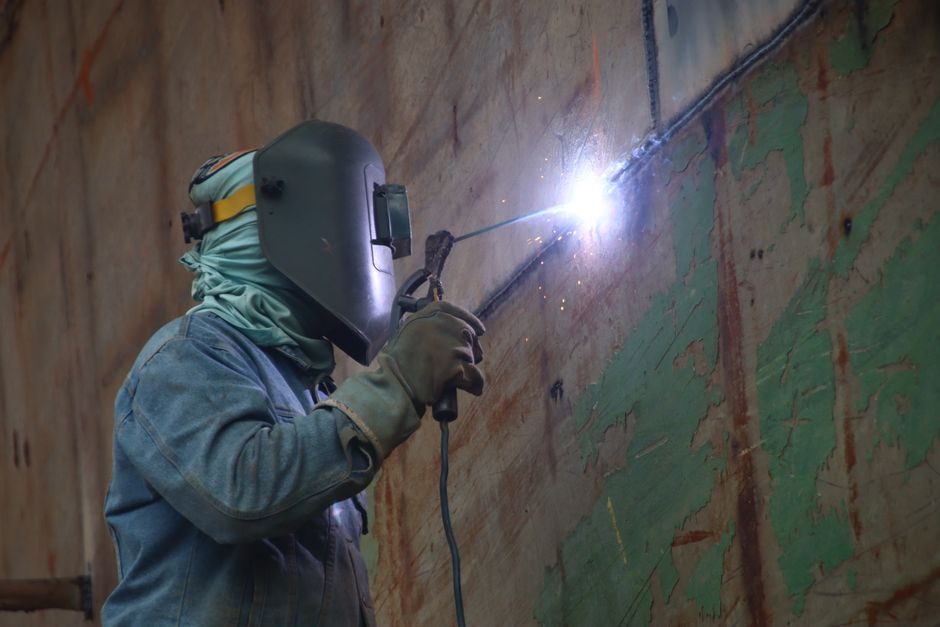
Industrial buyers evaluating an oxy-fuel cutting torch in 2026 face a four-order-of-magnitude price band — a portable Victor-style handbook lists at US$25.99 retail [S7], while KRONOS-series automatic gantry systems weigh up to 10,000 kg and price into the multi-million-dollar class for steel-fabrication line builders [S1].
The cost spread is dictated by three hardware tiers (hand torch, mechanised track cutter, CNC gantry), the fuel-gas train (acetylene, propane, MAPP, propylene, natural gas) [S8], and the cutting envelope: travel up to 4,000 × 12,000 mm and plate thickness from 5 mm to 38 mm are typical on current gantry offerings [S3]. The process itself remains the widest-deployed thermal cutting method because it can sever 0.5-250 mm steel at low equipment cost [S8].
Price Bands by System Class
Entry-level torch kits and reference manuals are listed on the secondary market for under US$30 — the Victor Cutting, Heating & Welding Guide sold for US$25.99 with 315 units moved at that price point [S7] (2025-05). Above that, hand torches and portable rail cutters from industrial-supply channels sit in the US$300-2,500 range for a complete oxygen/fuel regulator, nozzle and tip set, with the per-tip replacement part cost of an oxy-fuel cutter running low single-digit to low double-digit US dollars depending on size and fuel-gas compatibility. Compact CNC machines such as the Shandong Jiaxin CNC series (X travel 1,200-1,600 mm, Y travel up to 5,500 mm) open the mechanised tier in the tens-of-thousands band [S4].
Mid-range CNC gantries, exemplified by the ERMAKSAN SMART PLAZMA (X travel 1,500-4,000 mm, Y travel 3,000-12,000 mm, cutting height 5-38 mm, cutting speed 35 mm/s) [S3] and the United ProArc Master series with CE marking and bevel capability [S2], typically land between US$80,000 and US$250,000 depending on plasma-oxy hybrid configuration, bevel head and table size. Heavy fabrication lines — FICEP KRONOS HP/SP/PC at 2,500-10,000 kg with 40 mm (2 in) tube capacity and high-definition plasma + oxy-fuel head combinations [S1], plus KALTENBACH KF 3114/28 plate processing centres with automated loading [S5] — sit in the US$2.5M-8M bracket for a fully tooled cell, with software such as Lantek Expert Cut and Lantek Flex3d Steelwork layered on top to manage chamfers, loops, bridges, orthogonal and bevel cuts on sheet and beam work [S9][S10].
Fuel-Gas Selection and Operating Cost
Fuel-gas choice is the single largest consumable cost lever. Acetylene delivers the fastest pre-heat and cleanest cut on mild steel but is the most expensive fuel-gas per cubic metre, while propane and propylene sit at roughly one-third the gas cost with lower flame temperature [S8]. Natural gas and MAPP occupy the mid-cost band; MAPP is favoured for field work because cylinder pressure is sufficient to avoid flashback without an economiser. For typical 6-25 mm mild-steel plate, propane and acetylene dominate shop-floor cells, and the cutting machine supplier community (THERMACUT, ESAB, Victor) ships separate nozzle families rated for each fuel.
Operating cost is governed by oxygen consumption per metre of cut, tip size selection and pre-heat time. The TWI process reference notes that nozzle design and gas choice "can significantly enhance performance in terms of cut quality and cutting speed" [S8], and THERMACUT organises its 2026 replacement-parts catalog exactly along the LASER / PLASMA / OXY-FUEL split to support that decision [S6]. Buyers should plan on oxygen consumption in the 1.5-4 m³/h per tip range for 6-25 mm plate, scaling with thickness; this is the line item that turns a 3-cent tip into a several-dollar-per-metre cut.
Selection Criteria: When Oxy-Fuel Beats Plasma or Laser
Oxy-fuel is the default choice for carbon-steel plate above roughly 12-15 mm and remains competitive up to 250 mm thickness [S8]. Plasma wins on thinner gauge, on stainless and aluminium, and on cut speed below ~10 mm. Laser wins on precision and on stainless/aluminium thin sheet, with cut quality that obviates secondary machining. A plain carbon-steel fabricator cutting 6-50 mm plate has the strongest economic case for oxy-fuel, and a hybrid machine (oxy-fuel + plasma, e.g. KRONOS [S1], SMART PLAZMA [S3], KF 3114/28 [S5]) gives one machine the ability to do all three without changeover loss.
Decision criteria for selecting the torch class: plate thickness band, required bevel angle range (oxy-fuel bevel heads typically cover 0-45° on heavy plate, plasma narrower), duty cycle (hand torch is 1-2 hours/day, mechanised 1-2 shifts, gantry 2-3 shifts), and CNC integration (Lantek Flex3d Steelwork for beams [S10], Lantek Expert Cut for sheet and heavy plate [S9]). For a buyer cross-shopping industrial tools, the same evaluation logic of travel, power and consumable cost shows up in a cut-off machine 2026 price guide and a marble cutter price guide — travel envelope and consumable-per-metre dominate the landed-cost math in every thermal-cutting category.
Hidden Costs and Sourcing Risks
Beyond the sticker price, the cost drivers that surprise first-time buyers are: (1) the gas train (two-stage regulators, flashback arrestors, hose sets) — a complete acetylene/oxygen train is US$400-1,200 per station; (2) tip inventory — for a five-nozzle line (1/2/3/4/5) you carry US$300-800 in tips per workstation; (3) ventilation and the gas-room, which on a CE-marked gantry such as the United ProArc Master [S2] is part of the installation scope; and (4) software — Lantek Expert Cut and Flex3d Steelwork are licensed per seat and per post-processor [S9][S10], typically a low five-figure add-on for a multi-head gantry cell.
Lead-time risk in 2026 remains concentrated on heavy gantry deliveries (3-9 months from European and Taiwanese builders), while Chinese-built compact CNCs (Shandong Jiaxin [S4]) and Turkish-built gantries (ERMAKSAN [S3]) are the faster-track path. For reference on a 2026 build-vs-buy decision, the closest parallel spec-cut in the power-tool domain is the angle grinder selection guide, which lays out the same six-gate filter — voltage, RPM, duty cycle, accessory cost, weight and warranty — that a process engineer should apply to an oxy-fuel gantry spec sheet.
Specifications Compared: Four Current Gantry Offerings
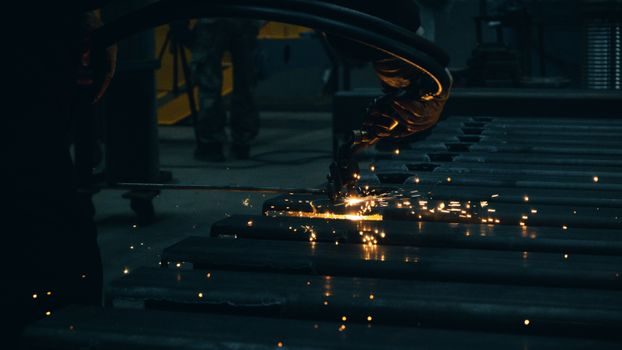
Direct comparison of representative 2026 gantries on four buyer-relevant criteria: FICEP KRONOS HP/SP/PC delivers tube capacity 40 mm and weight 2,500-10,000 kg with high-definition plasma + oxy-fuel [S1]; United ProArc Master adds CE marking, bevel and stainless/carbon-steel coverage [S2]; ERMAKSAN SMART PLAZMA posts X/Y travel 1,500-4,000 / 3,000-12,000 mm, height 5-38 mm and cutting speed 35 mm/s [S3]; KALTENBACH KF 3114/28 brings automated workpiece loading plus engraving, marking, drilling and milling alongside plasma/oxy-fuel [S5]. On duty cycle and post-processing breadth, the KALTENBACH and FICEP lines lead; on price-per-square-metre of cutting envelope, the ERMAKSAN and Shandong Jiaxin offerings lead [S3][S4].
Total Cost of Ownership: 5-Year View
For a two-shift heavy-plate cell (3,000 cutting hours/year), rule-of-thumb 5-year ownership cost breaks down as: hardware 55-65%, gas and electricity 15-20%, tips and consumables 5-8%, software and service 5-8%, operator labour the variable. The TWI Global guidance [S8] and THERMACUT's process-aligned catalog [S6] both stress that consumable and gas choices swing operating cost by 20-30% with no change to the linear guide hardware, so any 2026 buying decision should price the full consumable line item, not just the gantry sticker. Beam-machine shops should pair the oxy-fuel gantry with a riser-cutting machine workflow for sprue removal to keep the cell balanced.
Next, buyers should request a written tip-per-metre consumption curve from the vendor and a per-shift gas consumption table sized to the dominant plate thickness in the order book; second, confirm CE/IECEx conformity for the European chemical-plant or ATEX 2014/34/EU Zone 1 footprint if the cell sits in a classified area. A pull-through check of the oxy-fuel cutting torch 2026 buying guide is the natural next step once the price band is fixed.