A standard low-top safety shoe weighs approximately 450–600 g per foot, while a high-top leather boot often exceeds 700 g, making cut height a meaningful mobility and fatigue variable [S4].
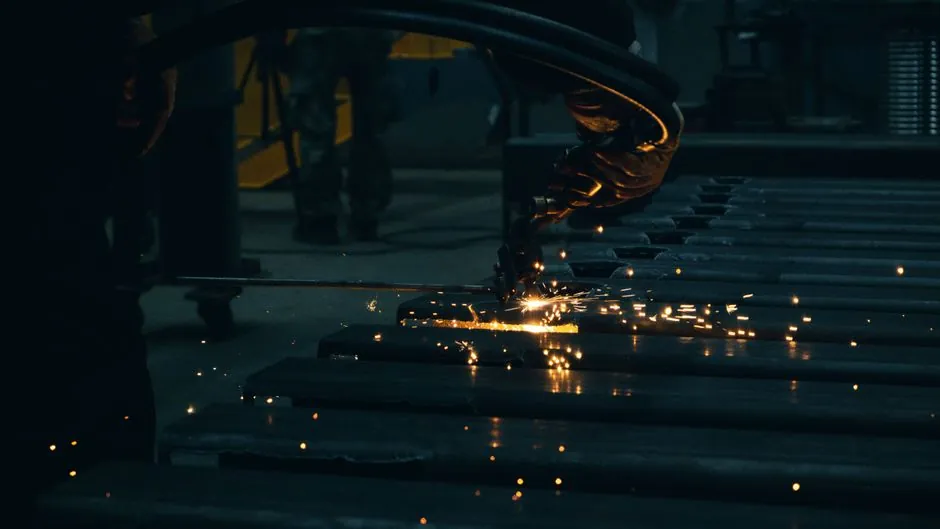
Low-cut shoes end below the ankle and suit warehouses, assembly lines, transport work, and frequent crouching; high-cut boots extend above the ankle and suit construction, mining, welding, heavy fabrication, and outdoor work on rough ground [S1][S2][S3].
Choose the Cut by Walking Surface and Movement
Low-cut safety shoes generally end below the ankle, provide a shoe-like range of motion, and reduce upper material around the ankle compared with high-cut designs [S1][S2]. They are the stronger choice where workers walk long distances on relatively even surfaces, change direction frequently, kneel, squat, climb ladders, or enter and exit vehicles repeatedly [S1][S3].
High-cut safety footwear wraps above the ankle and is preferable where ground conditions are uneven, loose material is present, or the ankle is exposed to knocks and debris [S2]. High-cut safety footwear may offer additional coverage and support around the ankle, resistance to external hazards and slippery surfaces, and weather resistance through water-repellent treatments or waterproof membranes [S5].
Boot height alone does not establish toe protection, slip resistance, puncture resistance, chemical resistance, or electrical performance. These functions depend on the model’s construction, outsole, upper, protective components, and test results [S1].
Compare Mobility, Weight, Coverage, and Durability
Low-cut shoes normally win on mobility and warm-weather comfort because the ankle remains less enclosed, while high-cut boots normally win on lower-leg coverage and perceived stability. These are design tendencies, not guarantees, because weight, comfort, durability, and protective performance vary between models [S2].
For the decision matrix, compare low-cut shoes against high-cut boots on four criteria: mobility, mass, environmental coverage, and ground-condition performance. Low-cut footwear scores best where frequent articulation and low bulk matter, at roughly 450–600 g per foot for the cited standard model. High-cut leather boots provide more coverage but may exceed 700 g per foot [S4].
The weight difference is not a safety rating. A lighter shoe does not automatically provide greater toe, puncture, chemical, electrical, or slip protection. A heavy boot does not automatically prevent ankle injury, and a high shaft does not compensate for a worn or contaminated outsole [S4].
Match Height to Task-Specific Hazards
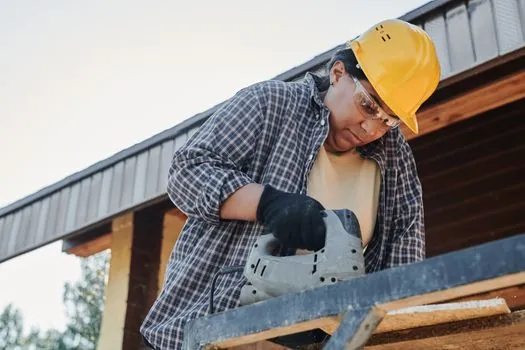
Low-cut safety shoes may suit warehouses, transport work, and indoor environments or tasks with lower impact risks [S2][S3]. They suit workers who repeatedly walk, pivot, crouch, or kneel and whose priority is unrestricted ankle movement, reduced bulk, and heat dissipation around the ankle [S1][S4].
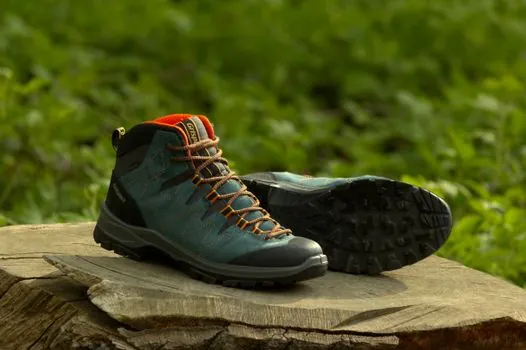
High-cut safety boots may be appropriate where additional ankle coverage and stability are needed, such as on uneven surfaces or when workers handle heavy materials [S2]. The extended upper offers additional ankle coverage and can protect against external contact, debris, and certain side impacts, but it does not guarantee prevention of every ankle injury [S2][S5].
Steel Blue identifies 150 mm ankle boots as best suited for FIFO workers, construction workers, electricians, and plumbers [S3].
High-Cut Boots for Rugged and Exposed Work
High-cut footwear can reduce the ankle’s lateral movement while enclosing the lower leg more fully, which is useful where workers carry heavy loads or negotiate unstable terrain [S4][S5]. Its upper may also shield the ankle from sparks, hot metal, splashes, gravel, and debris, but these claims must be confirmed against the specified material and test certification [S4][S5].
Weather resistance is model-dependent rather than inherent to every high-cut boot. Some high-cut safety footwear uses water-repellent treatments or waterproof membranes to help keep feet dry in wet conditions [S5]. High-cut models may also use deep-lug outsoles, reinforced toe caps, abrasion-resistant uppers, insulated linings, or breathable materials [S5].
The principal constraint is reduced articulation. A high upper and thicker sole can feel restrictive during squatting, repeated bending, ladder climbing, or frequent position changes, while added mass can increase fatigue over an eight-hour shift [S4][S5].
Low-Cut Shoes for High-Mobility Indoor Work
Low-cut footwear generally provides a shoe-like range of motion and can suit workers who spend the shift crouching, climbing, or repeatedly stepping in and out of vehicles [S1]. The open ankle design permits natural ankle motion, usually results in less heat retention, and avoids forcing the ankle to work against a tall upper [S1].
High-cut footwear may be more suitable than low-cut footwear where workers encounter uneven surfaces or loose gravel, or where the ankle is exposed [S1][S2]. A low-top can remain fully compliant when it carries the required toe, sole, slip, puncture, chemical, electrical, or other protection for that task; the cut changes coverage and ergonomics, not the underlying certification [S1].
Verify the Model, Not Just the Height
Specify the required protection class and test results before comparing footwear. EN ISO 20345:2022 is identified in the research as the European safety-footwear standard for occupational footwear, but the relevant product marking and tested features determine what the shoe actually provides [S4].
Check the declared upper height, material, toe-cap and midsole construction, outsole compound, slip-resistance designation, puncture protection, waterproof or chemical resistance, electrical rating, scuff-cap arrangement, and available ankle-protection designation. The cited SCRAMBLER S3 example combines an S3 designation with an AN ankle-protection level, a reinforced anti-abrasion toe cap, and an all-terrain construction, which illustrates why model-level verification matters [S5].
For PPE selection, confirm whether the required specification comes from the workplace risk assessment, procurement policy, client standard, or applicable safety-footwear marking. Additional PPE selection criteria are covered in the safety certification reference, while the footwear must still be assessed as part of the whole system rather than treated as an ankle-injury guarantee [S4].
Final Selection Rule by Workplace

Choose a low-cut safety shoe when the floor is even, walking distance is long, and the task involves frequent squatting, kneeling, pivoting, or ladder movement. Choose a high-cut boot when footing is unpredictable or when debris, side contact, splash, mud, gravel, sparks, or hot material can reach the ankle [S1][S2][S4][S5].
A practical trial should compare the actual models over a representative shift, including fit around the ankle, heel retention, joint articulation, heat buildup, sole condition, and compatibility with required protective clothing. Record the worker’s step count, terrain type, exposure to ankle-level hazards, and required EN ISO 20345 protection class; then revise the selection if the tested workload differs from the assumed task [S1][S4].