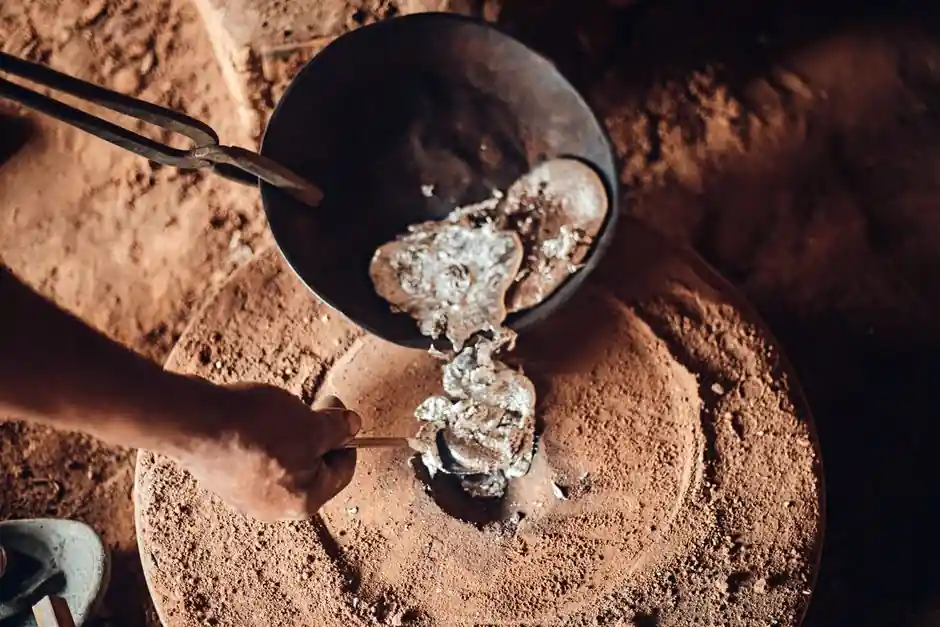
High-nickel austenitic cast iron, marketed as the Ni-Resist family, holds an austenitic matrix from deliberate nickel additions of roughly 15–36% by weight, with manganese, copper, and chromium used as co-stabilizers and as carbide formers [S4]. The Ni-Resist family is supplied in seven types whose corrosion, heat, and wear behavior vary primarily with composition and graphite morphology [S2]. For spec-driven selection the practical decision tree is: target service temperature → required corrosion medium → need for ductility/weldability → acceptable cost premium over grey or ductile iron.
This family sits between standard grey cast iron and stainless steels in both cost and corrosion performance, and competes directly with nickel alloy castings where dimensional stability and damping matter as much as raw corrosion resistance. The 2026 sourcing environment has tightened because LME nickel pricing still dominates the cost stack; a typical grey-iron vs cast-steel benchmark is laid out in the Grey Cast Iron vs Cast Steel Price per kg: 2026 Foundry Data reference, which uses the same pig-iron plus scrap-plus-alloying cost logic that applies here.
Composition Windows and the Austenite-Stabilizer Logic
Nickel is the primary austenite stabilizer in cast iron because it depresses the eutectoid transformation temperature of austenite below room temperature, so a fully austenitic matrix is retained at ambient without quenching [S4]. Conventional Ni-Resist alloys carry 15–36% Ni, with manganese and copper substituting for part of that nickel where cost pressure is acute; very high nickel can be reduced by manganese plus copper to reach a Ni-Mn-Cu cast iron with corrosion resistance similar to standard Ni-Resist [S6]. Powder-metallurgy studies confirm that the corrosion behavior of equivalent Mn-doped austenitic iron tracks conventional high-Ni iron when the Ni-equivalent number is held constant, with Mn5-PM (5% Mn) showing the lowest corrosion current density and the highest polarization resistance in potentiodynamic and EIS testing [S1].
Three working composition windows now coexist in the market. Low-nickel austenitic cast iron (below 10 wt% Ni) can achieve an austenitic, non-magnetic matrix while eliminating copper entirely, through balanced additions of carbon (typically 2.5–3.5 wt%), silicon (1.5–2.5 wt%), and manganese (0.5–1.2 wt%), with nickel as the primary austenite stabilizer, thereby reducing raw-material cost by approximately 30–40% compared to conventional Ni-Resist alloys [S5]. Corrosion-resistant ductile cast iron uses a much narrower 0.2–2.0% Ni band to enhance electrochemical stability while keeping a primarily ferritic matrix with spheroidal graphite, with 1.5% Ni raising polarization resistance by 180–220% in simulated soil (pH 6.5–7.5, 500 ppm chloride) [S5]. For elevated-temperature wear service, high-nickel grades run 8.0–10.0% Ni with 15.0–20.0% Cr, 0.8–1.2% Mo, and 1.0–2.0% C to suppress sigma-phase precipitation between 600–850°C [S5].
Flake vs Ductile Ni-Resist: When to Pick Each
The seven standard Ni-Resist types split cleanly by graphite morphology: Types 1–4 are flake-graphite (grey) austenitic irons, and the D-2 through D-5 series are ductile (nodular) austenitic irons with magnesium-treated graphite [S2][S3]. Flake grades give better thermal conductivity, damping, and dimensional stability at temperature, while ductile grades trade some of that for higher toughness, tensile elongation, and impact resistance [S3]. The foundry-side reality is that ductile Ni-Resist is rated as very difficult to weld and requires customer consent, so any field repair plan has to account for that limitation up front [S3].
Ductile Ni-Resist grades (D-2, D-2B, D-2C, D-2S, D-3, D-3A, D-4, D-5, D-5B, D-5S) target applications that need toughness plus corrosion plus wear/erosion resistance: slurry pump components, cylinder liners, pistons, bearings, and pump glands [S3]. Machinability is fair to good and corrosion resistance is rated good in mild acids, mild alkalies, and seawater, but is fair and below stainless steels in more aggressive media [S3]. For foundries, pattern shrinkage allowances of about 1.6–1.8% apply, with up to 2.2% possible under unrestrained conditions, and casting temperatures reach up to 1500°C depending on wall thickness [S4].
High-Temperature and Corrosion Performance Bands
High-nickel wear-resistant cast iron at 8.0–10.0% Ni, 15.0–20.0% Cr, 0.8–1.2% Mo, and 1.0–2.0% C delivers volume loss rates 40–55% lower than martensitic white irons at 700°C in ASTM G65 dry sand/rubber-wheel testing, and retains 52–58 HRc after a 500-hour exposure at that temperature [S5]. This is the operating envelope where Ni-Resist outperforms standard flake graphite iron, which begins to scale and lose hardness well below 500°C, and where austenitic stainless steels (e.g., 304/316) become the cost-rational baseline. Austenitic stainless steels are documented in the cast iron and adjacent nickel-alloy reference pages for direct comparison of corrosion tables.
At lower temperatures in chloride-rich service, low-nickel austenitic formulations that eliminate copper show a 15–25% service-life extension over copper-containing Ni-Resist in marine and chemical processing atmospheres, because removing copper prevents galvanic-couple initiation in chloride [S5]. For underground water infrastructure, ductile iron at 1.5% Ni is now a common specification because the 180–220% jump in polarization resistance is enough to extend service life without crossing into stainless or nickel alloy territory [S5]. The Tappi paper on cast high-nickel austenitic alloys for paper and pulp equipment reaches the same conclusion from a different angle: Ni-Cr-Mo superaustenitic castings outlast standard austenitic stainless in bleach-plant and digester service where chloride, temperature, and mechanical load all overlap [S7].
Standards, Production Routes, and Heat Treatment
Austenitic nodular graphite cast iron is classified under DIN EN 13835, which groups grades by heat and corrosion resistance and lists typical applications in Annex A [S4]. Melting is almost exclusively done in electric furnaces, either induction or electric arc, with alloying done in the furnace; magnesium treatment and primary/secondary inoculation follow standard nodular-iron practice [S4]. Because high-nickel melts absorb gas readily at high temperature, melt-to-pour time must be kept short and each bath checked with a thermocouple; thermal analysis is recommended to verify homogeneity before pouring [S4].
Because austenitic cast iron does not transform on cooling, castings can be shaken out directly after solidification, and there is no harden-and-temper step as with pearlitic or martensitic grades [S4]. The two heat treatments that are standard are stress relief and spheroidizing anneal for carbide distribution and hardness reduction [S4]. For foundries budgeting their 2026 cost stack, the same pig-iron and scrap drivers that affect standard grey iron, detailed in the Grey Cast Iron 2026 Price Drivers: Pig Iron, Scrap, and Foundry Cost Stack reference, apply one-to-one to the base iron; the incremental cost is almost entirely the nickel, copper, and chromium addition packages and the extra electric-furnce holding time.
Selection Criteria and Comparison Against Alternatives
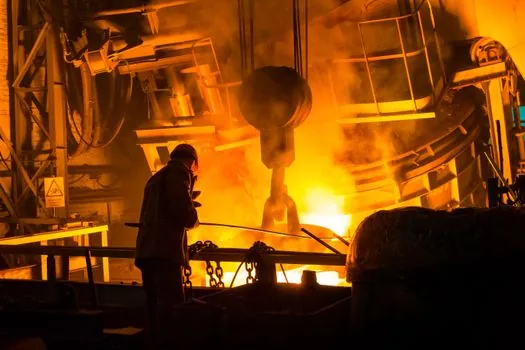
On a four-criterion matrix, flake Ni-Resist (Types 1–4) rates high on heat resistance and damping, medium on corrosion, low on toughness, and high on cost versus grey iron; ductile Ni-Resist (D-2 to D-5) rates high on toughness, medium-high on corrosion, medium on heat, and high on cost [S2][S3]. Low-nickel austenitic ductile iron (0.2–2.0% Ni) rates high on ductility and weldability, medium on corrosion, low on heat resistance, and low on cost premium [S5]. High-nickel wear grades (8–10% Ni, 15–20% Cr) rate very high on heat and abrasion, medium on toughness, medium on corrosion, and very high on cost [S5]. By contrast, standard grey cast iron is the lowest-cost baseline with poor corrosion and limited heat resistance, while 304/316 austenitic stainless sits above all Ni-Resist types on corrosion but below high-nickel wear grades on abrasion at 700°C [S5].
The two failure modes engineers most often miss are weld-cracking in ductile Ni-Resist (treated as unweldable without explicit customer consent and special procedure) and sigma-phase embrittlement in high-chromium high-nickel grades if the 600–850°C window is held for long periods [S3][S5]. A practical rule is to specify ductile Ni-Resist only when toughness and damping are non-negotiable, and to shift to standard ductile iron with 0.2–2.0% Ni for buried or submerged service where cost dominates. Trackable 2026 signals worth watching include LME nickel price volatility, any revision of DIN EN 13835 grade tables, and the steady migration of low-nickel austenitic ductile iron into municipal water specifications; these three nodes will decide whether the next 12 months bring more foundries offering the 0.2–2.0% Ni ductile grade as a stocked line or only on inquiry.
For component-level specifications, see high voltage tester.