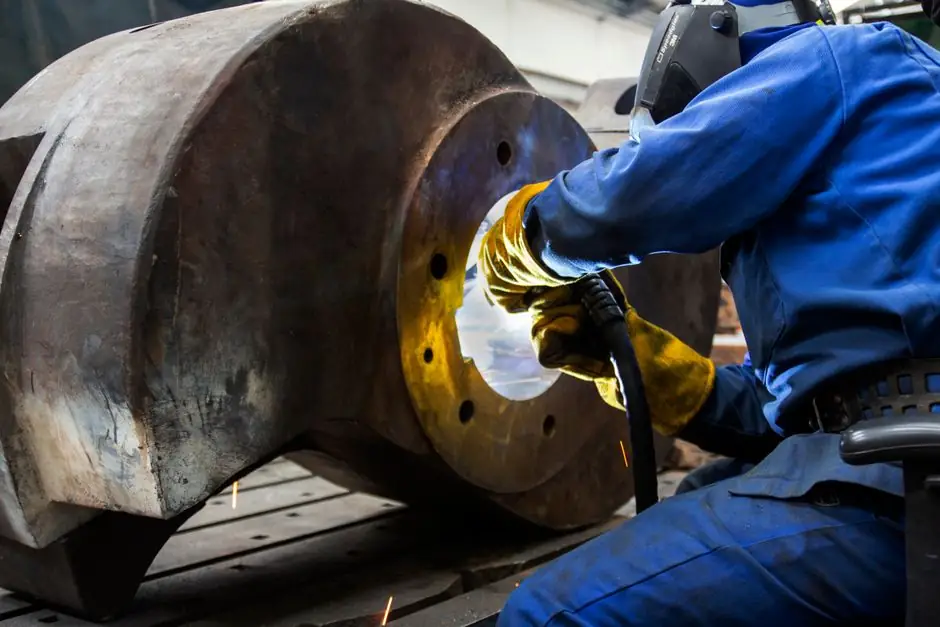
Hard chrome plating still specifies for thin, smooth, low-load surfaces, but HVOF tungsten carbide dominates new specification on hydraulic rods, landing gear, and downhole tool sleeves where abrasive wear life, salt-spray hours, or REACH compliance drive the decision [S1][S3].
Quantitative wear data from independent testing converges on the same ranking: hard chrome provides baseline hardness around 850 to 1000 HV, while WC-CoCr HVOF routinely hits 1100 to 1400 HV and extends wear life by a factor of 4 to 24 depending on test geometry and counterface [S3][S4][S9].
Side-by-Side Material Comparison on Four Decision Criteria
Across hardness, abrasive wear, corrosion, and whole-life cost, HVOF WC grades out-rank electrolytic hard chrome on three of four criteria and tie on the fourth [S3][S4][S9]. WC-CoCr (86/10/4) is the default REACH-compliant grade for hydraulic and aerospace service; WC-CrC-Ni (73/20/7) is preferred for combined high-temperature oxidizing and corrosion attack above 540 degrees C [S3]. Standard hard chrome has no comparable elevated-temperature grade and begins to lose hardness above 400 degrees C [S1].
Hard chrome still wins where deposit thickness must stay below 25 micrometers, where surface roughness Ra under 0.05 micrometer is required without subsequent grinding, and where the part is geometrically simple and a legacy plating line is already permitted. Outside those narrow envelopes, HVOF is the better economic and engineering answer [S3][S10].
Process Origin and Why Hard Chrome Is a 20th-Century Baseline
Electrolytic hard chrome deposits chromium from a hexavalent chromic acid bath at current efficiencies typically below 25 percent, which is why the process generates large volumes of Cr(VI) effluent and why REACH authorization has been required for any EU user since the 2017 sunset date [S4]. OSHA PELs in the United States have tightened in parallel, and the US Department of Defense Hard Chrome Alternatives Team (HCAT) program, run jointly with Boeing and Airbus, drove the 1990s to 2010s qualification data set that put HVOF on the aerospace approved-processor list [S3].
HVOF works by combusting a fuel gas (typically hydrogen, kerosene, or propylene) with oxygen in a chamber, then injecting tungsten carbide powder downstream and accelerating the particles through a converging-diverging nozzle at 600 to 1000 meters per second [S1]. The kinetic energy, not just the heat, is what densifies the deposit: porosity is routinely below 1 percent and bond strength to a grit-blasted steel substrate sits in the 70 to 90 MPa range, which is roughly twice what chrome plating delivers and explains the absence of a fatigue debit in HVOF-coated landing gear [S3].
Wear Mechanism: Why WC Beats Chrome on Sliding and Abrasive Service
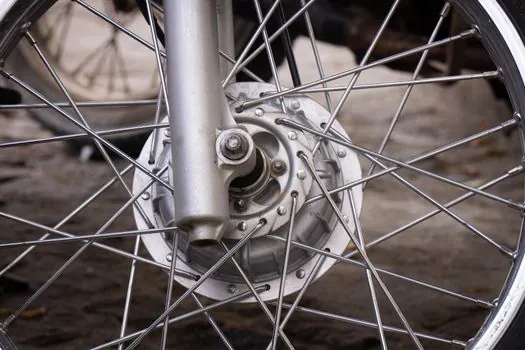
Hard chrome is a soft, hexagonal chromium matrix with hard chromium carbide precipitates, and it develops a network of micro-cracks during deposition to relieve internal stress [S4]. Those micro-cracks are pathways for corrosive media, and they propagate under cyclic sliding load, which is why hard chrome often fails by spallation at the crack tips rather than by gradual wear [S4].
HVOF tungsten carbide inverts that structure: hard, angular WC grains (typically 0.5 to 5 micrometers, though nanostructured variants go below 0.1 micrometer) are embedded in a ductile metal binder (10 to 20 percent Co, CoCr, or Ni matrix) [S1][S3]. The binder carries load and arrests cracks, while the WC skeleton resists both abrasive ploughing and adhesive metal-to-metal transfer. In TWI abrasion tests against a silica counterface, WC-Cr-Co coatings showed 4 to 5 times the wear resistance of electrolytic hard chrome on the same substrate [S9].
CVD tungsten carbide variants, where chemistry permits a reactor, have demonstrated up to 24 times the abrasive wear life of hard chrome, with the additional benefit of pore-free coverage on internal surfaces and complex geometries that a thermal spray line cannot reach [S4]. Where component geometry is restrictive, CVD is the higher-performance option; for external surfaces and field-repairable parts, HVOF is the practical choice.
Failure Modes, Limitations, and Where Hard Chrome Still Wins
HVOF has its own failure modes. Line-of-sight deposition means bores below about 75 mm diameter and internal radii below 6 mm are difficult to coat uniformly without robotic manipulation [S3]. Coating thickness for HVOF WC grades is typically 50 to 300 micrometers per pass, so tight-tolerance parts need post-coat grinding with diamond wheels, and the as-sprayed surface roughness Ra of 4 to 6 micrometers is too rough for hydraulic seal surfaces without finish machining [S1][S3]. Hard chrome plates directly to Ra 0.05 to 0.2 micrometer and can hold dimensional tolerance to plus or minus 2 micrometers on a finished shaft, which is why hydraulic rod OEMs still permit hard chrome on small-diameter chrome-plated rods where a grinding step after HVOF would risk distortion [S3].
Hydrogen embrittlement from the chrome plating bath forces high-strength steel parts (above roughly 1400 MPa UTS) into a mandatory 200 to 300 degrees C bake within four hours of plating to avoid delayed fracture [S3]. HVOF is a thermal spray process with no aqueous chemistry, so the embrittlement risk is removed entirely and bake-out is unnecessary, a genuine safety and schedule win on aerospace and military landing-gear work [S3].
Standards, Compliance, and Specification Defaults
Aerospace HVOF tungsten carbide on landing gear and actuator components is qualified to OEM specifications derived from the HCAT program data, with salt-spray and Taber abrasion acceptance criteria that hard chrome cannot meet at equivalent thickness [S3]. Hard chrome process control falls under SAE AMS-QQ-C-320 and the REACH authorization regime in the EU, with OSHA 29 CFR 1910.1026 governing US Cr(VI) exposure in the plating shop [S4]. For non-aerospace industrial users, the practical 2026 default on hydraulic rods, mud-pump liners, and gate-valve trim is HVOF WC-CoCr 86/10/4, with WC-CrC-Ni 73/20/7 reserved for high-temperature or sour-service components [S3].
Cost modeling from a Cincinnati Thermal Spray program survey puts whole-life HVOF cost at approximately 50 percent of hard chrome when maintenance, downtime, and Cr(VI) compliance overhead are included, with up to 80 percent reduction in process time on a per-part basis [S3]. A June 2026 industry review confirmed that HVOF outperformed hard chrome in every category tested, with HVOF-coated components outlasting chrome-plated equivalents across multiple wear scenarios [S10].
Selection Map: When to Specify Each Process
Specify hard chrome plating when the deposit must be under 25 micrometers, the surface finish Ra target is under 0.1 micrometer without grinding, the part is a small-diameter shaft or a simple geometry that does not justify HVOF setup, and the operating environment is non-sour and below 400 degrees C [S3][S4]. Hard chrome remains the default for legacy repairs, decorative-functional rolls, and tight-tolerance hydraulic rods under 50 mm diameter in non-aerospace service.
Specify HVOF tungsten carbide for hydraulic rods and cylinders above 50 mm, downhole tool sleeves, pump plungers, gate valve trim, and any part subject to abrasive slurry, sand, or high-cycle sliding above 500 HV equivalent hardness target [S1][S3]. Use WC-CoCr 86/10/4 as the default REACH-compliant grade, switch to WC-CrC-Ni 73/20/7 for temperatures above 540 degrees C or sour H2S service, and consider CVD tungsten carbide for complex internal geometries where a thermal spray line cannot reach [S3][S4]. Engineers building a new specification in 2026 should default to HVOF unless one of the hard chrome envelopes above genuinely applies, because the performance, life-cycle cost, and regulatory direction all favor the thermal spray route [S3][S10].
For a broader view of how coating choice interacts with surface metrology and corrosion testing, the industrial coating fundamentals reference page lays out the underlying thickness and adhesion criteria that govern any wear coating qualification. Engineers also need a working coating thickness gauge on the shop floor, since HVOF deposits require both magnetic and eddy-current probes depending on the substrate, and the waterproof coating entry covers the sealing topcoats that often go over an HVOF carbide in marine service. On the related question of substrate preparation, the silicon carbide page is useful where seal faces or wear rings are run against an HVOF-coated counterface.
For related coverage, see Wet vs dry battery separator supply in 2026: process choice, coating strategy, regional.