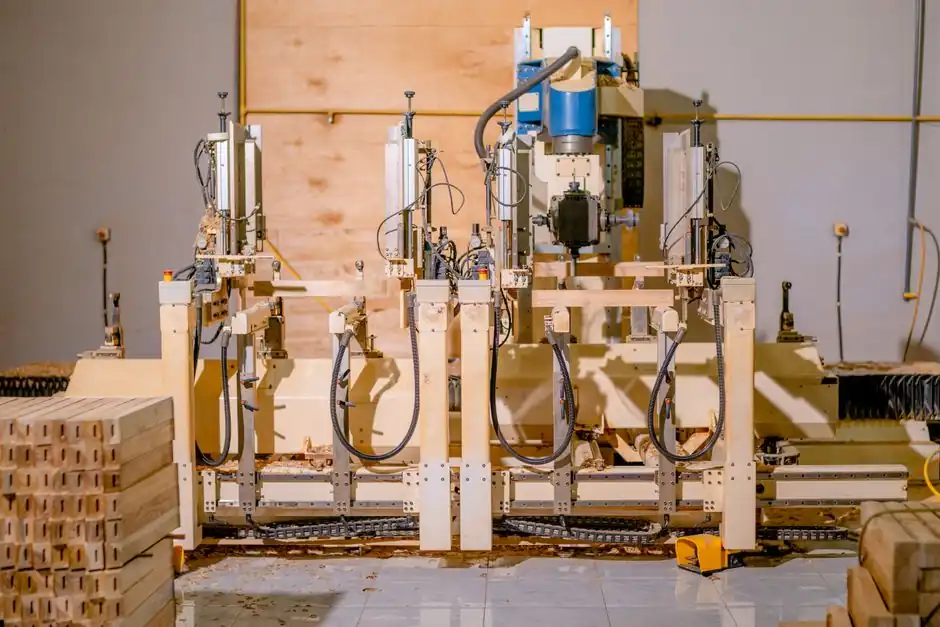
DISA MATCH supports mold sizes from 610×508 mm to 813×813 mm and offers rapid replacement of bilateral plates, making it relevant to foundries with changing sample requirements.
The decision is not a generic vertical-versus-horizontal preference. It is a fit calculation against casting geometry, production mix, sand demand, automation interfaces, and maintenance access.
Core Difference: Parting Orientation and Machine Footprint
Vertical flaskless molding makes the mold in a vertically closed stack, while a horizontal line uses a horizontal parting arrangement and bilateral mold plates. DISA MATCH applies horizontal molding to the flaskless DISAMATIC principle and states that this combination minimizes machining of mismatch parts, with mismatch below 0.25 mm [S2].
The vertical arrangement is compact by nature because the mold stack forms above and below the working plane. DISA MATCH specifies rapid replacement of bilateral plates through its QMC mechanism and automatic rod installation through CSE [S2].
For broader mechanical context, the flaskless molding machine category covers both configurations. Do not assume that flaskless construction eliminates tooling costs: pattern plates, alignment features, tooling interfaces, and replacement inserts remain part of the capital decision.
Decision Matrix: Output, Size, Changeover, and Integration
DISA MATCH is ideal for small-scale foundries with frequently changing samples.
The comparison should be made using the foundry’s actual part envelope, not rated machine dimensions alone. A horizontal machine can still outperform a vertical machine if its tooling, sand preparation, and downstream handling are correctly matched to the product.
Horizontal Line Capacity and Dimensional Limits
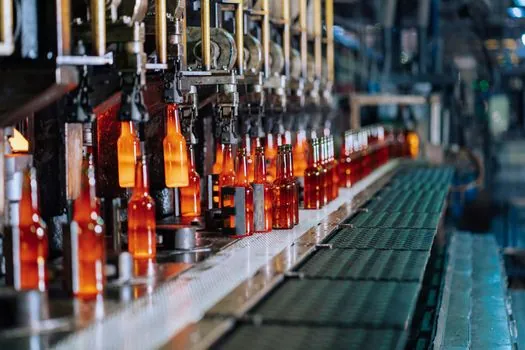
DISA MATCH 130, 24/28, 28/32, and 32/32 configurations cover mold lengths from 610 to 813 mm and widths from 508 to 813 mm. Rated output without rods ranges from 100 to 160 lb/h, while output with bars ranges from 80 to 120 lb/h [S2].
The documented mismatch error is 0.25 mm for all four configurations. Lower-mold height ranges from 150–200 mm on the 130 model to 225–300 mm on the 28/32 and 32/32 models; upper-mold height reaches 150–350 mm on the two largest configurations [S2].
Electrical demand increases with platform size: 21 kW for the 130 model, 50 kW for 24/28, and 60 kW for both larger platforms. Net mass rises from 14 t to 19 t and then 25 t, so foundation loading, crane access, installation clearance, and service space must be checked before purchase [S2].
For independent comparison, a static pressure molding machine is a different green-sand forming method, not another name for a horizontal flaskless line. Likewise, a shell molding machine uses a different mold-making process and should not be included in the vertical-versus-horizontal flaskless capacity comparison.
Sand, Air, and Hydraulics Drive Utility Demand
Green-sand consumption rises with mold height and platform size. DISA MATCH requires 23–31 t/h at minimum and maximum mold height for the 130 model, while the 32/32 configuration requires 44–64 t/h [S2].
Compression pressure is specified at 1.2–10 kgf/cm², and blowing pressure is 0–4.5 kgf/cm². The pneumatic system requires a minimum air pressure of 5 bar. Hydraulic fluid capacity is 250 L for the 130 model, 350 L for 24/28, and 400 L for each larger platform [S2].
These values determine more than utility bills. Sand delivery must sustain the selected mold rate, compressor capacity must handle simultaneous blowing and plant demand, and hydraulic maintenance must account for reservoir size and contamination control. A line that meets nominal casting demand but undersupplies prepared sand will lose rated output [S2].
For a production comparison, the automatic molding line should be evaluated as an integrated system. Rated output per hour is useful only when sand mixing, mold transfer, pouring, cooling, shakeout, and reclamation can sustain the same effective cycle rate.
Best-Fit Applications and Poor-Fit Projects
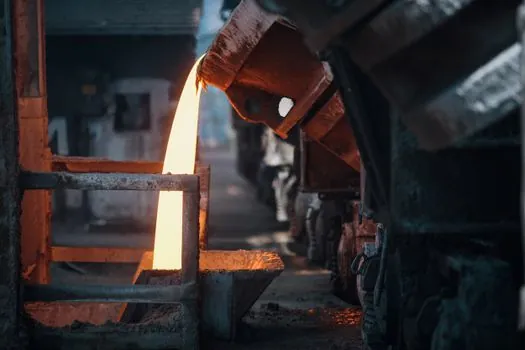
DISA MATCH covers mold envelopes from 610×508 mm to 813×813 mm, supports flexible production, and offers quick-change models through rapid replacement of bilateral plates. DISA MATCH explicitly positions the platform for small-scale foundries with frequently changing samples and for foundries seeking accurate, flexible casting production [S2].
Sinto America provides a category page for flaskless molding machines.
Horizontal lines are a poor fit when the floor cannot accommodate the width, overhead lifting envelope, service aisles, and sand infrastructure. Vertical lines are a poor fit when every casting needs a different pattern, frequent plate replacement dominates the shift, or the product envelope exceeds the vertical stack limits.
Neither configuration is automatically the choice for automotive, aerospace, or construction castings. Juneng describes automated flaskless lines for these sectors, but that supplier statement contains no comparative output, tolerance, or footprint data, so it cannot substantiate a sector-specific selection rule [S3].
Tooling, Maintenance, and Commissioning Checks
DISA MATCH uses rapid bilateral-plate replacement and automatic rod installation, with a claimed mismatch of less than 0.25 mm. Those features favor short changeovers, but the procurement package must define pattern-plate material, wear inserts, alignment method, fastening arrangement, and acceptance measurement before those benefits can be validated [S2].
Commissioning checks should include mold-length and mold-width limits, lower- and upper-mold height, 0.25 mm mismatch tolerance, compression and blowing pressures, minimum 5 bar supply air, hydraulic capacity, installed power, and net machine mass. Four DISA MATCH platform sizes provide a concrete baseline for installation planning [S2].
For foundries comparing flaskless configurations with other green-sand systems, the process and labor consequences of green sand versus no-bake casting costs should be calculated separately from the machine purchase price. Binding chemistry, core requirements, reclamation, and labor content can dominate the final cost per acceptable casting.
Procurement Specification and Acceptance Test
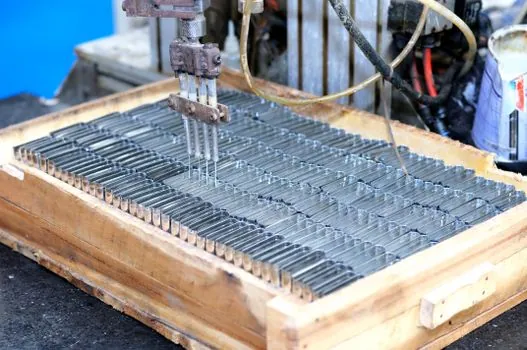
Specify the line by verified casting envelope rather than generic “flaskless” terminology. Request maximum and minimum lower- and upper-mold heights, allowed mismatch, output with and without bars, sand consumption at minimum and maximum heights, compression and blowing pressures, supply-air pressure, connected power, net mass, and machine dimensions [S2].
Demand a witnessed mold trial using production patterns and representative sand properties. Record cycle time, dimensional mismatch, core-setting time, plate-change time, sand consumption per mold, hydraulic and pneumatic demand, and downstream transfer behavior. The supplier’s rated 100–160 lb/h without rods and 80–120 lb/h with bars should be treated as configuration-dependent reference points, not guaranteed output for every mold [S2].
The final decision rule is straightforward: select horizontal when large tooling access and production flexibility outweigh floor-space consumption; select vertical when stable tooling and output density outweigh the need for frequent bilateral-plate changes. Verify the choice against the foundry’s own mold catalogue and utility envelope rather than adopting either architecture by reputation.