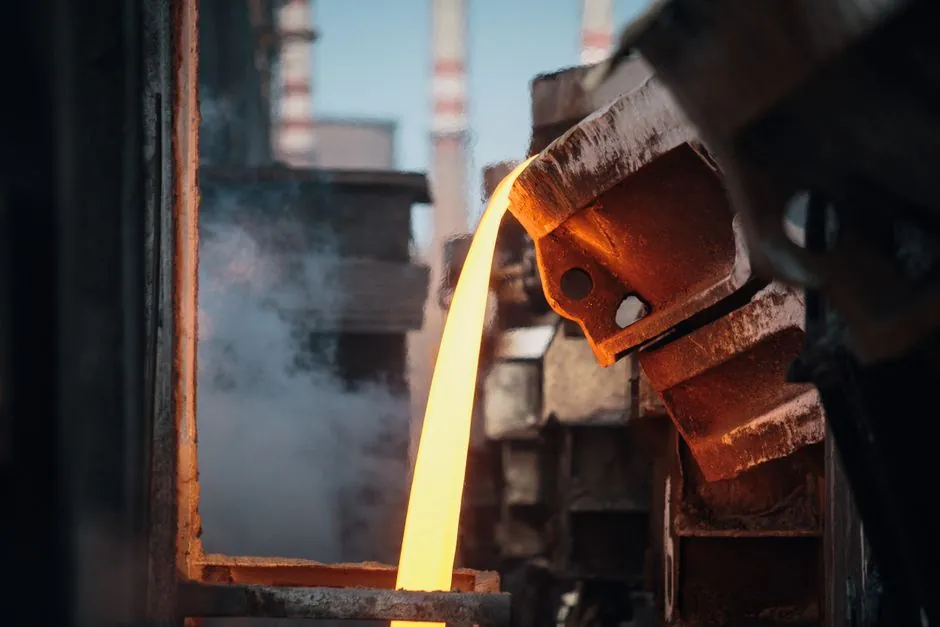
Krownmatic specifies ±1% dosing accuracy, ±1°C temperature accuracy, and aluminum oxidation loss below 0.05% [S4].
The comparison depends on the delivery architecture: a holding furnace mainly conditions and stores melt, whereas a dosing or tilt-pour furnace controls the transfer of a measured quantity into the receiving vessel or mould [S1][S3].
Dosing accuracy by furnace architecture
The meaningful accuracy comparison is dose-to-die, not furnace-temperature stability alone. A holding furnace may hold aluminum near its required casting temperature, but an open ladle transfer exposes the melt to air and introduces variable ladle positioning, tilting, transport, and weighing or volumetric measurement steps. A closed dosing furnace integrates holding and delivery and is specified for precise dosing to die-casting machines or moulds without exposure to air [S2].
For a tilt-pour furnace, dosing repeatability depends on calibrated geometry, tilt angle, discharge timing, melt head condition, and the receiving vessel. The US Department of Energy metal-casting study describes tilting furnaces as suited to controlled, consistent metal flow with minimal harm to melt quality [S1]. That supports their use in high-volume transfer, but it does not provide a universal dose-error percentage comparable to the ±1.5% figure published for closed dosing systems [S2].
A practical specification should therefore request measured static dose error, cycle-to-cycle repeatability, net-shot weight, and rejection limits under production conditions. Vendor accuracy alone does not demonstrate performance with a specific alloy, ladle, shot sleeve, or control rule.
Closed dosing furnaces versus tilt-pour furnaces
Closed dosing systems lead on air exclusion and metered delivery. Westomat is described as a crucible-free, closed holding and dosing system for liquid aluminum, with a metal yield of 99.04% and stated uptime of 98% [S2]. Krownmatic specifies ±1% dosing accuracy, ±1°C temperature accuracy, and oxidation loss below 0.05% [S4].
Tilt-pour furnaces lead where large, intermittent transfers and controlled flow are the priority. One operating example described a tilt-and-pour unit with a stated capacity of about 500 lb of bronze or 175 lb of aluminum, although that figure is not a universal design limit [S7]. A tilting furnace can also replace or reduce the role of a separate holding furnace in flexible automated metal delivery, and it can pour large batches rather than only small shots [S5].
Energy, yield, and operating constraints
Closed dosing architecture can reduce transfer energy and metal loss relative to ladle-based holding systems. Westomat furnaces consume up to two-thirds less energy than ladle-based systems for melt transfer and delivery, with a stated metal yield of 99.04% [S2]. Krownmatic specifies electrical consumption one-third lower than traditional holding furnaces and oxidation loss below 0.05% [S4]. These are manufacturer-specific comparisons, not universal efficiency guarantees.
An open crucible comparison is less favorable to the dosing approach: one supplier states that dosing furnaces require about 20% of the energy used to hold 2,000 lb of aluminum compared with an open crucible furnace [S8]. For a detailed view of standby losses and melt-holding energy, see Crucible Furnace Power Use: Standby vs Active Melt Comparison.
Accuracy can also be limited by downstream conditions. Ladle capacity, transfer distance, line losses, receiver alignment, turbulence, oxidation, and the pressure or geometry of the receiving shot chamber can change the delivered mass. A furnace rated at ±1% at its outlet may not maintain ±1% at the die if the dosing system has unmatched restrictions or if the alloy and temperature are outside the qualified range.
Selection by production requirement
Choose a closed dosing furnace when the process needs repeatable shot-size metal, low oxidation, rapid cyclic delivery, and tight coordination with a die-casting cell. It is suited to high-pressure die casting, gravity die casting, and green-sand applications involving liquid aluminum [S2]. Specify the required shot mass, cycle time, alloy range, maximum temperature, and acceptable oxide content before selecting a furnace capacity.
Choose a tilt-pour furnace when the casting process requires large pours, variable ladle quantities, or the flexibility to move a heated delivery device between destinations. The 2015 casting-process article describes heated delivery devices as flexible and capable of replacing some holding-furnace functions [S5]. This option is less compelling when the primary requirement is ±1% shot dosing with minimal aluminum oxidation.
Do not choose either configuration from nominal furnace capacity alone. For a holding furnace, sizing starts with an hourly demand model and a refill strategy [S9]. For either dosing or tilt-pour equipment, add the verified net metal per cycle, maximum and minimum cycle rates, expected peak demand, charging method, and the tolerance consequence of over- or under-dose.
Commissioning and quality-control requirements
Acceptance testing should measure the quantity that reaches the process, not only the command issued by the controller. Record at least 30 consecutive delivered doses at normal operating temperature and after the furnace reaches thermal stability. For each dose, record commanded mass, measured mass, cycle time, alloy temperature, and any deviation caused by charging, transfer, or vessel positioning. [S2]
Use the supplier tolerance as a starting point, not the purchase criterion. Westomat publishes dosing accuracy up to ±1.5%, and Krownmatic specifies ±1% [S2][S4]. A plant should set an acceptance tolerance from the casting process, because an accuracy figure without an identified measurement point, test load, and statistical basis cannot be compared directly.
For aluminum, include oxide and metal-loss checks. Krownmatic specifies oxidation loss below 0.05% and identifies porous plugs plus nitrogen or argon protective gas as available options for melt-quality improvement [S4]. The crucible furnace remains relevant where low-cost melt containment or batch charging is required, but it should not be confused with a precision dosing architecture.
Final selection criteria
The evidence favors closed dosing furnaces for mass accuracy and melt protection, with published specifications of ±1% to ±1.5%, temperature accuracy of ±1°C, and oxidation loss below 0.05% [S2][S4]. Tilt-pour furnaces remain the stronger choice for large, flexible, controlled transfers, but dose repeatability must be demonstrated for the installed geometry and process [S1][S5][S7].
Track two signals before purchasing: delivered-metal repeatability across production loads, and energy plus metal loss normalized to good castings rather than furnace hours. A controlled test that records net shot mass, temperature, oxide level, cycle time, and rejected metal will expose whether the advertised furnace tolerance survives integration with the rest of the line.