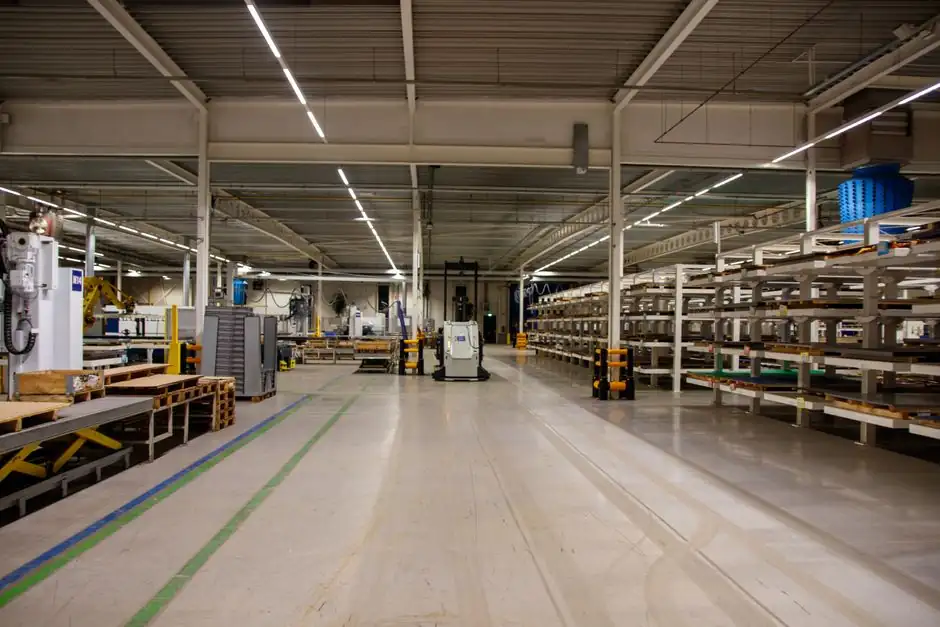
A horizontal machining center with a pallet changer can maintain 80–90% spindle utilization in suitable production work, versus 25–40% for a typical vertical machining center without automatic pallet changing [S4].
The decision rests on 3 variables: part geometry, chip-control requirements, and production strategy, not a universal winner. A vertical machining center normally costs $20,000–$100,000 used, while a horizontal machining center ranges from $60,000 to more than $300,000 [S4].
Chip evacuation starts with spindle orientation
A vertical machining center places the spindle perpendicular to the worktable, so the cutter enters the workpiece from above and chips tend to remain in pockets, bores, and on the part [S2][S3]. A vertical machining center uses a vertically oriented spindle, with the cutting tool approaching the workpiece from above, which makes setup straightforward and gives operators good visibility into the work area.
A horizontal machining center uses a side-cutting spindle, allowing gravity to pull chips away from the cutting zone. This arrangement is particularly effective in deeper pockets and heavier roughing operations, where chip evacuation can influence surface finish, recutting risk, and tool life [S1][S3].
Vertical machines can still machine deep cavities effectively when the machine includes suitable through-spindle coolant, an auger or conveyor, high-flow cutting tools, and an internal chip-management system. The weak specification is chip retention caused by the geometry, not an automatic HMC advantage. Horizontal machines can also require engineered chip management, and their advantage is greatest when the workpiece orientation, tool path, and coolant strategy cooperate [S1][S5].
Pallet changing determines unattended output
A vertical machining center can add a pallet changer, but a straightforward table-fed VMC generally leaves the spindle idle while the operator unloads, loads, and checks the next workpiece [S4]. The reported 25–40% spindle utilization applies to a typical VMC without a pallet changer, not every vertical configuration.
An HMC pallet changer indexes prepared fixtures while another pallet is being loaded or machined at the next station. The rotary B-axis can provide 4-sided access without manual repositioning, allowing multiple faces to be completed in one setup [S4]. Tombstone fixtures can also combine several parts around a horizontal spindle, reducing setup frequency and operator intervention [S1].
Palletization adds constraints. Fixturing cost was estimated at $5,000–$30,000 or more per HMC pallet, compared with lower-cost vises and clamps on a VMC [S4]. Workpiece consistency, pallet cleanliness, hydraulic or mechanical clamping force, fixture repeatability, and load balancing across multiple pallets can determine whether an automated HMC actually improves output.
Compare VMC and HMC against production criteria
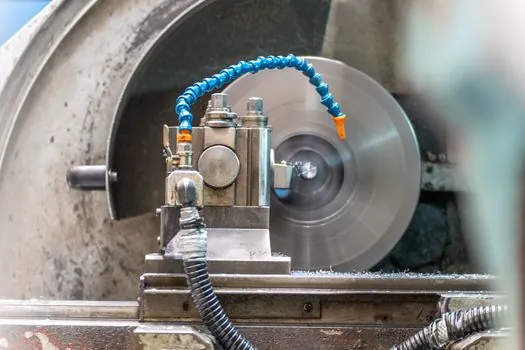
On acquisition cost and floor space, the VMC has the clear advantage: used VMCs were listed at $20,000–$100,000 with a typical footprint of about 8 by 7 ft, while used HMCs were listed at $60,000–$300,000 or more with a minimum footprint of roughly 12 by 12 ft [S4]. On chip control, multi-side access, and unattended operation, the palletized HMC normally wins because gravity-assisted chip fall, 4-sided B-axis access, and automatic work exchange are integrated into its design [S1][S3][S4].
The published 3–5x throughput advantage for HMCs should be treated as a production-use case rather than a universal specification [S4]. A complex, high-mix part that needs several VMC setups can gain from HMC multi-face machining, while a prismatic part needing one top-side operation may not justify the additional machine, tooling, and fixturing expense [S1][S3].
Select a VMC for mixed work and direct access
A vertical machining center is suited to prototypes, one-off components, fixtures, tooling, plates, brackets, housings, and general milling, drilling, tapping, contouring, and light pocketing [S1]. These applications benefit from simple vise-and-clamp workholding, direct view of the cut, and a shorter setup cycle [S3][S5].
The VMC is not a poor choice for production. It becomes a weak choice when the same part requires many manual orientations, when deep-pocket chips repeatedly interfere with the cut, or when labor waiting at the table prevents the spindle from working continuously.
A vertical machine is also the better starting point for a new shop, a toolroom, or an operation with frequent changes of part number. Its smaller footprint and lower acquisition cost reduce the commitment required before cycle-time data, tooling costs, and actual palletization benefits are known [S2][S3].
Select an HMC for repeatable multi-face production

An HMC is appropriate when a stable family of parts justifies repeatable fixtures, repeatable setups, and controlled production. The horizontal spindle supports gravity-assisted evacuation, while the pallet changer and B-axis reduce manual repositioning, setup frequency, and operator intervention [S1][S4][S6].
The application is strongest in deep pockets, heavy roughing, complex multi-face geometry, and repeat production where material-removal time dominates the cycle. Aerospace, automotive, and other production environments commonly use horizontal machining centers for these requirements, but the decisive evidence should come from cycle-time studies on representative parts [S2][S3].
The HMC is not for sporadic work with changing part numbers, low annual volume, or parts that can be completed efficiently in one vertical setup. In those cases, a VMC offers faster job changes, lower fixturing cost, and easier operator intervention. A heavy-duty HMC also demands greater operator skill because troubleshooting becomes less visible once the part is enclosed [S4].
Quantify the pallet changer before purchase
Build the business case from spindle seconds, not machine purchase price alone. Measure loading and unloading time, tool inspection time, queue delay, fixture preparation time, and the percentage of the cycle during which the spindle is cutting. A pallet changer cannot recover capacity if parts are not cleaned, measured, staged, or released before they reach the machine [S1][S4].
Request a cycle simulation using actual part family, raw material, cutting tools, and tolerances. Test whether the B-axis sequence adds useful tool life and whether the chute capacity matches the expected chip volume. Include the cost of dedicated fixtures, multiple pallets, presetting, maintenance, and spare-pallet duplication in the comparison with a VMC plus a separate automation option [S4].
For a lower-volume shop, start with a capable VMC and preserve the option of adding a pallet changer later. For a repeatable, multi-face production family, evaluate a palletized HMC against cycle-time and labor evidence, not only spindle orientation. The most reliable decision signal is sustained spindle utilization after realistic loading, unloading, inspection, and changeover delays [S4].