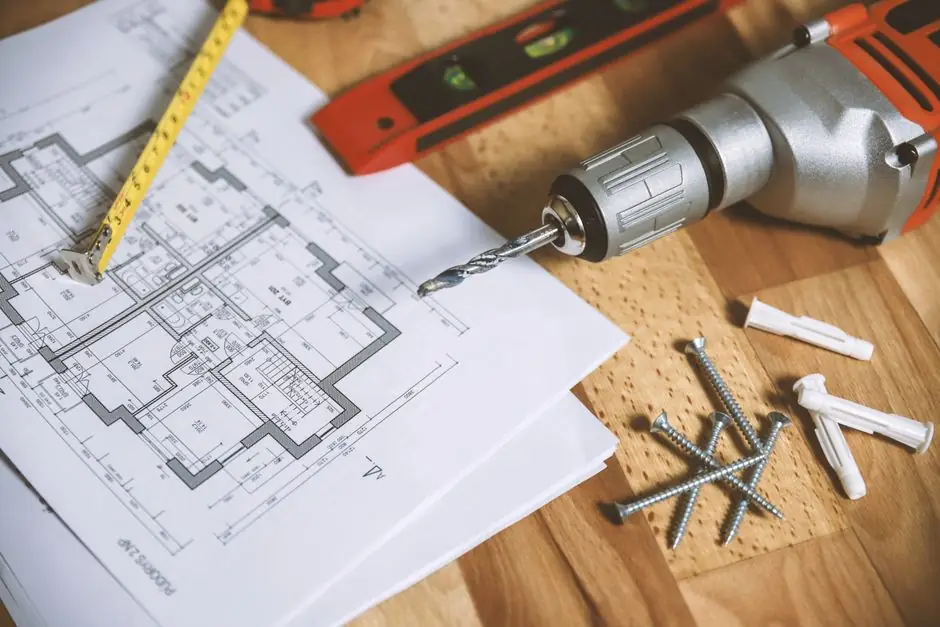
A percussion drill should produce the nominal hole diameter stated for the exact wall plug, with practical allowance for the specified clearance, rather than a general machined-hole tolerance.
M8, M10 and M12 threads do not determine the drill size: the same anchor thread can require different hole diameters, with examples ranging from 8 mm to 15 mm [S5].
Wall Plug Hole Size Is Set by the Fixing
The required drill diameter is a product-specific installation dimension. Published anchor examples show that an M8 fixing can need either an 8 mm or 10 mm hole, while M10 examples require 10 mm or 12 mm and M12 examples require 12 mm or 15 mm [S5].
That difference matters because clearance affects expansion of a mechanical anchor and the annular space available around a resin anchor. For post-installed anchors, use the manufacturer's stated diameter, drilling depth and cleaning procedure. For adhesive anchors, diameter, depth, rod, resin and approved drilling method belong to one tested system [S5].
A practical wall-plug procedure is to identify the exact plug or anchor reference, drill the stated diameter, remove debris, and test with a plug gauge or verified caliper before placing multiple fasteners. The thread designation alone is not a sufficient drilling specification [S5].
Machine-Drilling Tolerances Do Not Govern Masonry
The Machinist Drilling Mechanical Tolerance Capabilities Chart per. AND10387 states that drilled-hole locations and size variations depend on cumulative manufacturing variables, including tool sharpness and accuracy, tool and machine rigidity, spindle-bearing wear, machine quality, drill-fixture use, material thermal expansion, and material-density variations.
Those values describe controlled machining capability, not a permissible range for a percussion-drilled wall-plug hole. The reference explicitly attributes size variation to drill sharpness, machine and tool rigidity, spindle-bearing wear, fixtures, thermal expansion and material-density variation [S2]. Masonry adds aggregate, reinforcement, impact, hammer condition and operator technique to that variable set.
Using an AND10387 band as a wall-plug tolerance would therefore confuse process capability with installation requirements. The fixing manufacturer controls the required hole diameter and clearance; the installer controls whether the actual concrete, block or masonry hole conforms.
Twist-Drill Limits Show Why Process Matters
The Dormer Pramet chart lists H12 deviations of 0/-100, 0/-120, 0/-150, 0/-180, 0/-210, 0/-250, 0/-300, and 0/-350 µm for diameter ranges of 1 mm or less to over 120 mm [S4].
Even that controlled drilling result differs from a hammer-drilled masonry hole. Percussion drilling uses impact energy rather than a controlled cutting setup, so bit condition, hammer mode, runout, wall depth and reinforcement can alter the finished opening. The product-specific anchor diameter remains the controlling reference even when the drill bit itself is new and correctly sized.
For production fixing, a fixed-depth stop bit can improve repeatability, but it does not replace diameter verification. The bit cutting diameter, nominal anchor-hole diameter and stop depth remain separate characteristics, and the cutting-tip datum must be matched to the installation requirement [S5].
Compare the Decisions That Control Fit
The comparison is straightforward: the anchor specification controls required clearance, the drill type controls the process risk, the measuring method controls verification, and the substrate controls whether nominal-hole tolerances are meaningful. A value such as 8 mm is a diameter only when the selected M8 fixing specifies an 8 mm hole; it is not a universal M8 rule [S5].
This criterion-based comparison rejects a common shortcut: selecting the bit from the plug's M8, M10 or M12 thread marking. Two published M10 anchors use different drill diameters, and the same mismatch appears at M8 and M12 [S5].
Drill Size Alone Does Not Prove Installation Quality
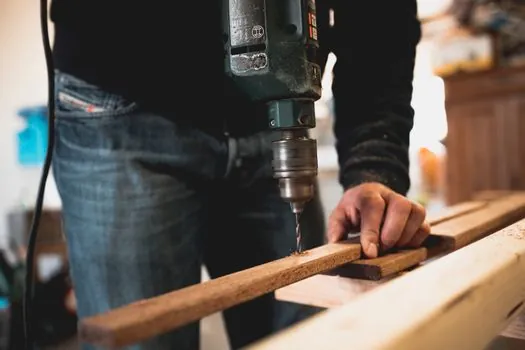
Published anchor guidance separates three dimensions that are often collapsed into one: the drill-bit diameter, the required hole diameter and the required drilling depth. Drilling depth and effective embedment are distinct, while hole cleaning is a separate operation required for mechanical-anchor preparation and adhesive bonding [S5].
The specified drill diameter must match the exact anchor model, and the anchor manufacturer’s instructions govern hole depth, cleaning, setting, and the permitted substrate [S5]. Selection of an impact drill still requires matching the bit retention system to the hammer and the bit geometry to the substrate.
Failure modes are identifiable: an undersized hole may prevent full insertion or distort expansion, an oversized hole can reduce bearing or bond performance, and contaminated walls can impair adhesive installation. These are installation deviations, not acceptable consequences of ordinary hole-diameter variation.
Measure the Installed Hole and Keep the Record
Inspection must confirm the finished hole rather than only the bit label. The dimensional-measurement hierarchy for precision bores includes plug gauges, inside calipers, telescoping bore gauges, tubular inside micrometers, dial bore gauges and three-point micrometers, although masonry-hole measurement normally calls for a gauge matched to the accessible opening [S3].
For a repeatable site process, record the anchor reference, nominal diameter, measured diameter, substrate, bit diameter and tool setting. Repeat the check when the bit changes or the substrate changes. This creates a traceable comparison between the specified diameter and the installed hole without applying a machine-shop tolerance that was never established for percussion drilling.
Concrete may contain variable aggregate, while reinforced concrete introduces the risk of striking rebar. A fixed-depth stop bit can control depth on repeated work, but hole diameter, drilling method and cleaning still need verification under the selected anchor system [S5].
Specify the Plug, Then Control the Hole
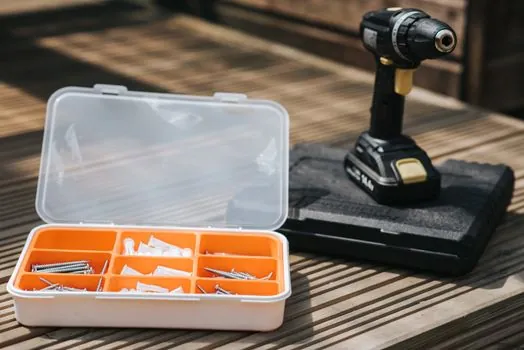
The defensible specification is not a universal tolerance for percussion-drilled holes. State the exact wall plug or anchor, its required drill diameter, hole depth, substrate and installation method, then verify the finished opening before installation. [S5]
Track three signals on any recurring installation: the measured hole diameter against the fixing requirement, the number of bits consumed per 100 holes, and the rejection rate for insertion, expansion or pull-out tests. These expose an undersized bit, worn bit, unsuitable hammer setting or incorrect anchor selection without pretending that a general machining tolerance governs masonry.