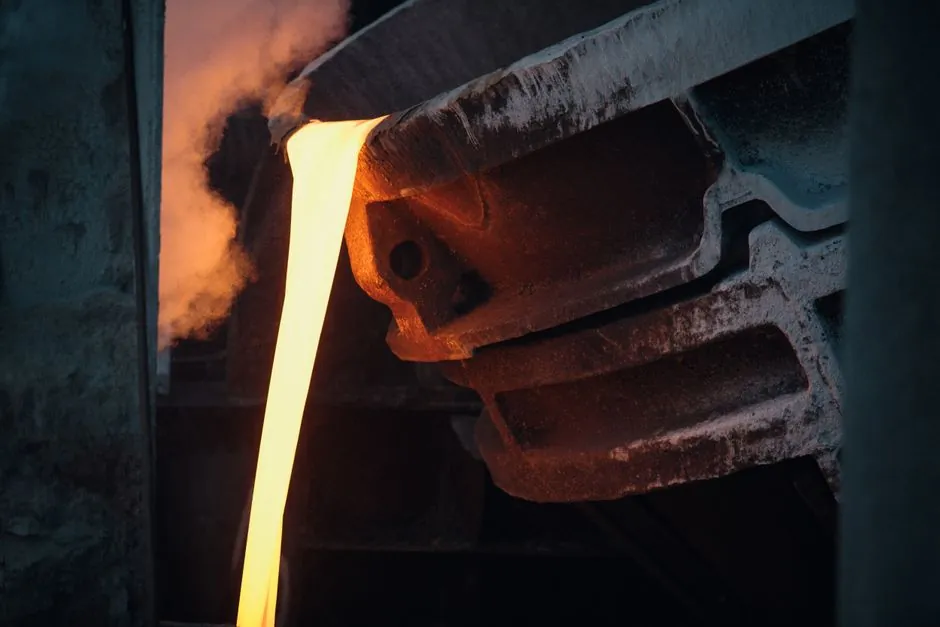
Hot chamber die casting machines generally use clamping forces ranging from 400 to 4,000 tons.
This process keeps zinc molten inside the machine, supports short cycles measured in seconds and is generally intended for smaller components made from low-melting-point alloys [S1][S3][S4].
Hot Chamber Tonnage Range for Zinc Production
Hot chamber die casting machines generally use clamping forces ranging from 400 to 4,000 tons. This spread means that “tonnage range” must be treated as a selection range rather than a single machine class.
The hot chamber machine classification also fits the alloy choice because zinc has a relatively low melting point and remains molten within the integrated melting and injection arrangement. Hot chamber machines use a hydraulic or pneumatic piston to drive molten metal from the machine’s gooseneck into the die [S1].
How to Size a Zinc Hot Chamber Machine
Clamping force should be calculated from the projected part area and the selected casting pressure rather than chosen from a generic tonnage table. The source material confirms that hot chamber and cold chamber zinc machines are categorized by clamp tonnage, but it does not provide a universal pressure-to-area conversion, so any supplier quotation must state the calculation inputs rather than rely on the machine nameplate alone [S6].
Three quantities need confirmation before assigning a machine: the projected area in square centimetres, the net component mass in grams, and the annual or hourly demand. A thin, small component may fit a lower-tonnage machine even when annual demand is high, while a larger projected area can push the requirement into the several-hundred-ton class despite lower annual volume [S1][S2].
Zinc alloy die castings can achieve a minimum wall thickness of 0.3 mm. These figures describe attainable casting features, not a guarantee that every 0.2–0.3 mm wall will fill reliably; geometry, alloy, pressure balance and vent design still govern production acceptance.
Small, Medium and Large Zinc Parts Compared
Machine size should be compared against component complexity, required output and process economics. The research does not provide a universal part-weight-to-clamp-force table, so the following classes are procurement starting points rather than guaranteed limits: [S1]
For small zinc hardware, the lower end of the range can be more defensible than purchasing a large machine. A small hot chamber machine has been reported to complete 3,000–7,000 shots in an average eight-hour period, while multicavity tooling can improve output further [S2]. The comparison must include tooling cost: hot chamber dies are uneconomic for small batches because mold-making cost is high while the machine’s production rate is high [S2].
Hot Chamber Versus Cold Chamber for Zinc
Hot chamber machines hold and melt the alloy within the machine, while cold chamber machines receive molten metal from an external furnace. This architecture gives hot chamber machines the advantage for zinc because zinc and magnesium have low melting points and the molten supply is directly connected to the machine [S1][S3].
The main comparison is not simply clamp tonnage. Hot chamber machines melt the metal inside the machine and are not typically used with metals of high melting temperature, whereas cold chamber machines receive molten metal from an external source.
A detailed comparison of hot chamber versus cold chamber die casting tonnage can then be used to verify whether the required force belongs in the hot chamber envelope before tooling is ordered. The comparison also needs production volume, part mass and shot-cycle requirements because a tonnage-only decision can produce an oversized machine and a poor tooling economics case [S1][S2].
Zinc Cycle Time, Tool Life and Throughput

Hot chamber machines can achieve higher production rates because the metal does not have to be delivered from outside the machine. A separate production figure puts a small hot chamber machine at 3,000–7,000 shots per average eight-hour period, equivalent to 375–875 shots per hour over that stated period [S2]. These figures describe different machine and part conditions, so they should not be transferred directly into an annual output guarantee.
Zinc tooling can have a long service life because its lower melting temperature and fluid behavior are less abrasive to steel than the conditions associated with some other casting metals. One zinc producer reports individual tools lasting well over 1 million shots and estimates steel zinc tools around 5–10 times longer than tools for other casting metals, while also warning that geometry strongly affects wear [S5].
For procurement, the tool-life figure should be treated as a supplier-observed reference, not a guaranteed life for every die. Thin walls of 0.2–0.3 mm, complex corners, gating design and alloy selection still influence wear, filling and acceptance [S2][S5]. A realistic quotation should separate the machine price from the die cost, estimated shots per hour, expected tool-life basis and any maintenance for the molten-metal-contacting system [S1][S2].
Limits and Failure Modes to Resolve Before Purchase
Hot chamber systems expose the injection mechanism to molten metal, creating a corrosion concern that requires attention to material compatibility and preventive maintenance [S1]. The process also has inherent limits: rapid filling can create porosity, castings can be unsuitable for heat treatment, and deep or complex recesses are difficult to form [S2].
The process is not a good fit for small-batch work because the die cost is high and the machine is designed for high output [S2]. It is also a poor fit for high-melting-point metals, where contact with hot molten metal shortens die life and damages machine components [S1][S2].
Part design should account for the process rather than treating the machine tonnage as the only constraint. Zinc can support thin walls as thin as 0.2–0.3 mm, and the material’s fluidity helps fill complex features that may otherwise require machining [S2][S5]. Before releasing an order, ask the builder to validate projected area, shot weight, fill time, venting, gating, minimum continuous shot weight, alloy specification, corrosion protection and die-life basis for the proposed geometry [S1][S4].
Procurement Specification for Zinc Machines
A zinc hot chamber machine specification should state clamping force, usable platen area, maximum die dimensions, opening stroke, injection stroke, shot weight range, nozzle or gooseneck configuration, melting capacity, control system and cycle-time basis. These fields separate a 250-ton unit from a 500-ton unit even when both are described simply as hot chamber machines [S1].
Request a part-specific cycle estimate based on the proposed casting rather than accepting a generic “seconds per shot” figure. The published range of a few seconds applies to small parts, while 3,000–7,000 shots per average eight hours provides a separate small-machine productivity reference [S1][S2]. Also request tooling material, coating or maintenance details for the gooseneck and other molten-metal-contacting components, because the injection mechanism is continuously exposed to molten zinc [S1].
The zinc die casting machine class should be evaluated with the alloy supplier and die builder in the loop. The strongest selection package combines a calculated projected-area load, a representative 3D part model, annual demand, target wall thickness of 0.2–0.3 mm where feasible, proposed alloy, shot weight, cycle trial data and a documented die-life basis [S2][S5].
Two signals provide a trackable procurement path: the builder’s calculated clamp-force result and its measured cycle time on a representative zinc part. If neither is documented before order, the tonnage label alone is not sufficient equipment selection.