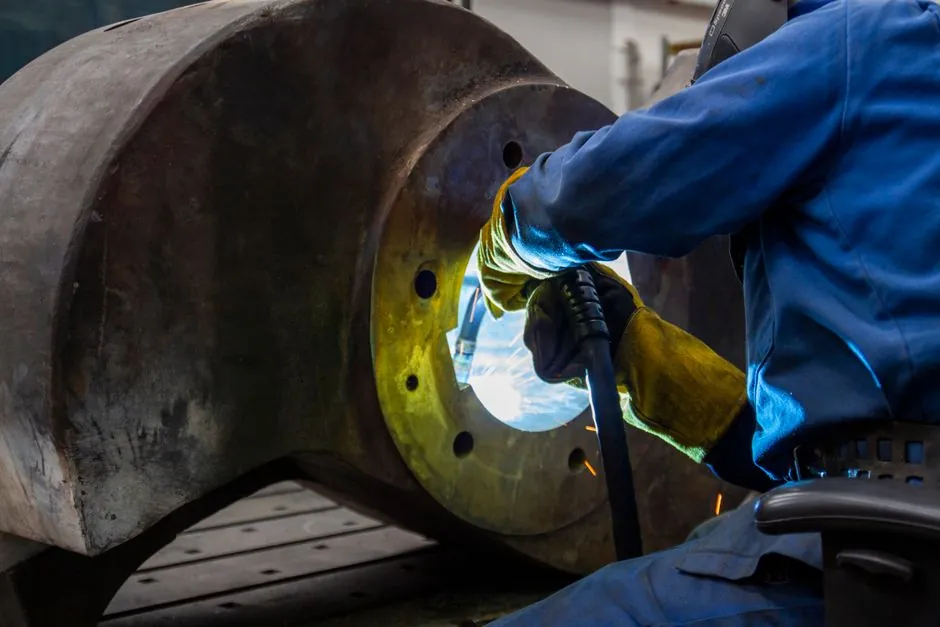
Hot-chamber die casting machines generally require less clamping tonnage than cold-chamber machines because they are built for smaller, high-volume parts made with lower-melting-point alloys, while cold-chamber machines cover larger components and higher-temperature metals [S1][S4].
The comparison is not a fixed tonnage rule: hot-chamber machines can include aluminum capability and up to 6 slides, while cold-chamber systems are selected around aluminum or magnesium, component mass, geometry and injection requirements [S1][S4].
What Die Casting Tonnage Means
Clamping tonnage represents the machine force used to hold the die closed against injection pressure, and casting machines are commonly characterized by this force [S9]. It should be compared with the projected casting area and the force generated by the selected alloy, shot weight and injection system, not simply by chamber type.
Hot chamber keeps molten metal inside the machine, while cold chamber receives metal from a separate furnace and injects it through a shot sleeve [S1][S3]. The hot chamber machine therefore exposes its injection mechanism to a different thermal and wear environment from the cold chamber machine, even when the published clamping tonnage overlaps.
How the Tonnage Comparison Changes by Alloy
Hot chamber is principally associated with zinc, magnesium and tin alloys, while cold chamber is used for higher-melting-point alloys such as aluminum [S2][S4]. Dynacast also lists aluminum, magnesium and zinc as compatible with its hot-chamber offering and states that the process suits smaller, intricate parts [S1].
That creates an important qualification: “hot chamber means low tonnage” is not an engineering rule. One supplier supports hot-chamber aluminum, so the alloy decision and the machine architecture must be established before assigning a force rating [S1]. For a conventional hot-chamber zinc or magnesium application, the absence of a ladling step often aligns with smaller tooling and lower force than the large aluminum work normally assigned to cold chamber [S2][S4].
Hot Chamber and Cold Chamber Compared

Hot chamber combines the furnace and injection system in one machine, with the injection system immersed in molten metal and metal drawn into the chamber through a gooseneck [S4]. Cold chamber keeps the injection system separate, requires molten metal to be ladled into the chamber, and then uses a piston to inject at high pressure [S4].
Where Hot Chamber Has the Tonnage Advantage
Hot chamber gains an advantage when the component is small, the die area is modest, the shot weight is limited and the production target favors short cycles. Dynacast lists Multi-Slide Die Casting and Hot Chamber Die Casting among its die-casting technologies, and lists aluminum among the metals it supports [S1].
The process also integrates the furnace and injection system, reducing repeated molten-metal transfer [S2][S4]. For a small zinc or magnesium component, those characteristics can support a smaller force package than a cold-chamber machine assigned to a larger aluminum casting [S2][S4]. This is a tendency, not a guaranteed tonnage band.
Hot chamber is a poor fit when the project requires a very large die, a large structural casting, or a higher-melting-point alloy only approved for the selected cold-chamber process. Those conditions increase the die size, shot size and structural loads that the machine must contain [S4].
Where Cold Chamber Raises the Capacity Requirement
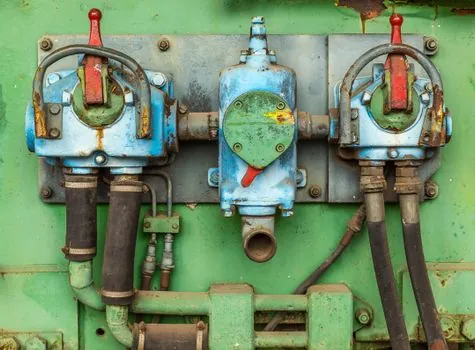
Cold chamber becomes necessary when metal must be melted separately, ladled into the shot sleeve and injected under high pressure, a configuration used for aluminum and magnesium and for larger or more complex parts [S3][S4]. Larger projected area and greater injection loading translate into a higher demand for machine clamping force.
The cold chamber die casting machine also requires the shot sleeve to receive ladled metal, making its tonnage decision inseparable from sleeve capacity, shot weight and fill control. A machine should not be selected from nominal tonnage alone; the proposed alloy, casting dimensions and verified tooling load must be reconciled with the machine specification.
Cold chamber can also provide denser castings than hot chamber, while its separate melting and ladling operation produces fewer gases and fumes during injection than the hot-chamber arrangement [S7][S8]. These are process-quality and environmental trade-offs, not additional tonnage ratings.
Safety, Cycle Time and Operating Constraints
Hot-chamber die casting combines the die-casting machine and furnace into one unit, providing a ready supply of molten metal and significantly increasing process efficiency [S2].
Hot chamber removes the repeated ladling transfer because the integrated pot supplies molten metal directly, while cold chamber requires that transfer during every cycle [S2][S4]. For output planning, the dry cycle time method can separate nominal machine speed from the production consequences of metal handling, but it cannot replace a tonnage calculation.
Neither process provides an automatic rule that one chamber type always needs a specific number of tons. The defensible comparison is: hot chamber tends toward smaller parts and lower force; cold chamber tends toward larger parts, higher-temperature metals and greater capacity; the final tonnage must be matched to the actual casting and injection load [S1][S4].
For procurement, request the projected part area, alloy, shot weight, cycle target, slide count and safety requirements, then compare each proposal against those inputs. For large structural castings, the dedicated selection guide for large structural parts provides the broader framework for moving from chamber type to a defensible machine capacity.