Dry-mix mortar pricing in 2026 is driven by cement content, polymer grade, packaging volume, freight, and factory controls, with North American volume forecast at 79.66 million tons [S1].
Ready-mix mortar is a factory-produced, pre-blended formulation that requires only water addition at the construction site and incorporates precisely proportioned ingredients, including specialized additives, polymers, and performance-enhancing agents [S3].
What sets a dry-mortar price
Portland cement is a major cost driver because its share rises with the binder demand of a formulation, while aggregate usually supplies the bulk mass but carries its own freight and grading cost [S1][S3]. Factory production of ready-mix mortar involves controlled conditions and precise ingredient proportioning [S3].
A useful baseline for field mortar is one part Portland cement blended with three parts sand before water is added [S6]. That ratio is a mixing guide, not a universal commercial formulation, because factory products can add mineral fillers, admixtures, or polymers and then tailor the ratio to the application [S3][S4].
Price changes must therefore be read per tonne or per bag, not from a generic product label. The North American market was measured at 76.27 million tons in 2025 and forecast at 79.66 million tons in 2026, a 4.45% forecast growth rate through 2031 [S1]. A larger demand base can improve utilization, but it does not guarantee a lower unit price when cement and polymer inputs rise [S1][S2].
Cement, polymer, and formulation economics
The distinction matters because cement is a high-volume formulation component, while a specialty polymer can be a smaller mass fraction with a disproportionately high cost per kilogram.
Redispersible polymer powder redisperses when water is added, then forms a continuous film during curing that improves adhesion, workability, and water resistance [S4]. This performance creates value in waterproofing and bonded systems, but it also makes the finished mortar sensitive to polymer type and dosage rather than to cement price alone [S4][S9].
The Asia-Pacific dry mix mortar market is projected to expand from USD 16,489 million in 2025 to approximately USD 24,960 million by 2032, representing a forecast CAGR of 6.10% [S5].
Compare the main sourcing options

Conventional cement-and-sand mortar has the lowest apparent ingredient cost and maximum on-site proportion flexibility, but it carries higher labor, measurement, storage, waste, and batch-consistency exposure [S3]. Factory dry mortar adds controlled dosing and packaging, yet it reduces on-site mixing and can carry additives that would be difficult to reproduce consistently by hand [S3].
For cost control, the comparison is straightforward. Site-batched material minimizes controlled-manufacturing cost but raises labor and variability; factory commodity mortar reduces mixing effort but adds processing; polymer-modified factory mortar adds resin cost but supports waterproofing and adhesion; specialty repair mortar adds formulation and qualification cost but targets rapid setting, low shrinkage, and sulfate resistance [S1][S3][S4].
Bulk delivery can also remove bag-handling and packaging intensity, while bulk order scale generally supports better pricing [S9]. However, a bulk cement-and-sand system is not interchangeable with a dry polymer-modified product because the latter delivers factory dosed additives and consistent performance that site mixing does not automatically provide [S3][S4].
Which method fits each application
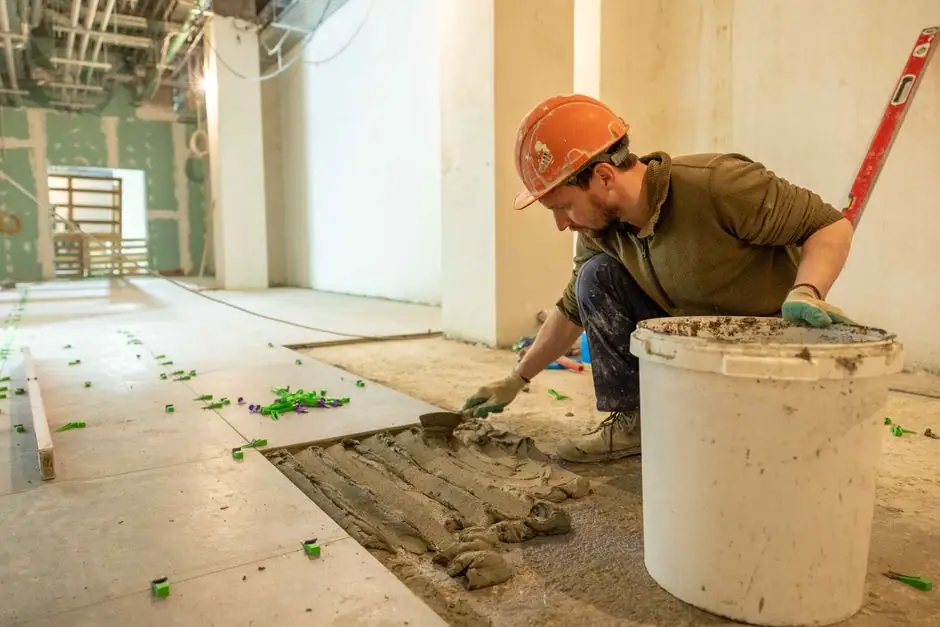
Conventional mortar remains suitable for small renovation batches, simple masonry, and projects able to control cement-to-sand proportion and mixing labor [S3][S6]. Factory dry mortar fits work where consistent quality, simplified application, reduced waste, and schedule certainty justify controlled production [S3][S4].
Polymer-modified dry mortar is the better fit where waterproofing, adhesion, and fresh-mix workability are functional requirements rather than optional finishes [S4].
Factory production is not the right choice solely to minimize the invoice when the application is highly variable, low volume, or easily batched on site. The economic case improves when measured consistency, reduced labor, lower waste, or a verified performance envelope offsets the factory premium [S3].
Cost drivers, installation savings, and lifecycle value

Purchase price is only one part of the delivered cost. Cement and polymer determine the material core, formulation complexity determines the additive and processing cost, volume determines bulk purchasing efficiency, and lead time determines inventory and working-capital exposure [S1][S9]. Storage and transport also matter because dry mortar still carries the bulk of its aggregate mass even when only a small polymer fraction raises its unit cost.
Installation savings can offset a higher dry-mortar price. Factory dosing removes on-site weighing and mixing, while preblended products simplify application and reduce material waste [S3][S4]. If site labor, rejected batches, rework, and inconsistent performance are included, the total-cost comparison can differ from the bag-price comparison.
The regional data reinforce the need to distinguish volume from value. Asia-Pacific consumption reached 139.78 million tons in 2025 and is projected to reach about 201.06 million tons by 2032 [S5]. The Asia-Pacific market was valued at USD 16,489 million in 2025 and projected at approximately USD 24,960 million by 2032 [S5]. These figures describe market value, not a quoted dry-mortar selling price, so they should guide procurement planning rather than substitute for a supplier quotation.
Procurement controls that reduce price exposure
The first control is to separate cement inflation from formula inflation. A quotation should identify binder type, polymer type, dosage, aggregate grading, packaging, delivery mode, and order volume, because a broad “dry mortar” price cannot distinguish a commodity plaster grade from a waterproofing system [S1][S9].
The second control is to compare formulations by delivered performance and installed cost. Bulk orders can improve commercial terms, but reducing binder or polymer dosage must be validated against adhesion, water resistance, setting behavior, and durability rather than accepted on material cost alone [S4][S8][S9]. PCE products are available as liquid admixtures for concrete and as powder additives for dry mortar, so formulation teams can compare dosage and logistics rather than assuming one additive format fits every product [S8].
The third control is to model the base case alongside a high-input case. Cement price movement, polymer type, bag or bulk delivery, plant utilization, freight distance, and required testing should each have a defined adjustment rule. This creates a traceable price forecast without treating volatile input movements as permanent and without confusing forecast market growth with guaranteed producer margin [S1][S2][S5].
For related purchasing logic, How Cement and Aggregate Costs Drive 2026 Ready-Mix Prices provides a useful distinction between factory mortar and wet ready-mix production economics. The materials comparison also clarifies why cement binder pricing cannot be evaluated separately from dry mortar formulation design.
Track three procurement signals through the next quotation cycle: the delivered cement basis, the named polymer system and dosage, and the delivered unit price at the contracted volume. Each resolves one of the main unknowns behind a 2026 dry-mortar price, while a trial mix can confirm that the lower-cost formulation retains the required performance [S1][S4][S9].