
The BLS concrete ingredients and related products index rose from a 2025 annual average of 457.015 to a preliminary September 2026 value of 479.408 [S1].
Cement represents 40–60% of ready-mix material cost and aggregates occupy 60–75% of concrete volume, making their combined cost the largest material variable in the $135–$175 per cubic yard U.S. price range [S2][S8].
Material cost drivers behind delivered concrete
Cement accounts for 40–60% of ready-mix material costs, while crushed stone, sand and gravel account for 60–75% of concrete volume [S2]. These proportions explain why an aggregate quarry constraint or cement market move can affect the batch price before transport and labor are added.
The BLS concrete ingredients and related products index reached a preliminary September 2026 value of 479.408, compared with a 2025 annual average of 457.015 [S1].
Premium aggregates were priced 10–15% above standard qualifying material, while rapid-hardening cement carried a 15–20% premium and sulphate-resisting cement a 10–15% premium in the cited UK market data [S2]. These are specification premiums, not automatic price increases for every mix.
Comparing cement and aggregate price effects
Cement and aggregates affect price through different mechanisms: cement has the larger stated share of material cost, but aggregates have the greater volume share and showed the stronger 2026 index movement in the cited U.S. data [S1][S2].
For standard work, local aggregate availability and delivery distance usually offer more practical savings than switching cement types. For aggressive sulfate exposure or a compressed schedule, the 10–20% special-cement premiums may be lower than the cost of rework or a missed placement window [S2].
From material price to quoted yard price

A national average of $135–$175 per cubic yard covers material and delivery, but the actual quote still depends on supplier distance, order quantity and concrete type [S8]. The cited benchmark also places delivered concrete at $120–$150 per cubic yard within 20 miles, illustrating the variation between published national ranges [S5].
Delivery distance is a separate cost driver from cement and aggregate procurement. The cited UK data shows local deliveries of 0–10 miles at £80–£120, with an additional £10–£20 for every additional 5 miles [S2]. Concrete begins setting within 90–120 minutes after mixing, so excessive haul time can also reduce usable workability [S2].
Order size changes the commercial structure. A load below 10 cubic yards has been cited with a $43 per cubic yard short-load charge, while commercial delivery within 20 miles was benchmarked at $120–$150 per cubic yard [S5]. Full loads spread plant, dispatch and truck costs across more cubic yards.
Mix design and additivity premiums
Concrete strength is specified in megapascals, and higher grades generally require more binder and tighter proportioning. The cited UK price examples range from £100–£120 per cubic metre for C20/25 to £130–£160 for C40/50 and above, with each grade increment adding about 5–10% [S2].
Admixtures create smaller but identifiable price additions. Published UK examples list plasticisers and superplasticisers at £5–£15 per cubic metre, accelerators at £8–£20, retarders at £6–£15, waterproofers at £10–£25, and air-entraining agents at £5–£12 [S2]. Their technical selection should follow the exposure and placement conditions, as covered in the reference on concrete admixture.
Fibre reinforcement was listed at £8–£30 per cubic metre in the same market data [S2]. For projects comparing material substitutions, the concrete fiber reference provides a component-level starting point, while special cement covers the performance-driven binder choices.
Which buyers face which price exposure
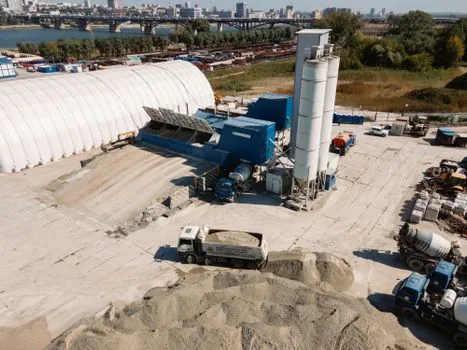
Large repeat buyers are best positioned to negotiate direct cement and aggregate supply, schedule full truckloads and secure local batching capacity.
Small residential buyers face the opposite exposure. Short-load fees, minimum-order rules and narrow delivery windows can dominate a 1.85 cubic yard slab purchase, which was estimated at $302–$357 including materials and the short-load charge [S5]. A ready-mix concrete comparison should therefore separate material price from delivered quantity and access conditions.
Ready-mix buyers also need to distinguish quoted product from installed concrete. One published estimate placed professional plain concrete placement and finishing at an additional $5.50–$9.00 per square foot, before decorative work or permits [S5]. That labor component does not move with cement or aggregate, so its inclusion prevents misleading total-cost comparisons.
Aggregate availability and local sourcing
Aggregate cost is governed by more than the commodity index. Regional availability, delivery distance, grading, moisture correction, required fragmentation and the cost of moving crushed stone, sand and gravel can produce a local price that differs materially from a national benchmark [S5][S2].
Quality-assured, properly graded aggregate is necessary for durable concrete, but premium material should be specified against an exposure or performance requirement rather than accepted as a blanket upgrade [S2]. The relevant material choices include ordinary cement, blended binders, conventional sand and gravel, and crushed aggregate.
The market structure shows why local supply has value. Stationary batching plants within 30-kilometer urban delivery rings accounted for an estimated 68.0% in 2026, and producers were pursuing quarry and plant ownership to control local haul radii [S4]. Captive supply does not guarantee a lower ticket price, but it reduces exposure to third-party aggregate availability and long-distance freight.
Total cost, contract risk and sourcing decisions

Cement and aggregate set the material floor, but the controllable commercial levers are volume, haul radius, mix complexity and dispatch efficiency. The cited 2026 ready-mix price range of $135–$175 per cubic yard is therefore a screening range, not a bid, and it should be tested against strength grade, order size, delivery distance and required admixtures [S8].
Delivery and placement can cost more than the apparent material movement. The U.S. ready-mixed concrete producer price index rose from a 2025 annual average of 386.967 to 395.319 in September 2026, while concrete ingredients and related products rose from 457.015 to 479.408 over the same comparison [S1]. The divergence is consistent with plant labor, delivery and dispatch costs affecting the delivered product beyond cement and aggregate alone [S1][S9].
The most defensible sourcing strategy is to obtain at least three project-specific quotes using the same strength class, volume, delivery radius, pumping requirement and waiting allowance. Track the BLS concrete ingredients, cement, aggregate and ready-mix indices monthly, and document each quote in dollars per cubic yard [S1].