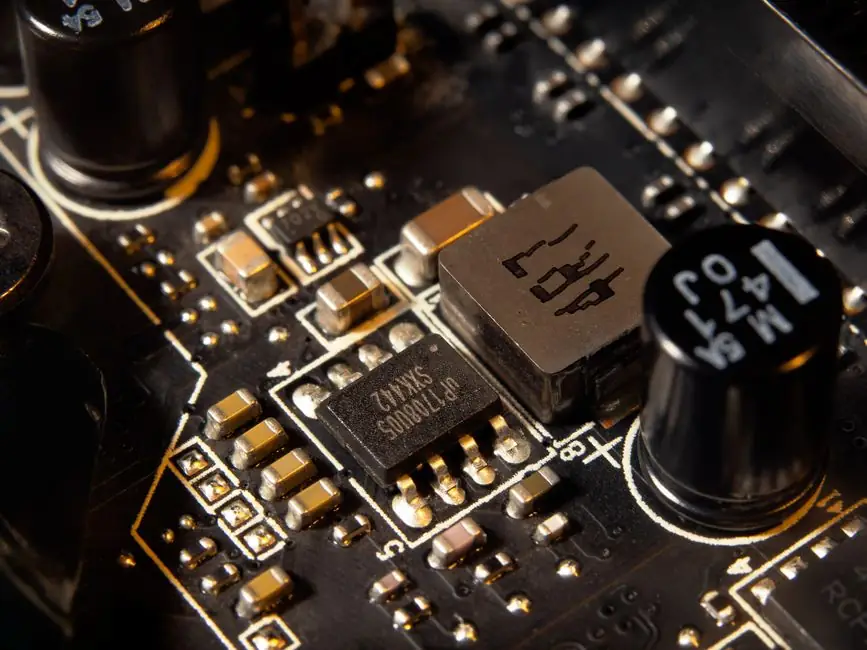
Memory makers are reallocating constrained wafer capacity and packaging capacity toward HBM, tightening supply for conventional DRAM and NAND flash memory.
The squeeze affects DRAM sold for PCs, consumer devices, industrial equipment and servers outside the hyperscaler supply chain, with DRAM prices reported 80% to 90% higher in one 2026 quarter [S1].
Why HBM absorbs disproportionate DRAM capacity
HBM is stacked DRAM, not a separate memory chemistry. A stack may contain as many as 12 thinned dies, vertical through-silicon vias, and a base die, with the completed package installed close to a GPU or AI accelerator [S1].
That construction adds wafer-thinning, stacking, test and packaging operations. These requirements mean that a small shift in production mix can remove a much larger quantity of conventional DRAM capacity.
HBM economics reinforce that allocation. Its general cost is estimated at three times that of other memory and it can represent 50% or more of a packaged GPU's cost [S1]. Capacity consequently shifts toward products with higher revenue and margin per unit of constrained production, rather than remaining allocated to lower-margin DDR4, DDR5 or other conventional products [S2].
Where conventional DRAM supply tightens
The supply loss reaches conventional DRAM through at least three routes: fewer wafer starts, lower output per bit because of more demanding HBM processing, and competition for assembly and test resources [S3][S5].
Distributors report double- and triple-ordering, while inventory weeks have plunged.
The consequence is not a uniform shortage across every density and package. Buyers report particular pressure on ordinary DDR5 and LPDDR supply, alongside some NAND-controller shortages, as packaging and production priorities move toward AI-linked memory [S3]. Procurement teams should therefore evaluate device-level fit, package allocation and contracted position rather than treating “DRAM” as one interchangeable commodity.
Comparison of HBM and conventional DRAM allocation
HBM and conventional DRAM compete for the same constrained manufacturing ecosystem, but they differ materially in allocation efficiency, customer priority and supply response time. [S5]
For buyers, the comparison is decisive: HBM earns more value from constrained capacity, but each stack consumes more production resources per bit. That combination pushes conventional DRAM pricing upward without requiring an equivalent fall in total DRAM demand.
Who is exposed and who has purchasing leverage
Large AI infrastructure buyers are positioned first in the allocation queue because their HBM demand is large, contracted and linked to accelerator deployment. Smaller electronics manufacturers face extended lead times, weaker volume leverage and reduced ability to match hyperscaler commercial terms [S5].
For PC, smartphone, server and industrial-system manufacturers, the issue is supply continuity for standard DRAM modules and embedded memory. For AI-accelerator vendors, the issue extends beyond conventional DRAM because qualification delays in advanced packaging and HBM integration can constrain complete accelerator output [S1][S6].
Conventional buyers gain little leverage merely by holding a long-standing supplier relationship. The market has moved from a conventional cycle in which rising prices encouraged higher fab utilization toward a structural allocation of limited cleanroom and capital expenditure toward higher-margin AI products [S5]. Procurement teams should evaluate allocation priority, lead-time exposure, package fit and forecast accuracy rather than relying on historic purchasing behavior.
Price transmission and downstream failure modes

DRAM contract and spot prices transmit the squeeze into servers, PCs, consumer electronics and embedded systems. According to Counterpoint Research, DRAM prices have risen 80% to 90% so far this quarter. The report title cites forecasted average selling-price increases of 116% for Samsung and 78% for SK hynix.
Higher input costs create several operating risks. Buyers can face abrupt bill-of-material increases, extended lead times, forced redesigns around smaller capacities, and difficulty maintaining production schedules when a module is allocated to higher-margin applications [S5]. Distributors have also reported double-ordering and triple-ordering, which can amplify the apparent shortage by drawing inventory forward [S3].
Demand substitution has limits. A server can use less DDR5 than planned, but reducing memory content can impair performance, while moving a platform from HBM to conventional memory does not remove the need for advanced packaging and qualified accelerators. This makes the capacity effect stronger than a simple change in end-product bill of materials.
Why supply cannot respond at normal cycle speed
It may take years for new capacity and new technology to bring supply back into balance. Capacity additions therefore arrive after an AI infrastructure demand surge, reducing the chance that new supply immediately restores conventional DRAM availability.
Process migration adds another constraint. The DRAM industry historically expanded bit output through geometric shrinks in existing facilities, but forum analysis argues that meaningful shrink below 10 nm is no longer readily available, reducing that low-capital bit-growth route [S4]. Yield losses, node transitions, equipment limits and advanced-packaging bottlenecks can therefore reduce usable output before nominal capacity reaches full operation.
The supply outlook remains unresolved within the available material. A Deutsche Bank analysis cited in May 2026 projected a DRAM supply gap through 2030, or longer, because data-center demand growth was outpacing constrained capacity expansion [S4]. That projection is a forecast rather than a guaranteed market outcome, so buyers should track actual allocation, qualification and lead-time data instead of treating a target balance date as certain.
Practical response for memory buyers

Procurement action should focus on securing device-specific allocation before accepting broad volume commitments. DDR5, LPDDR, DDR4 and embedded DRAM can have different package constraints and customer priorities, while HBM production can also compete for assembly, test and substrate resources [S2][S3].
Three measurable signals deserve attention: supplier inventory measured in weeks, contract-price changes from one quarter to the next, and supplier lead times moving from weeks toward months [S3][S5]. A sustained rise in all three would indicate that the squeeze is spreading beyond selected HBM packages into conventional channels.
Allocation negotiations also matter when several uncommitted supply options remain. How to negotiate allocation priority with constrained supply provides a framework for comparing supplier commitments, escalation paths and volume flexibility.
The near-term engineering reality is that HBM demand does not create conventional DRAM demand by itself. It changes where manufacturers place constrained wafer, packaging and test capacity. The authors of the cited forum discussion expect that the DRAM and HBM supply-demand balance may not emerge before 2029.