
Magnet buyers qualify a new rare earth separation source by proving its oxide purity, recovery yield, mass balance, waste performance, production capacity, and ability to deliver qualified material to downstream metal and magnet makers.
The process covers mining, beneficiation, cracking and leaching, impurity removal, separation into individual oxides, metallisation, alloy preparation, powder production, magnet forming, sintering, machining, coating, quality assurance, and component integration [S4].
Separation is the gate between ore and qualified magnet supply
Rare earth separation removes extractable rare earth elements from other elements and compounds in mineral rock, converting a mixed feedstock into separated oxides suitable for further processing [S1]. Mining capacity alone does not create a diversified magnet supply chain because separation requires its own technology, capital, operating evidence, waste management, and commercial contracts [S4].
The chain includes resource development, mining, beneficiation, cracking and leaching, impurity removal, separation into individual oxides, conversion to metals, alloy preparation, powder production, magnet forming, sintering, machining, coating, quality assurance, and component integration [S4]. A buyer should treat the separation plant as a product-specific supplier, not as a generic mining asset, because each stage has distinct customers, technical evidence, capital intensity, and financing capacity [S4].
Concentration makes this qualification economically significant. China represented 60% of mined magnet rare earth output, 91% of refined output, and 94% of sintered permanent magnet production in 2024 [S4]. A non-dominant source therefore has to compete not only on headline unit cost but also on continuity, traceability, usable recovery, and demonstrated downstream acceptance.
The technical data package must show product quality and recovery
Qualification should begin with a traceable mass balance from received ore or concentrate through leach solution, intermediate fractions, separated oxide, tails, residues, and final waste streams [S4]. The buyer should record feed grade, individual rare earth oxide purity, recovery by element, yield to saleable product, contaminant levels, mass loss, and the destination of unrecovered material.
Element-level recovery matters because the commercially important magnet inputs are not interchangeable with every rare earth contained in the feed. The principal magnet elements include neodymium, praseodymium, dysprosium, and terbium, while samarium and cobalt are associated with samarium-cobalt magnets [S4][S10]. A source producing large quantities of low-value rare earths while losing a high-value magnet element may not create the expected supply benefit.
The acceptance package should also identify the process route, operating history, batch size, product packaging, storage conditions, and change-control process. Every stage should have its own product specification, mass balance, yield, customer specification, working-capital profile, and downside liquidity [S4]. Without these records, a buyer cannot distinguish a demonstrated process from a plan to produce a specification.
Comparison criteria separate a bankable source from a low-cost sample
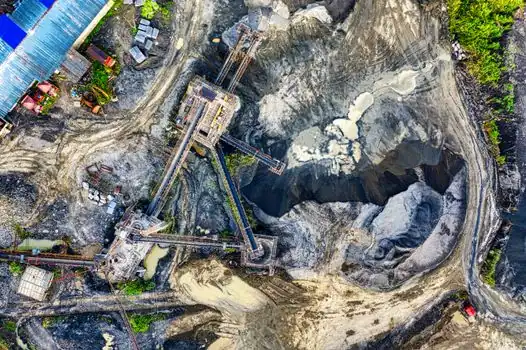
A separation source should be compared against at least four criteria: oxide purity, element-by-element recovery, commercial scale, and downstream qualification status. A laboratory result can demonstrate technical potential, but it does not establish a resilient source for magnet production. [S4]
This comparison prevents a common category error: a mining project, a separation project, and a recycling project may all add supply, but they do not create the same number or type of qualification gates. Mining capacity alone does not create a diversified magnet supply chain [S4].
Buyers qualify the source for its intended use, not for all magnets
Qualification criteria should follow the target application. Electric vehicles, wind turbines, industrial motors, robotics, electronics, aerospace, and defence systems all support demand for magnet rare earths, but they do not necessarily require the same magnet grade, coating, temperature capability, or qualification evidence [S4].
NdFeB and SmCo are the two alloy families identified in magnet export compliance work, while SH, UH, EH, and AH are grade suffixes used to classify magnet performance [S10]. A buyer should therefore specify the target alloy and grade before deciding whether a separated oxide source is technically acceptable. The separation supplier may need to provide additional information on trace impurities and consistency because those properties can affect alloy and magnet performance.
Defence buyers may also need documentation tied to specific systems. The F-35 requires more than 900 lb of rare earth elements, an Arleigh Burke DDG-51 destroyer requires 5,200 lb, and a Virginia-class submarine requires 9,200 lb [S1]. These quantities illustrate why a nominally small element shortage can become a program-level constraint, but they do not replace magnet-level qualification.
The source is best suited to buyers that can value a verified supply option rather than purchase only on the lowest spot price. It is poorly suited to buyers unwilling to underwrite qualification work, reserve capacity, manage long-term offtake, or tolerate the cost of maintaining a second qualified chain.
Waste management and mass balance are part of product quality
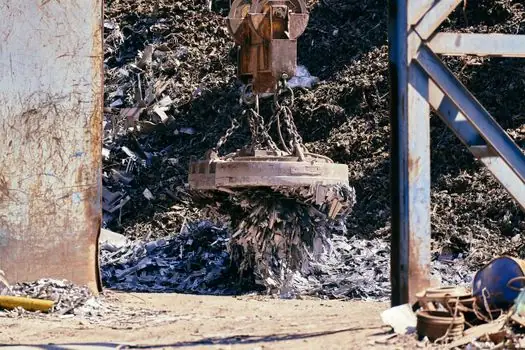
A separation plant fails the commercial test if it shifts environmental and material burdens to stages that are not measured. Waste management is a distinct capital and operating requirement in the mine-to-magnet framework, alongside customer qualification and bankable demand arrangements [S4].
Buyers should request quantities and compositions for solid residues, liquid effluents, radioactive material where relevant, acid and reagent consumption, water use, recycle rates, and final disposal routes. The mass balance should reconcile the delivered feed with saleable oxide, process intermediates, recoverable inventory, and final residues. Discrepancies between laboratory assays and plant accounting are a qualification finding, not a clerical issue.
Responsible sourcing evidence should cover the origin of the ore or concentrate, chain of custody, operating permits, transport documents, and the treatment of material moved between sites. These controls matter because a separation plant can receive feed from multiple mines and blend streams. The finished oxide certificate is only one part of traceability.
Capacity and offtake determine whether qualification creates supply
Qualified laboratory output does not create a commercial alternative unless the source can produce, store, finance, and deliver material at contracted volumes. The buyer's technical approval and the supplier's commercial viability must therefore be linked through a capacity-backed offtake arrangement. [S4]
The International Energy Agency estimated that meeting demand for magnet rare earths outside the dominant supplier requires about USD 60 billion of investment over the following decade from public and private capital [S2]. Demand for magnet rare earths doubled between 2015 and 2024 and was projected to rise by more than 30% by 2030 under stated policies [S4].
Qualified supply also needs a market mechanism. The proposed economic security agreement described in 2026 policy analysis would use capacity-linked market access to create demand for qualified rare earth oxides, metals, alloys, and permanent magnets from non-dominant suppliers [S3]. The same analysis identified a supplier market share of 60% or more across the rare earth permanent magnet supply chain as the threshold for excessive concentration under the G7 definition [S3].
For buyers, this means qualification should include an executable volume pathway, not only a sample. Contract terms should address contingent volume, qualification-stage delivery, price formation, recovery assumptions, quality claims, and the treatment of unabsorbed capacity. The wider risk is weak offtake, which can leave new supply-side investments commercially fragile [S3].
Downstream validation closes the mine-to-magnet gap
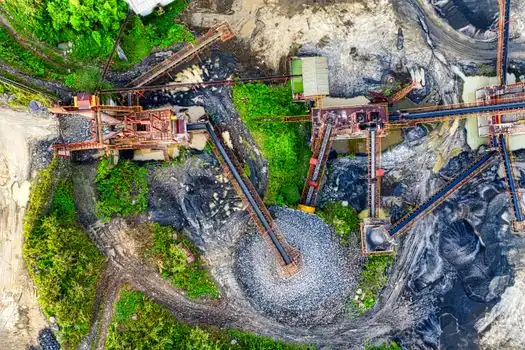
Separated oxide is an intermediate, not a qualified magnet. Buyers should require staged approval through metal conversion, alloy preparation, powder production, magnet forming, sintering, machining, coating, and final magnet testing [S4]. Each stage should have an approved sample, a defined test method, an acceptance tolerance, and responsibility for nonconforming material.
The seller's strongest claim is reproducible performance at the required production scale, including consistency across lots, not a single laboratory result. A buyer should compare oxide assay, impurity profile, recovery, yield, output rate, downtime, and delivered cost against the incumbent source. A materially cheaper oxide that fails downstream consistency requirements is not cheaper qualified supply.
Recycling can form part of the plan, but it should be qualified as a separate feedstock route. Recovery processes can extract rare earth compounds from end-of-life magnets, while the practical model requires collection, sorting, preprocessing, and specialized recycling capacity [S6][S7]. Magnet recycling versus mined rare earths examines why recycling cannot remove the need for mined supply in the near term.
The next decision point is a gate review. A buyer should approve a new separation source only when the supplier presents signed mass-balance data, element-level recovery, saleable oxide specifications, production-scale evidence, waste accounting, capacity-backed offtake, and successful downstream magnet trials. If any item remains a forecast rather than operating evidence, keep the source in trial status and do not count it as qualified supply.