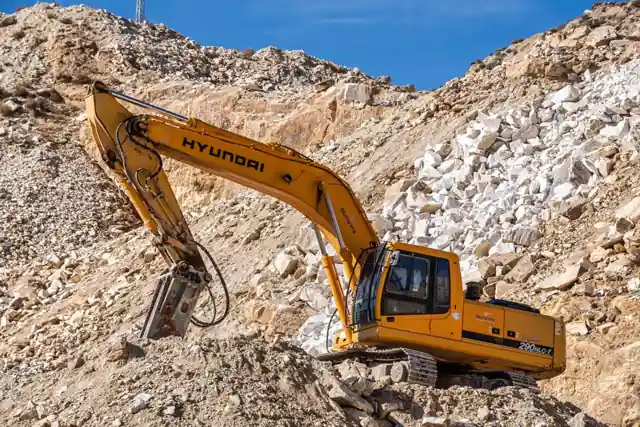
Permanent magnets account for around 95% of total rare earth consumption by value, according to the IEA's Rare Earth Elements report [S5]. That ceiling is the headline number every spec engineer writing a motor or actuator BOM should anchor to.
The dependency is structural. In 2024, China held 60% of mined magnet rare earths, 91% of refined output, and 94% of sintered permanent magnet production [S5]. Demand for Nd, Pr, Dy, and Tb has doubled since 2015 and is projected to grow another third by 2030 under current policy settings, with EVs, wind turbines, and AI data centre cooling drives pulling hardest [S5].
What the IEA 35% figure actually covers
The IEA's 35% primary-supply offset by 2050 explicitly bundles manufacturing scrap, end-of-life magnets, and reduced magnet content per unit, not just end-of-life recovery [S5]. Manufacturing scrap is the easiest stream: it is clean, segregated, and already inside the producer's gate. End-of-life recovery is the harder stream, and it is where decade-scale expectations break down.
For a working engineer, the practical read is this: the 35% is a 24-year cumulative ceiling, not a near-term substitution rate. It implies that even on the IEA's most aggressive scenario, mined rare earths remain the dominant input past 2040 [S5]. Specifying recycled-content NdFeB today is realistic for consumer electronics and HDD applications; it is not yet realistic as a baseline assumption for traction motors, wind turbine generators, or defence systems that require tight dysprosium and terbium tolerances.
Where the closed-loop case is proven, and where it is not
The cleanest reference point is the Dell closed-loop HDD pilot, triggered by criterion 7.1.4 of NSF/ANSI 426-2018. During the pilot, Dell diverted 660 lb of magnet material from landfill to build 25,000 HDDs, and the company demonstrated scalability to 8,000 lb of magnet feedstock and 300,000 closed-loop HDDs per year [S1]. The same reforming process is documented as adaptable to MRI magnets and EV motors in principle [S1].
That scalability claim has not translated to high-energy-density motor magnets. The reasons are technical: motor-grade NdFeB requires controlled Dy/Tb additions for high-temperature coercivity, and reforming a sintered magnet typically degrades grain alignment. A relevant adjacent reference is the engineering trade-off work in cerium-substituted magnet design, which shows where lower-cost or lower-criticality magnet chemistries can and cannot displace NdFeB. For instrumentation contexts, magnet selection still bleeds into industrial valve actuator sizing and flow meter pick-up coil design, where a 1-2% magnetic flux loss translates directly to a measurable signal-to-noise penalty.
Recycling routes, by feedstock and by yield

Three routes dominate the literature: hydrometallurgical leaching, pyrometallurgical slagging, and direct magnet-to-magnet reprocessing. Each has a different recovery rate, waste profile, and capital intensity. Okon Recycling's 2025 overview quantifies the upstream burden: every ton of freshly mined rare earths can generate up to 2,000 tons of toxic waste, including radioactive byproducts requiring controlled disposal [S3]. That ratio is the strongest economic argument for recycling, even when recycle yields are imperfect.
Quantitative comparison for engineering planning:
- Hydrometallurgical acid leach: best published rare earth recovery rates of 80-95% for separated oxides, but generates large acidic wastewater volumes and is sensitive to feedstock contamination [S3].<br>- Pyrometallurgical slag route: tolerates mixed scrap including motors and electronics assemblies, but rare earth partition into slag is rarely above 60-70% and downstream leaching is still required [S3].<br>- Direct hydrogen decrepitation plus re-sintering: the only route that preserves alloy microstructure for magnet-to-magnet reuse; the Dell pilot operates in this regime [S1]. Reported scrap-to-magnet mass efficiencies of 90%+ are achievable on clean streams, but the route rejects any magnet with surface oxidation or coating damage.
Across all three, separation of Dy and Tb from Nd and Pr remains the chemistry bottleneck, which is why the refined stage, not the mining stage, is the real chokepoint at 91% concentration [S5].
Standards, policy levers, and what they actually unlock
NSF/ANSI 426-2018 is the first sector standard known to incentivize recycled rare earth content, specifically criterion 7.1.4 for HDD magnets and criterion 9.2.4 for end-of-life locator marking to help recyclers [S1]. EO 14017 on America's Supply Chains is the federal policy hook that prompted EPA, DOE's Critical Materials Institute, and Seagate to participate in the NSF task group [S1].
For European buyers, the lever looks different. 3D-printed magnet research at VTT and partner labs has been estimated to cut rare earth metal waste by 20-30% through near-net-shape deposition, which removes the swarf stream that would otherwise need re-melting [S2]. That is a yield engineering gain, not a recycling gain, and it stacks on top of any closed-loop recovery. Note the date on that source: it is a 2022 estimate and the 20-30% range has not been independently confirmed in production environments [S2].
Why a decade is the wrong timeframe
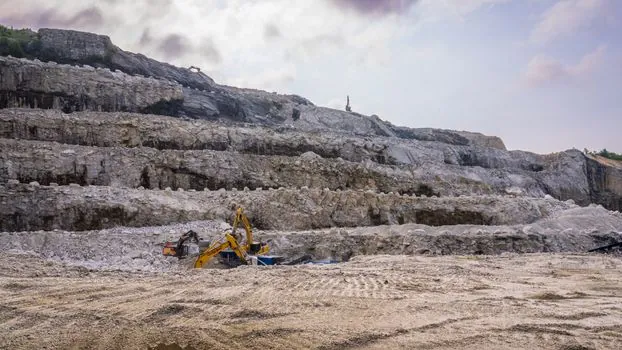
Three constraints stack against a 10-year displacement claim. First, in-use stock: an EV traction motor has a 15-20 year service life, so a 2026 vehicle's magnet is unavailable for recycling until the 2040s. Second, collection infrastructure: the locator-marking logic of NSF/ANSI 426.9.2.4 exists precisely because most e-waste magnets are not recovered today [S1]. Third, magnet-grade purity: even successful recovery returns oxides, not finished magnets, unless a direct reprocessing line is co-located, which is currently rare outside China [S5].
For instrument and control buyers, the actionable filter is straightforward. If the pressure transmitter or pressure sensor on your spec sheet uses a magnetic pickup or a latching solenoid, recycled-content magnets are a credible option today, with documented precedents in consumer electronics [S1]. If the application needs high-coercivity Dy/Tb-grade NdFeB, plan on mined supply for the rest of the decade, and treat any recycled-content claim from a vendor as a marketing line until the producer publishes an ASTM or ISO conformance certificate tied to a specific magnet grade.
Sourcing and verification standards to require
Three reference points are worth pinning into procurement language. NSF/ANSI 426-2018 sections 7.1.4 and 9.2.4 for HDD-class magnets [S1]. The IEA Rare Earth Elements 2025 executive summary for supply concentration and demand baselines, with the 60/91/94% 2024 figures and the 35%-by-2050 recycling ceiling as anchor numbers [S5]. And the upstream-impact ratio of up to 2,000 tons of waste per ton of mined rare earths for the environmental case [S3].
Trackable signals to watch over the next 12 months: any EU Critical Raw Materials Act implementing act specifying recycled-content thresholds for permanent magnets, any US Department of Defense Title III award for a non-Chinese sintered magnet line, and any ASTM WK number covering recycled-content NdFeB classification. These three together will determine whether the IEA's 35%-by-2050 curve bends steeper or holds.