S1 reports that cybersecurity spending among organizations with fewer than 100 employees ranges from $8,500 to $78,000 annually.
The planning scope covers industrial firewalls, asset visibility, network segmentation, monitoring, incident response, backups, training, and maintenance, rather than treating OT security as a one-time equipment purchase [S3][S4].
A Practical OT Security Budget for a Mid-Size Plant
S1 reports an annual cybersecurity-spending range of $8,500 to $78,000 for organizations with fewer than 100 employees but does not provide a separate OT-security budget range for a mid-size plant.
This budget should fund plant-specific deliverables rather than a generic percentage: asset discovery, segmentation between IT and OT, industrial firewall policy, controlled remote access, passive traffic visibility, logging, tested restoration procedures, staff training, and recurring review of temporary vendor connections [S3][S4].
S1 reports that annual cybersecurity spending for organizations with fewer than 100 employees ranges from $8,500 to $78,000, with significant variation by industry and region. A plant with hazardous processes, remote assets, many legacy controllers, or contractual security obligations can therefore justify the upper end of the $25,000–$100,000 planning band.
How to Set the Number from OT Exposure
Start by identifying the consequence of compromise: production interruption, loss of process control, safety impact, environmental exposure, or disclosure of operational data [S2]. OT security spending must protect physical processes managed by PLCs, SCADA, and related industrial systems, so an incident can affect more than an IT data set [S2].
Next count the assets that require visibility, including HMIs, PLCs, engineering workstations, historians, safety systems, remote-access gateways, and temporary contractor devices. Passive monitoring can reveal unmanaged or obsolete equipment without sending active probes into the network, making it a practical first control for plants with incomplete engineering documentation [S4].
Set the annual amount against three measurable requirements: maintaining safe operation, limiting the spread from an IT compromise into production, and restoring critical processes within an agreed recovery objective. Those requirements determine whether the plant needs asset discovery first, segmentation first, or monitoring and incident-response capability first [S3][S4].
Where the Budget Dollars Should Go

Allocate the first tranche to OT asset inventory, passive network monitoring, and segmentation using existing infrastructure. Basic separation can use VLANs and firewall rules to restrict communication between OT, IT, process areas, and external access [S3][S4]. This approach can materially improve security without requiring a full enterprise platform deployment.
The second tranche should cover industrial firewalls, controlled remote access, endpoint protection, logging, and security event management. Conventional IT controls cannot be assumed to work without OT-specific testing because industrial traffic depends on protocols, real-time constraints, and a different operating tolerance for disruption [S5].
The third tranche covers recurring work: incident exercises, backup validation, policy review, configuration maintenance, training, and periodic audits. Firewalls, VPNs, intrusion detection, antivirus, backups, encryption, employee training, and regular auditing and compliance all require lifecycle funding rather than purchase-only accounting [S3].
Comparing the Main OT Security Approaches
Passive network monitoring offers low operational disruption and immediate asset visibility, but it does not itself block traffic or guarantee active response. It suits legacy-heavy plants where active probing is unacceptable and the first task is to map unknown devices and communication relationships [S4].
Network segmentation provides stronger containment with relatively modest capital cost when existing VLAN and firewall capabilities can be reused. It limits pathways between OT and IT, but stale rules, undocumented assets, or overly permissive vendor access can weaken the result [S3][S4].
The integrated-platform option suits organizations requiring centralized asset visibility, anomaly detection, and incident workflows, but it carries greater deployment and operating complexity [S5]. The global OT security platforms market is expected to grow from $24.4 billion in 2025 to around $105.8 billion by 2035 at a CAGR of 15.8%, with North America accounting for more than 39.7% of the market.
Who Needs More Than the Baseline
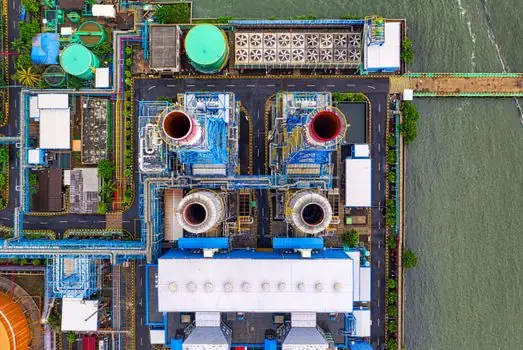
A mid-size plant with safety-critical processes, extensive remote maintenance, many vendors with persistent access, or unsupported legacy equipment needs more than a visibility-only baseline. These conditions increase the potential consequences of a compromised engineering workstation or unmanaged network path [S2][S4].
A plant with stable processes, few remote connections, documented assets, and a modest number of PLCs may achieve meaningful risk reduction below $50,000. By contrast, a regulated industrial organization with multiple production cells and formal audit duties should plan toward $75,000 to $100,000 or establish a project-based approval for spending above that range.
Broader budgeting data places cybersecurity spending at roughly 10.9% of IT spend or 0.69% of revenue, while another benchmark gives a typical range of 7% to 20% of the overall IT budget [S6][S7]. These percentages are planning aids, not an OT security standard, and must be translated into named plant controls before approval.
Why Underinvestment Creates a Measurable Gap
The industrial cybersecurity market is projected at $23.3 billion for 2026, while 81% of industrial organizations allocate less than half of their cybersecurity budgets to OT and ICS [S2]. That imbalance is material because OT systems control physical processes in manufacturing plants, pipelines, grids, and critical infrastructure.
Organizations reporting at least one OT incident during 2025 numbered 60%, and 88% increased OT security spending by more than 10% during that year [S2]. More spending alone does not establish readiness: governance remains weak when only 16% of organizations escalate OT security issues to their boards [S2].
For a mid-size plant, this supports a baseline-plus-exposure model rather than a percentage-only model. Fund asset visibility, containment, recovery, and governance first, then add spending where remote access, legacy systems, safety impact, or multi-site requirements justify it [S3][S4].
Metrics for the Next Budget Review

The plant should convert its annual allocation into tracked measures rather than leave it as a technology budget. Measure the percentage of OT assets inventoried, the number of unmanaged devices, the count of persistent vendor connections, and the percentage of inter-zone traffic allowed by policy [S4].
Track whether remote sessions are approved and logged, whether security events reach responsible operators, whether safety and production assets remain separated from general IT, and whether backup restoration has been tested against a defined recovery objective [S3]. These measures connect spending to operational resilience without requiring a production outage as the proof of control.
At the next annual review, compare actual OT spending with the $25,000 to $100,000 planning band, document every variance against asset count, legacy exposure, incident history, and project workload, and verify that IT remains responsible for enterprise controls while OT engineering owns process-safety and production constraints [S2][S3].