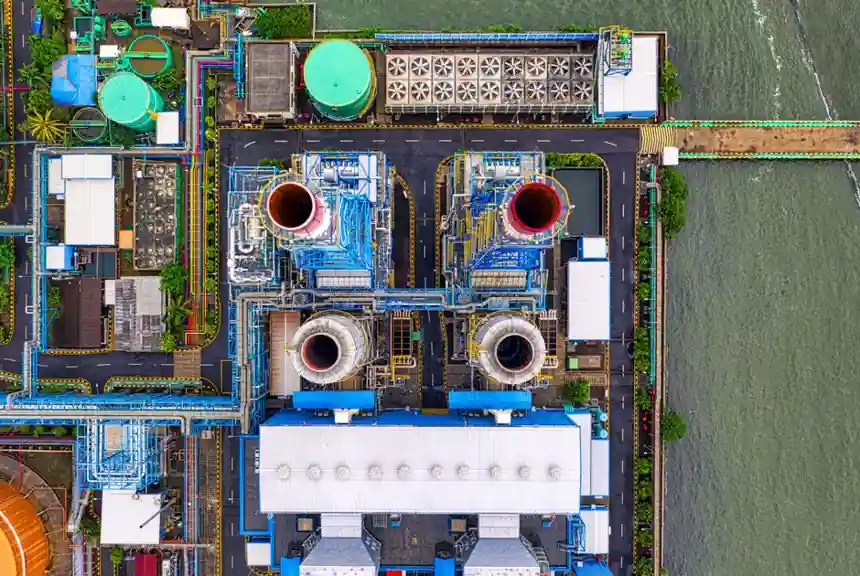
A full industrial facility can cost $10,000–$100,000 or more depending on complexity and size, with the price covering field scanning, data registration, and delivery of clean point-cloud data [S2].
The budget should distinguish scanning services from scan-to-CAD and scan-to-BIM work, which is charged separately, commonly at $0.50–$10.00 per square foot depending on detail level [S3].
What a brownfield scanning quotation should include
A complete base-service price covers mobilization, survey targets, scan-position registration, noise filtering, quality-control scans, and delivery of registered point clouds in formats such as E57, RCP, LAS, or OBJ [S2]. It does not necessarily include conversion into a CAD or BIM model, which is commonly priced separately at $0.50–$10.00 per square foot depending on required detail [S3].
Typical project tiers help define the scope. A single space below 2,000 square feet costs $1,000–$2,000, while an industrial or plant project covering 50,000–500,000 square feet costs $10,000–$100,000+ [S2].
The requested output, not the plant floor area alone, is the decisive commercial variable [S4]. A registered point cloud supports visualization and spatial review, while scan-to-CAD and scan-to-BIM packages create deliverable engineering objects. For model-quality selection, the distinction between articulated-arm CMM and bridge CMM is also relevant when downstream dimensional inspection, rather than facility-wide geometry, drives the twin specification.
Scan-only, digital-twin, and engineering-model options compared
Scan-only service is the lowest-cost option because it ends with registered point-cloud data and basic accuracy documentation [S2]. Scan-to-CAD and scan-to-BIM cost $0.50–$10.00 per square foot because the supplier must classify geometry, resolve interfaces, and produce parametric or structured model content [S3].
The comparison is straightforward. Scan-only works for spatial records and early design; digital-twin modelling works for visualization, equipment context, and operational planning; scan-to-CAD or scan-to-BIM works when engineers need discrete assets and dimensions.
Brownfield modification support and digital-twin enablement are treated as distinct purposes in project costing [S7]. One estimate places laser scanning at approximately 5%–10% of total project cost when it is defined as a standalone service, which is a useful budgeting position but not a universal plant percentage [S7].
Plant complexity, safety, and access drive the price
Industrial pricing depends on area, safety requirements, and documentation depth [S3]. Dense process equipment, pipe racks, confined spaces, elevated structures, poor reflectivity, and active operations can require more scan positions, additional target control, tighter safety procedures, and more extensive data cleanup than a commercial floor survey.
Standard industrial and commercial rates assume accessible spaces, ordinary operating hours, standard deliverable formats, and normal project schedules [S2]. In an operating brownfield, confined-space entry, isolation procedures, escort requirements, and shutdown windows may therefore cost more than the measured square footage suggests.
Scan coverage also affects productivity. Most 3D laser-scanning projects cost $0.20–$0.70 per square foot, subject to a $1,000 minimum project cost [S2]. Unit rates can fall with scale while the total project cost still rises sharply.
Buying equipment is economical only above the utilization threshold
Professional terrestrial scanners represent a substantial capital commitment. Entry-level professional systems are listed at $20,000–$35,000, agile systems at $35,000–$60,000, and higher-productivity terrestrial systems at $46,000–$81,000 [S5]. A professional scanner package cited at about $85,000 before software and training becomes economically attractive only when the organization can run roughly 20–30 projects per year [S4].
Software and support add recurring cost. On-demand expertise is optimal for a singular, critical project, while in-house capability can provide a long-term return when a firm has a consistent project pipeline [S5].
Total cost of ownership extends beyond the scanner or service invoice. Buyers must compare mobilisation, data preparation, modelling labour, software, subscriptions, operator training, quality review, storage, and later model updates [S5]. Scanning can represent only about 5%–10% of the broader project cost, while the downstream digital-twin work can determine whether the capture produces usable engineering information [S7].
Digital-twin scope must be defined before quoting
A plant-scale budget should state the scanned area, operating constraints, required accuracy, asset inventory, model granularity, and file formats before requesting a price. Digital-twin pricing of $0.30–$0.80 per square foot assumes a defined documentation level, while generic industrial scanning benchmarks span $10,000–$50,000+ [S1][S3][S4].
Asset and system boundaries determine how much modelling follows capture. If the twin must connect equipment to engineering registers, work orders, and operating procedures, the laser profiler or laser tracker may support downstream dimensional verification, but these are separate metrology activities rather than automatic parts of a building scan [S4].
The model objective also affects acceptance criteria. Digital twin fidelity levels distinguish visual representation from engineering-grade asset definition, so the owner should specify which outputs must be measurable, traceable, or suitable for modification design.
Comparable budget bands for scope definition
For a brownfield plant, $10,000–$50,000+ supports industrial scanning documentation at the baseline level described in the market breakdown [S3]. A broader industrial facility can reach $100,000+ when the area, geometry, and documentation requirements expand [S2]. Comprehensive projects have been quoted from $1,500 for a single-room survey to $150,000 or more for large facilities [S10].
These figures are not interchangeable quotations. The $0.20–$0.70 per square foot rate applies to many terrestrial building surveys, the $0.30–$0.80 per square foot rate applies to digital-twin work, and the $0.50–$10.00 per square foot range applies to scan-to-CAD or scan-to-BIM services [S2][S3][S4]. One commercial service range of $1.00–$10.00 per square foot reflects broader service scopes, while another published estimate places total service expenditure at $5,000–$15,000 [S6].
A defensible tender should therefore request three separate prices: field capture and registered point cloud, digital-twin model preparation, and engineering-model creation or asset classification. That structure prevents a low capture bid from obscuring the cost of the usable model. Track the awarded contract value against the stated area, deliverable level, safety restrictions, and model schedule before treating the price as comparable across bidders.