
Mature machine learning models for rotating machinery achieve 92–97% prediction accuracy and typically provide a 2–4-week advance warning window.
That dataset must cover relevant operating conditions, link sensor readings to labeled failures, and support separate training and validation data for credible prediction performance [S1][S3].
Data volume must cover seasons and repeated failures
Failure count matters more than raw sensor volume. A model trained on years of normal vibration and temperature data but only one bearing failure has little evidence with which to learn the precursor pattern. Increasing sample frequency does not create additional independent failures, and it cannot repair an inadequate set of labeled events [S3].
A practical dataset therefore has a longitudinal baseline, several labelled failure events, and a validation segment that the training process has not seen.
Define the failure mode before counting records
The required history depends on the failure mode because different degradation mechanisms leave different signatures in vibration, temperature, pressure, current and operating-condition data [S2]. Long Short-Term Memory networks are used for time-series anomaly detection on vibration and temperature signals, while convolutional neural networks are applied to visual inspection data captured through industrial cameras.
Machine-learning failure prediction models use historical data, sensor readings and mathematical algorithms to estimate failure probability or remaining useful life, commonly expressed as RUL [S3].
Available input families include vibration, temperature trends, operating hours and maintenance history [S3].
Compare model families by data requirement and output
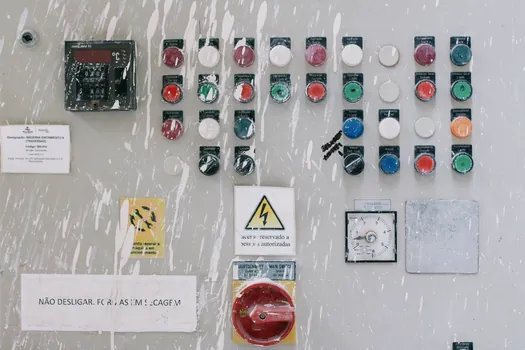
Supervised machine learning uses labelled sensor and operating data to learn relationships between pre-failure conditions and outcomes. Random Forest and Gradient Boosting are used for classification of failure types. These methods require enough representative failures to expose the relevant relationships [S2].
Deep sequence models address temporal dependency in vibration and temperature signals. Long Short-Term Memory networks are used for time-series anomaly detection on vibration and temperature signals. Convolutional neural networks are applied to visual inspection data captured through industrial cameras.
Use the operating mix as a data-selection test
Work-order history and sensor streams should be time-aligned with the same assets. A failure label must be connected to the condition data recorded immediately before it, and maintenance interventions must not be mislabeled as spontaneous failures [S2][S3].
Visual inspection data can supplement conventional sensors when degradation is directly observable. Documented examples include surface-crack progression, corrosion growth, belt-wear patterns and thermal-anomaly trends [S2].
Reserve independent data for validation

Training data and validation data serve different purposes: the model learns feature patterns preceding known failures, while held-out historical events test whether those patterns generalize to unseen failures [S1].
The industrial machine-learning workflow proceeds through data collection, model identification, parameter estimation and validation [S5]. Sensors may provide vibration, temperature, pressure, current draw and acoustic-emission readings, which are transformed into engineering features before training [S1]. Feature examples include RMS vibration amplitude, spectral peaks at bearing-fault frequencies and temperature rise per operating hour [S1].
Validation should report performance by failure mode and operating regime, not only one headline accuracy value. Published guidance gives 92–97% prediction accuracy for rotating machinery with mature models and a typical 2–4 week advance-warning window, but those figures describe systems with suitable operating history, multiple events and rigorous validation, not an arbitrary sensor archive [S1].
Know which assets and outcomes the model fits
A plant-level archive is not automatically transferable to every machine. A model trained on one asset class, operating envelope and failure mechanism should not be treated as a universal predictor across dissimilar assets [S2][S3]. Separate models may be needed when failure signatures, duty cycles or label definitions differ materially.
The model is suitable for condition-based intervention when its output supports three actions: intervene now, monitor more closely or wait [S3]. It is not suitable as the sole basis for safety-critical protection when training coverage is sparse, labels are unreliable, or validation does not include relevant operating conditions [S3]. Statistical population models and individual-asset machine-learning models also answer different questions, so their outputs should not be compared as if they were interchangeable [S3].
Cost controls also require operational context. One manufacturing analysis frames the cost of a missed failure at 50 times that of a false alarm, while an 18-hour bearing-related production shutdown is used to illustrate losses extending well beyond the replaced part [S1]. These figures are not universal constants, but they show why validation must measure both missed events and nuisance alerts against the plant’s consequence profile [S1].
Deployment should follow a measured readiness gate
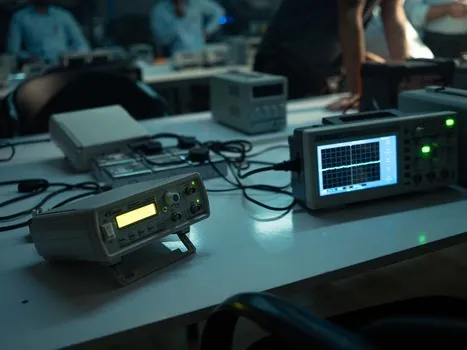
A readiness gate should require at least 365 days for an annually seasonal asset, a target of 12–18 months for mature rotating-machinery prediction, multiple labelled failures, and an independent validation period [S1][S4]. The gate should also confirm that the inputs are available at scoring time and that the output can trigger a work order or condition-based decision [S1][S3].
After deployment, continuous scoring compares live sensor data with the learned degradation patterns, and CMMS integration can convert a threshold breach into a work order containing the predicted failure type, recommended action and estimated time to failure [S1]. Track missed failures, false-alarm frequency, warning lead time and data completeness, because changes in operating mix can degrade a model that passed its initial validation [S1].
The next decision should be based on evidence rather than an arbitrary sample count: inventory the labelled failures per mode, the length of continuous operating history, the seasonal coverage and the number of held-out failure events. If those four measures fall short, collect more history or narrow the model’s scope before expanding deployment.