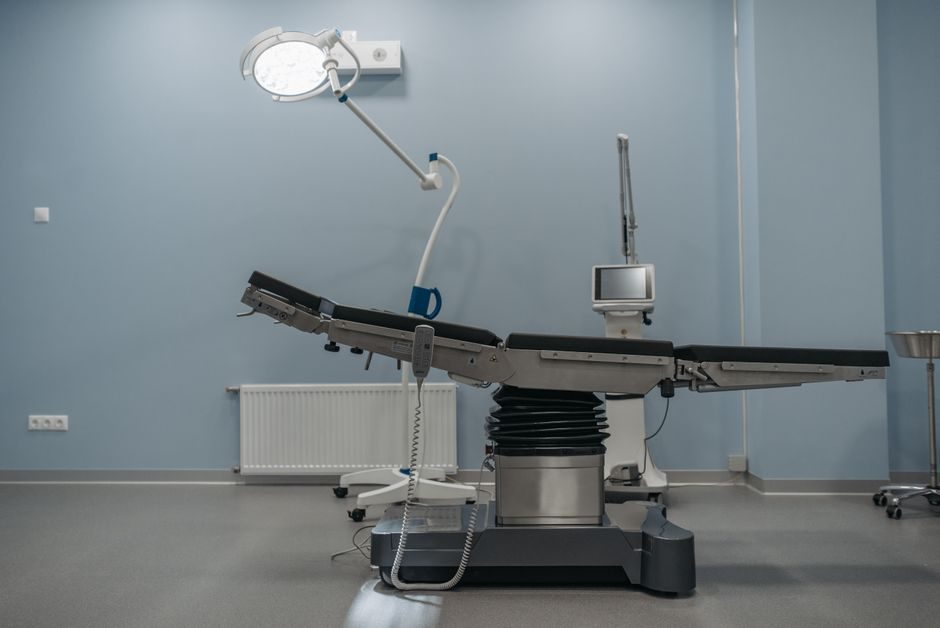
Clean-room selection hinges on three binding decisions: target ISO 14644-1 cleanliness class, the AHU topology (centralized, decentralized, or semi-centralized) that delivers and conditions the air, and the terminal filter grade (HEPA H13/H14 or ULPA U15-U17) that polishes the supply [S2][S3].
Federal Standard 209E, introduced in the United States in 1963 and superseded operationally by ISO 14644-1 in 1999, still anchors how buyers talk: a Class 100 (209E) room is the industry-acceptable floor for critical product manufacturing, hard disks are produced in Class 100, and a Class 1 envelope allows no more than one 0.5 µm particle per cubic foot of air [S2]. Most office ambient air already sits at 50,000-100,000 particles of 0.5 µm per cubic foot, which is why an unfiltered room is not a clean room by any class definition [S2].
ISO 14644-1 Class and 209E Equivalence: Picking the Right Cleanliness Floor
ISO 14644-1 normalizes cleanroom classes by permitted particles ≥0.1 µm per cubic metre; Class 5 caps at roughly 3,520 particles ≥0.5 µm per m³, the numerical twin of Fed Std 209E Class 100 [S2]. Process choice drives the class: hard-disk heads, photolithography, and nanofabrication sit at ISO Class 3-5; pharmaceutical aseptic filling is regulated as ISO Class 5 in the room with Grade A unidirectional airflow at the critical zone; biotech labs and optics assembly commonly run ISO Class 6-7; and final device packaging or backend electronics assembly frequently accepts ISO Class 7-8 [S2].
If your line is data recovery, treat ISO Class 5 (Class 100 under 209E) as the gate for opening any hard drive platter assembly — most data-recovery specialists publish this number because it matches the OEM drive-build envelope [S2]. Under-spec and you cannot recover; over-spec and you burn 5-10x the fan and reheat energy for no yield gain.
Centralized vs Decentralized vs Semi-Centralized AHU Topology
Chinese cleanroom-HVAC practice, codified in the air-cleaning technology literature, divides systems into three structural families: centralized (洁净空调机组集中于机房,通过送风管分配到各洁净室), decentralized (每个洁净室独立设置净化设备), and semi-centralized (集中机房+分散末端处理) [S3]. The three families are also labeled by the cleanliness classes they serve (e.g. Class 100 system, Class 1000 system) and by terminal filter grade (high-efficiency, sub-HEPA, medium-efficiency) [S3].
Centralized systems win on energy, redundancy, and recovery-wheel economics for multi-room campuses; decentralized systems win on single-suite renovations, fast commissioning, and isolation of one process from another's contamination profile; semi-centralized is the workhorse for large pharmaceutical and semiconductor fabs that want a central chiller plant plus local fan-filter units (FFUs) on the ceiling grid [S3]. The decision rule: one process risk profile plus more than ~500 m² of cleanroom area typically pushes the spec toward centralized; multiple risk profiles or staged expansion tends toward semi-centralized; a single suite under ~200 m² tends toward decentralized [S3].
Filter Tier, Air Changes, and Pressure Cascade
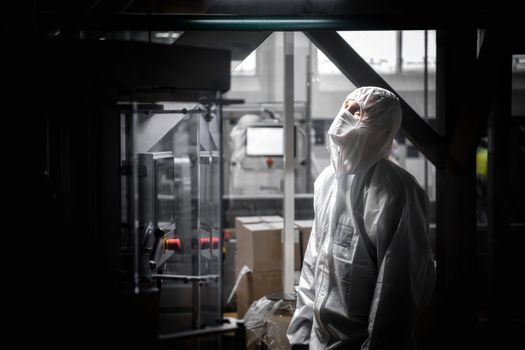
Terminal filtration is the line that separates a cleanroom from a clean-ish room.
Pressure cascade is the second axis: cleanrooms are held at +10 to +15 Pa relative to a less-clean corridor, and +15 Pa relative to unclassified outdoors, so contamination flows out of — never into — the controlled volume when a door opens [S2]. Particle shedding is contained by air showers, air curtains, and full-coverage garment systems (hood, coverall, boots, gloves) at the personnel airlock; airborne particles that escape are removed by the redundancy of recirculation through bag-in/bag-out pre-filters and final HEPA/ULPA stages [S2].
Who Needs a Clean Room — and Who Does Not
Cleanrooms are mandatory where the product or the science cannot tolerate micron-scale contamination: semiconductor wafer fab, hard-disk manufacturing, flat-panel display lithography, pharmaceutical aseptic fill-finish, biotech sterility testing, optics and laser assembly, nanofabrication, and data recovery [S2]. They are also useful in wildfire-prone regions as a residential 'clean room' — a closed room, ideally a bedroom with attached bathroom, fitted with a portable air cleaner (typically a true-HEPA MERV-13+ unit) to keep indoor PM2.5 low when outdoor AQI is unhealthy [S1].
Who should NOT pay for a full ISO-rated cleanroom: light-assembly shops whose defectivity is dominated by vibration or ESD rather than particles, food-and-beverage lines where hygienic design (smooth stainless, sloped floors, drainability) matters more than sub-micron counts, and any buyer expecting a cleanroom to compensate for poor gowning discipline. A residential cleanroom is also not a substitute for evacuation when local authorities issue a stay-indoors alert that breaks down — if the power fails, indoor temperatures rise, or smoke continues to infiltrate, the EPA guidance is to relocate to a cleaner-air shelter or a large filtered commercial building [S1].
Decision Map: Centrifugal FFU vs Fan Filter Unit vs Portable Air Cleaner
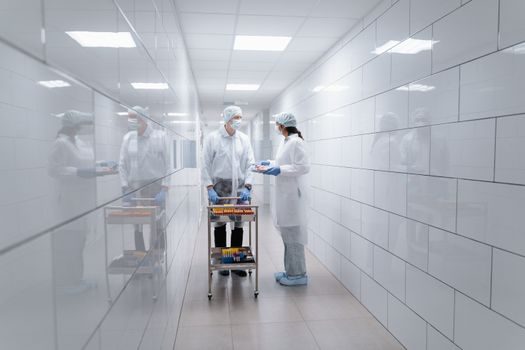
Three equipment lanes compete for the cleanroom envelope, and the right lane is set by class and footprint: ceiling fan-filter units (FFUs) on a T-grid are the default for ISO Class 5-6 across semiconductor and pharma suites; centrifugal (blower-style) AHUs feeding a ducted ceiling plenum suit large-volume ISO Class 7-8 packaging rooms and any retrofit that must reuse a low ceiling void; portable air cleaners with true-HEPA are reserved for the residential clean-room application under wildfire-smoke events [S1][S2]. Comparison on four decision criteria:
1) Achievable cleanliness: FFU grid reaches ISO Class 5 in production; centrifugal AHU typically plateaus at ISO Class 7-8 without a separate terminal HEPA bank; portable cleaners target PM2.5 reduction in a single room, not ISO classification [S1][S2]. 2) Energy per m²: FFU-led ceilings at ISO Class 5 commonly draw 0.6-1.2 kW/m² from fan power alone; centrifugal AHU at Class 7-8 drops to 0.15-0.3 kW/m² because lower ACH is required; a residential portable cleaner is rated in CADR (clean-air delivery rate), not kW/m² [S2]. 3) Lead time and install footprint: FFUs ship as modular ceiling tiles, fast on a green-field grid; centrifugal AHUs need a plant room, ductwork, and longer commissioning; a portable unit is consumer-grade and on-site in minutes [S1][S2]. 4) Maintenance: FFUs accept in-situ DOP/PAO leak testing per row; centrifugal systems require bag-in/bag-out pre-filter changes and AHU shut-down windows; portable filters are user-replaced on a manufacturer schedule [S2].
Standards, Verification, and Operating Discipline
Verification follows ISO 14644-3 (test methods) and IEST-RP-CC002 (cleanroom design) in parallel; particle counting for class certification follows ISO 14644-1, and air-cleaning device performance is graded under EN 1822 / IEST-RP-CC001 [S2]. Operational discipline is what keeps a cleanroom at class: particle shedding is capped by full-coverage garment systems at the airlock, no particle-shedding activities (cooking, combustion, rapid movement) inside the controlled volume, and HVAC redundancy so a single fan failure does not collapse the pressure cascade [S1][S2]. A cleanroom that is not leak-tested annually — in-situ DOP/PAO challenge on every HEPA/ULPA and airflow/ACH verification — drifts toward non-compliance within 12-18 months, regardless of how it was spec'd on day one [S2].
For upstream build-out cost models, buyers running parallel capex on material handling should cross-check the industrial robot BOM and TCO drivers for FFU servicing and AHU cell automation; for fab-side lighting spec that must coexist with the ceiling FFU grid, the lux meter price tiering map sets the right photopic-and-ambient sensor class for ISO 14644-5-compliant cleanroom lighting checks; and where a fab also runs automated storage, the ASRS system spec typically inherits the same ISO class and pressure cascade as the production suite it feeds.
For component-level specifications, see shuttle system, and sorting system.