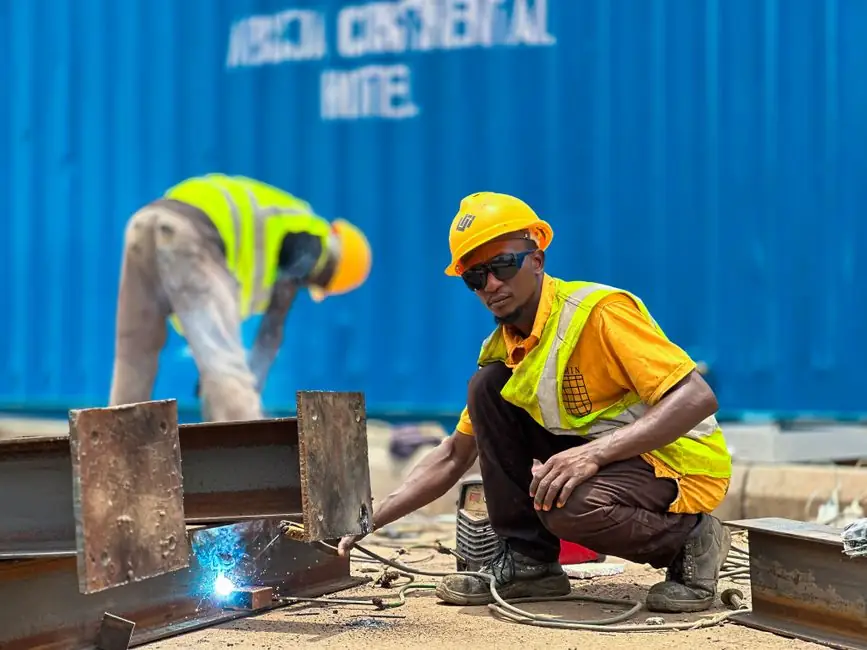
For arc welding eye protection, the practical selection rule runs shade 9 to 13 for most manual processes, with shade 10-12 covering the bulk of GMAW (MIG) and SMAW (stick) work at 100-350 A and shade 13-14 reserved for high-current FCAW and carbon-arc gouging above 350 A [S2]. Shade 5-7 spectacles alone are only acceptable for torch soldering, brazing inspection, and oxy-fuel cutting observation, never for true arc work.
Auto-darkening filters (ADFs) in the 9-13 dark-state range, with a clear-state shade around DIN 3 (roughly 3-4), cover the same envelope and let a welder strike, set parameters, and watch the puddle without lifting the hood. The two decision axes that drive a 2026 specification are process-amperage and grinding/inspection overlap, both of which land inside the ANSI/ISEA Z87.1-2020 impact and optical-class framework [S1].
Shade number selection by welding process and amperage
Shade selection is governed by radiated visible, IR, and UV intensity, which scales roughly with arc current, not base metal thickness. The widely used selection table maps shade 9 to GMAW and GTAW on light-gauge steel below 60 A, shade 10-11 to the 60-200 A SMAW/GMAW band, shade 12 to 200-350 A, and shade 13-14 to 350 A FCAW and air-carbon-arc gouging; shade 14-15 is reserved for plasma arc cutting above 80 A [S2]. The hard rule across all arc processes is that the chosen shade must still let the operator read the weld puddle against the parent metal; if you cannot see the leading edge, go one shade lighter, not darker.
For non-arc hot work, the table is much lower. Oxy-fuel welding, brazing, and light gas cutting typically use shade 3-5 in spectacles plus a face shield, because the dominant hazard is IR from the flame and flying spatter rather than UV from a sustained arc. This is the one case where the same worker can swap the welding hood for a safety glasses plus flip-up side shield combination without losing compliance.
Auto-darkening filter (ADF) spec gates: DIN range, switching time, sensors
A 2026-spec ADF is defined by four numbers: clear-state shade (DIN 2.5 or 3), dark-state shade (DIN 9 to 13, with DIN 9-13 variable being the most common), switching time light-to-dark (typically 1/10,000 to 1/20,000 second for mid-range hoods, 1/25,000 second on premium units), and dark-to-clear recovery (0.1 to 0.3 s on mid-range, 0.05 s on premium). Optical class and viewing area sit alongside, with EN 379 1/1/1/2 (optical quality / scattered light / homogeneity / angular dependence) as the most common European grade and Z87.1 impact-rated plusions as the U.S. baseline [S1].
The two most common spec mistakes on a 2026 PO are: (1) ordering a fixed-shade 10 plate when the job will swing from 80 A root passes to 300 A cap passes, where an ADF 9-13 with a single internal slider eliminates the helmet-lift cycle, and (2) ordering a 110x90 mm viewing area when the welder is doing out-of-position work, where 100x60 mm (often sold as a "compact") actually fits under a hard hat better and gives a deeper clearance to the cheek for tight joints.
Lens material, optical class, and impact rating
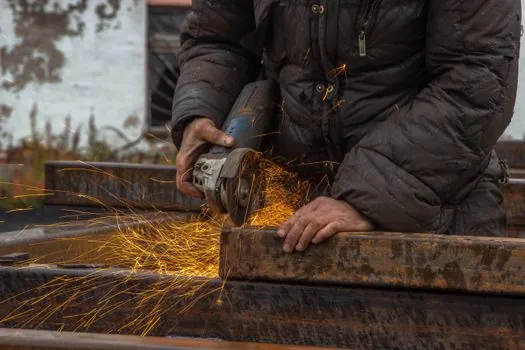
Polycarbonate dominates because it carries the Z87.1+ (high-impact) marking, blocks UV-A/B/C to 380 nm inherently, and weighs roughly half of a glass cover plate of the same shade. Glass cover plates (CR-39 or tempered glass) are still specified on some heavy-amperage SMAW hoods where spatter adhesion is a recurring issue: the cheap glass takes the spatter and is flipped or replaced, while the polycarbonate ADF cartridge behind it stays clean. The classic spec pattern is a shade 10-13 polycarbonate inner cover plus a CR-39 outer cover on every helmet in a fab cell.
Side coverage matters as much as front coverage for welders working in cells, because arc flash from a neighbour's stick rod is a real documented injury. Side-shield or wraparound safety glasses with a minimum 6 mm temple coverage and Z87.1+ rating are the lower-cost solution; for tight cells, a flip-up welding goggles shell with a separate shade plate slots in under the hood and protects against reflected arc from the back of the booth.
Helmet, goggles, and spectacles: who needs what
The selection table by role is short. A welder doing manual arc work always needs a welding hood (fixed-shade or ADF) plus Z87.1+ safety spectacles under the hood for chipping and grinding, because the hood flips up more than a hundred times a day. A nearby fitter or grinding operator in the same cell needs Z87.1+ safety glasses with side shields plus a face shield, not a welding hood, because they are not staring at the arc. A supervisor walking the cell needs the same Z87.1+ glasses plus a face shield for any pass through an active welding bay; this is the most commonly skipped PPE item in 2026 plant audits.
For overhead and out-of-position work, a hard-hat slot ADF (Z89.1-class hard hat with a lift-front welding attachment) is the standard, and the optical class should be specified as 1/1/1/1 if the budget allows, since angular dependence class 2 hoods show edge distortion when the welder tilts the head more than 15 degrees, and that is exactly when out-of-position welds are run. For tight-budget shops, the practical downgrade is a 1/1/1/2 hood with a replacement cartridge schedule, not a class-2 optic.
Common spec failures and how to avoid them
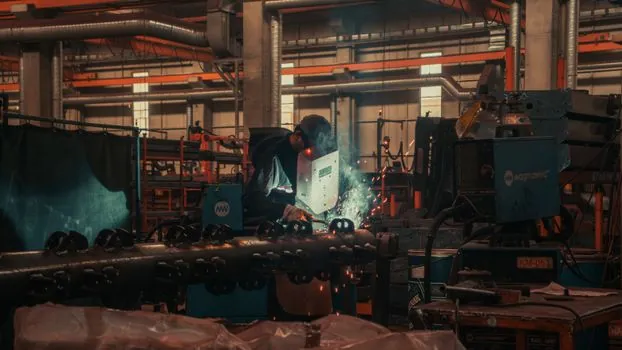
The three recurring 2026 warranty and audit failures on welding eye protection are: (1) ADF cartridges left past their 2-year service life, after which UV/IR blocking photochromic layers drift out of spec, (2) replacement cover lenses installed without checking the Z87.1+ marking, which voids the impact rating even if the part physically fits, and (3) shade-5 spectacles issued to welders for "comfort", a clear ANSI/ISEA Z87.1-2020 violation for any arc process because shade 5 is below the minimum for GMAW at any amperage [S1]. The cheapest fix on all three is a dated-tag program: month/year sticker on every cartridge and cover plate, replaced on a 24-month cycle regardless of apparent condition.
For selection adjacent to welding, a side-by-side comparison of the three main options on four decision criteria reads: fixed-shade plate (cost low, amp flexibility poor, weight low, optical quality high) vs mid-range ADF 9-13 (cost medium, amp flexibility high, weight medium, optical quality class 1/1/1/2) vs premium ADF 9-13 with true color (cost high, amp flexibility high, weight medium-high, optical quality class 1/1/1/1). The mid-range ADF is the 2026 default for fab cells; the premium ADF earns its price on high-amperage stainless and out-of-position aluminium work where puddle colour discrimination drives defect rate.
Standards, sourcing, and what to ask the vendor
For U.S. plants, specify ANSI/ISEA Z87.1-2020 with the "+" high-impact marking and the "W" shade marking on the lens; Z87.1 is the consensus standard for eye and face protection and is administered by ANSI, the U.S. non-government standards coordination body founded in 1918 with over 250 member societies [S1]. For European plants, specify EN 169 (welding filters) plus EN 175 (welding helmets/hand shields) plus EN 379 (ADF performance). For oil and gas or chemical-plant work, the additional gate is that the lens, frame, and headgear must all carry the ATEX/IECEx non-sparking material requirement for the zone rating of the work area, which is a separate compliance layer from the optical spec [S3].
Two questions to put on every RFQ: "What is the EN 379 optical class on the production-line cartridge, and is the test report dated within 24 months?" and "Is the shade plate Z87.1+ rated and is the marking laser-etched, not printed?" A printed marking on the temple or lens wipes off in 6 months of sweat and weld spatter, and an auditor will red-tag the PPE. A dated test report on EN 379 means the manufacturer has not changed the LCD stack in a way that would drift the spec. For plant buyers specifying across a multi-site fleet, the RFQ spec map on timing belts carries a similar four-question template that translates to most industrial PPE and consumable categories.
Trackable signals for the next sourcing cycle: watch for EN 379 revisions that tighten the angular-dependence class-1 limit, and watch the channel for true-color ADF cartridges dropping below the current entry price, since the LCD stack has been the cost driver for the last decade. Both will move the 2027 spec floor for any fab cell that runs mixed-process welding.
The underlying component specifications are covered under welding cutting tool, and fire safety.