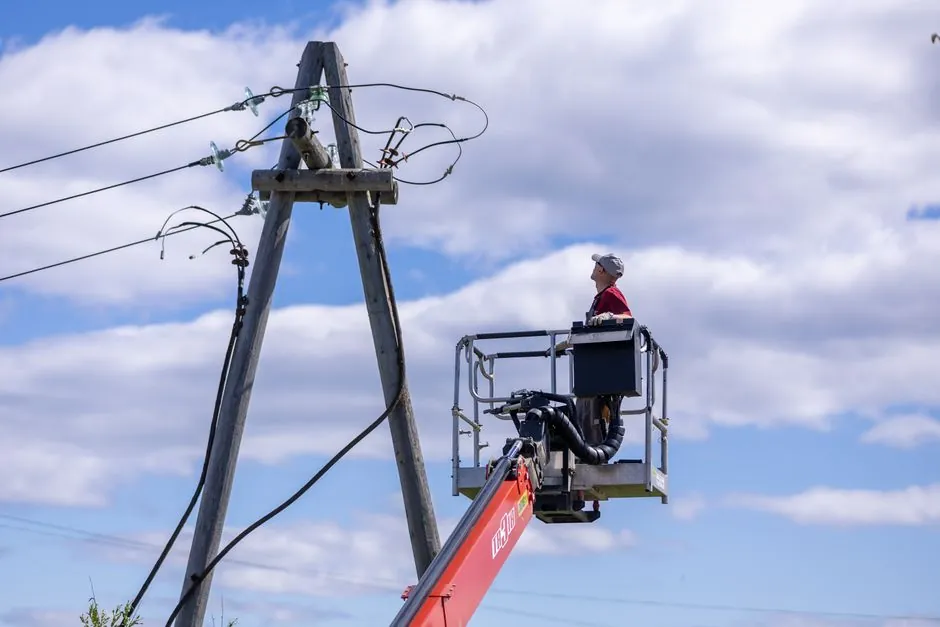
For crews on roofs, scaffolds, MEWPs and ladders, safety glasses are not an optional add-on to a harness; they are the eye-level defence against falling debris, dust blown from above the worker's face, and chemical splash from overhead pipework, and they have to clear the same planning gate as the fall-arrest system under the Work at Height Regulations 2005 [S2].
Three facts set the spec floor. First, EN 166 is the umbrella European standard for personal eye protection and defines mechanical, optical, and marking requirements. Second, the Work at Height Regulations 2005 require that PPE is selected after the risk assessment, that it is appropriate to the risk, and that it is maintained [S2]. Third, BS 7883:2019, the British Standard for personal fall protection equipment, has tightened inspection discipline across UK roof-access work and is treated by major contractors as a baseline for competency [S1].
EN 166 Marking Codes: What Has to Appear on the Lens and Frame
EN 166 forces a specific code block on every certified spectacle, and any pair missing one of these fields is not compliant for industrial use. The lens carries a mechanical strength symbol: S for increased robustness (a 22 mm steel ball dropped from 1.2 m), F for low-energy impact (a 6 mm ball at 45 m/s), B for medium-energy impact (120 m/s), or A for high-energy impact (190 m/s) [S2-adjacent]. For work at height the typical floor is F (low-energy), and B is specified where metal swarf, strimming, or grinding is in scope. The frame must also show the EN 166 number plus the manufacturer's mark, and the lens itself must carry the optical class (1 for continuous use, the only choice for all-day wear). [S2]
Two optional lens filters usually run with EN 166 on a roof. EN 170 covers ultraviolet filters, with shade codes 2-1.2 to 2-5, and is the default for outdoor structural steel and roofing work. EN 172 covers sunglare filters for industrial use, shade codes 5-1.4 to 5-3.1, and is added when workers are on reflective metal roofing, glazing, or snow and need glare control without losing impact protection. If a crew needs both UV and glare control on the same job, EN 170 with a higher shade number is usually a better spec than swapping to a non-certified tint.
Indirect Ventilation and Anti-Fog: Why the Vent Geometry Matters Overhead
Indirect-ventilated safety glasses, where the side and top vents are baffled so droplets and dust cannot enter from a vertical drop, are the correct choice for overhead work; direct-ventilated spectacles, which have open slots, fail when dust or liquid falls onto the face and are restricted to clean indoor assembly work. On a roof or scaffold, the worker is almost always looking up at fixings, and debris falls toward the lens, so the vent path has to deflect, not admit. [S3]
Anti-fog performance is graded separately under EN 168, with N (no fogging), K (resistance to surface damage by fine particles), and a fogging rating on the lens. For height work in UK and northern-European weather, the practical gate is a marked N or a tested anti-fog coating, because a fogged lens mid-task on a ladder is a documented cause of slips and falls. Field reality: coated lenses lose performance after 6-12 months of daily wipe-down with standard solvents, so site procurement should plan a replacement cycle, not a one-off purchase.
PPE Hierarchy Under the Work at Height Regulations 2005
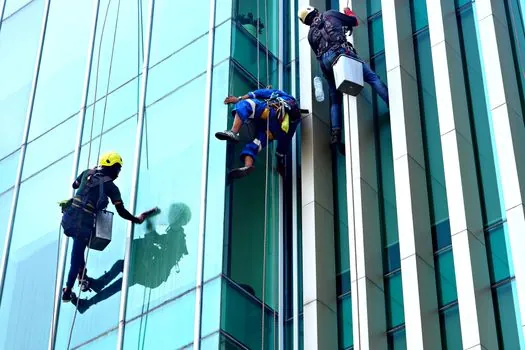
The Work at Height Regulations 2005 (WAHR) require that work at height is properly planned, that those involved are competent, that risks are assessed, that appropriate work equipment is selected, and that the equipment is properly inspected and maintained [S2]. PPE sits at the bottom of the prevention hierarchy in WAHR: first eliminate the work, then use collective protection such as guardrails, then work-restraint or fall-arrest systems, and only then personal protective equipment. This is why eye protection cannot be the primary control for a falling object hazard, but it is the only control that addresses the residual eye risk after the harness and scaffold are in place.
For eye protection specifically, the practical reading of WAHR plus EN 166 is that the glasses must be compatible with the chin strap of the worker's hard hat, must not interfere with the side arms of a harness, and must not block the peripheral vision needed for aerial work platform operators scanning the boom envelope. A common site failure is specifying wide safety goggles that push the spectacle arms outward and break the seal of ear defenders; the answer is a low-profile wraparound with flat arms, not a bigger goggle.
Site-Specific Selection: Roofing, Scaffolding, MEWP, and Ladder Work
Roof access: BS 7883:2019 governs the personal fall protection system (PFPS) the worker is attached to, and most UK roof-access contractors now require a documented inspection regime against that standard [S1]. On the eye side, the dominant hazards are UV, glare on membrane or metal roofs, and dust from drilling fixings, so EN 170 or EN 172 plus indirect ventilation and an N-rated anti-fog coating is the consistent site standard.
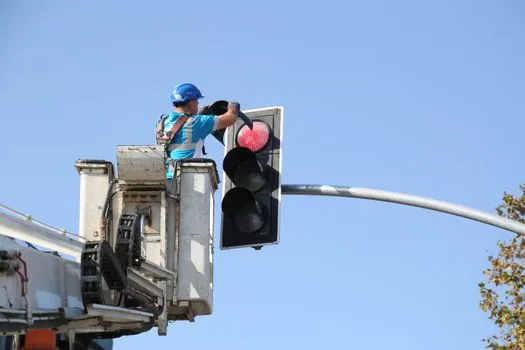
Scaffolding: dust from cutting boards, mortar splash, and overhead drilling make indirect-ventilated glasses with an F or B mechanical rating the right pick. If the scaffold is sheeted and the worker is doing grinding above their head, B-rated (medium-energy impact, 120 m/s) is the minimum, and a wraparound style that overlaps the side of the face is preferred to a flat lens. For aerial work truck and MEWP operators, the same F/B rating applies, but anti-fog performance is weighted higher because the cabin or basket can be humid, and the operator must keep clear sight of the boom limits and the ground-spotter.
Ladders: the HSE guidance under WAHR treats ladders as a short-duration, low-risk option, and recommends considering alternative equipment if a leaning or stepladder is used for more than 30 minutes at a time [S2]. For tasks inside that 30-minute window, lightweight F-rated glasses with anti-fog are the default, because anything heavier pushes the worker to over-reach and shift the ladder.
Comparison: Lens Marking vs Hazard vs Typical Use
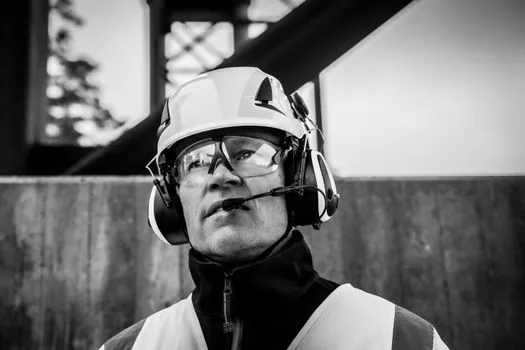
Three configuration families cover almost all work-at-height specs. (1) EN 166 + EN 170, F rating, indirect vent, N anti-fog: the all-rounder for general roof and scaffold work in overcast or mixed light, with UV protection and impact resistance but no sunglare filter. (2) EN 166 + EN 172, shade 5-2.5 or 5-3.1, F rating, indirect vent, N anti-fog: the right pick for reflective metal roofing, snow, or glazing, where the worker needs glare control and impact resistance. (3) EN 166, B or A rating, indirect vent, N anti-fog, optional side shields: specified for grinding, strimming, and chipping overhead, where the impact energy is documented and the F rating is not enough. Anything outside these three should be justified in writing on the risk assessment. [S1]
Inspection, Maintenance, and Replacement Cycle
EN 166 does not impose a calendar life on a spectacle, but a scratched lens, a coating that fogs within seconds, or a frame crack is enough to take the unit out of service on a WAHR-compliant site. The HSE's position under the Work at Height Regulations 2005 is that equipment used for work at height, which includes PPE supplied for the task, must be properly inspected and maintained [S2]. Most UK site PPE plans replace safety glasses annually for daily users, sooner if the anti-fog coating has failed, and always after any impact event where the lens has contacted a tool or a fall.
Cleaning discipline matters: alcohol-based wipes degrade anti-fog coatings in weeks, not months, and site supervisors are the right gatekeepers for the wipe type. Soap and water or a manufacturer-recommended anti-fog cloth is the only routine that holds the N rating over the life of the product.
Standards and Reference Signals to Track
WAHR 2005 (UK) is the regulation; EN 166 is the European product standard; EN 170 and EN 172 are the lens-filter standards typically co-specified; BS 7883:2019 governs the fall-protection equipment the worker is attached to, and most UK roof-access contractors treat BS 7883:2019 inspection records as a contractual deliverable [S1]. EN 168 is the test method that produces the N fogging and K abrasion marks on the lens, and is the one to look for on the data sheet when a vendor claims "anti-fog" without naming a standard.
Trackable next signals: the next WAHR amendment cycle (UK Statutory Instrument), any revision of EN 166's mechanical-strength table, and any tightening of the BS 7883:2019 inspection interval by the PH/5 committee. For day-to-day site work, the gate is the EN 166 marking on the lens plus the frame, the EN 170 or EN 172 filter code, and a visible N anti-fog rating, all reconciled against the task-level risk assessment under the Work at Height Regulations 2005 [S1][S2].
See also our earlier report, Melting Furnace Selection for Lighting Fixture Foundries.