
A push-in fitting is a tube-side connector whose grip is mechanical: a collet with stainless gripping teeth and an O-ring seals when the tube is inserted, and release is via a push-sleeve [S1]. Most catalogue lines cover 4 mm, 6 mm, 8 mm, 10 mm, and 12 mm metric OD, with 1/8 in, 1/4 in, 3/8 in, and 1/2 in thread ports [S3].
Selection is a four-gate problem, not a brand problem. Get the fluid, the pressure class, the tube OD, and the port thread right and 80% of the spec is done; the remaining 20% is temperature window, certifications (FDA, NSF, drinking-water approvals), and whether you need a swivel, elbow, tee, or hand-valve variant [S1][S3].
Media chemistry and body material
Polypropylene (PP) bodies such as the Festo NPQP series are FDA-compliant, light, and translucent, and are specified for chemical resistance in food, beverage, and laboratory water service [S1].
Brass and nickel-plated brass dominate general factory air, where the working fluid is oil-lubricated or oil-free compressed air at room temperature; BUC, PC, and PEG series in the AliExpress catalogue sit in this bucket, often priced under $1 per piece in small packs [S3]. 304 stainless steel push-in couplers (PU/PY/PE lines) are used where washdown, higher corrosion, or slightly elevated temperature push the duty beyond nickel-plated brass [S3].
Pressure class and temperature window
Push-in fittings for general pneumatics are typically rated for working pressures in the 0.9 MPa to 1.0 MPa range, with burst margins of 3-4x, but the exact number is a per-catalogue line item and must be confirmed against the datasheet, not assumed from the series name [S1][S3].
Temperature windows split by body material: PP (NPQP) is bounded on the hot side by the polymer softening point, brass and 304 SS lines are bounded by the O-ring compound (NBR for the standard offering, FKM/EPDM optional on most premium series) [S1]. Vacuum service is a separate spec line, with dedicated push-in vacuum generators and suction cups covered in the August 2026 vacuum supplier map; a standard push-in elbow will not hold vacuum unless the line is explicitly rated for it.
Tube OD, port thread, and standardisation
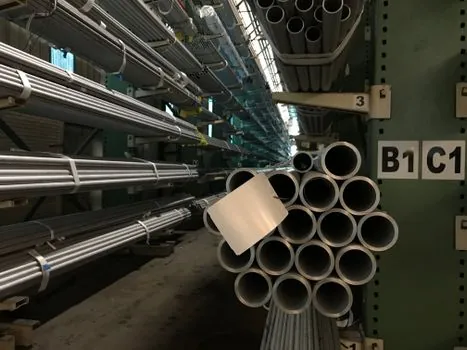
Tube OD is metric-first in most OEM catalogues (4, 6, 8, 10, 12, 16 mm), with inch equivalents (1/4 in, 3/8 in, 1/2 in) as a parallel offering on the same series [S3]. A 6 mm push-in port and a 1/4 in tube port are mechanically interchangeable only with a reducer insert, and the seal contact is different.
Port threads are where most field failures start. BSPP (G), BSPT (R, PT), and NPT are the three families seen in the AliExpress B2C feed, with NPT dominant in US-spec lines like the Festo 1/4-6 (1/4 NPT female to 1/4 in / 6 mm tube) and BSPP/BSPT dominant in European and East Asian OEM lines [S2][S3]. Sealing differs: NPT is thread-taper sealing with PTFE tape, BSPP is parallel and needs a bonded seal or O-ring, BSPT is tapered like NPT. Cross-threading an NPT into a BSPP port is a common leak source and a spec error, not a fitting defect.
Variant selection: straight, elbow, tee, bulkhead, hand valve
Form factor follows routing. Straight and elbow push-ins are the workhorses; tees and Y-pieces are for distribution and pilot-air takeoffs; bulkhead push-ins solve panel-mount and cabinet entry; and hand valves (BUC-style) are inline shut-offs for 4-12 mm tube service [S3].
The QS-1/4-4 (Festo 190644) and similar 1/4 NPT variants are typical machine-build workhorses, sold in 10-packs on the secondary market and used on cylinder ports, FRL outlets, and valve manifolds [S4]. For more complex assemblies, a modular FRL sizing guide decision feeds the downstream port size; if the FRL outlet is 1/2 in BSPP and the cylinder is 1/4 in BSPP, the push-in reducer becomes a fixed line item rather than a variable.
Selection criteria: who it is for, who it is not for
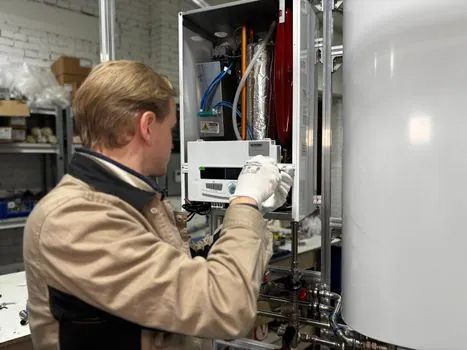
Push-in fittings are the right answer for shop-air distribution, packaging machinery, light pneumatics, laboratory water and inert gas, and any low-pressure line where tubes are added, removed, and re-routed frequently [S1][S3]. They cut assembly time versus compression fittings by 50-70% on bench builds, and the collet design gives repeatable pull-out resistance without torque control.
They are not the right answer for high-pressure hydraulic service above roughly 1.6 MPa, for permanent fixed installations where vibration could walk the tube out of the collet, for steam, for fuels, or for any fluid that attacks the standard NBR O-ring. A threaded compression fitting or a flared fitting is the correct pick in those duty windows; a push-in used outside its catalogue rating is a leak waiting to happen. For a deeper dive on adjacent fluid-handling hardware, the variable area flow meter cost structure and thrust bearing spec gates for food lines cover downstream selection logic for the same plant-floor buyer.
Standards, certifications, and documentation
FDA compliance is the headline certification for PP-bodied lines like NPQP, governing food-contact and potable-water exposure limits [S1]. RoHS and REACH compliance are baseline on European OEM lines and should be expected on any premium QS, NPQP, or equivalent series [S1].
Drinking-water certifications (KTW, WRAS, NSF/ANSI 61) are line-specific and not automatic, even on PP-bodied product, so a buyer specifying push-in for potable service must request the certificate by name, not assume it from the material [S1]. Thread standards are the only universally traceable spec: ISO 228 for BSPP (G), ISO 7 for BSPT (R/Rc), and ASME B1.20.1 for NPT, and the order code should match the standard exactly.
Practical shortlist logic
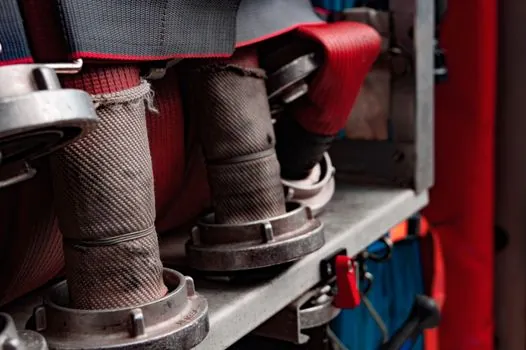
Start with media, then pressure, then tube OD, then thread, then variant. A buyer in a bottling plant specifying 6 mm PU tubing on a washdown line should default to 304 SS push-in with EPDM O-ring, BSPP port, and a documented FDA + NSF/ANSI 61 line; a buyer on a 0.7 MPa shop-air header with 8 mm NBR tube should default to nickel-plated brass, BSPP or NPT per region, NBR O-ring, and the cheapest qualified QS-equivalent. [S3]
Skip the brand premium unless a specific certification, cycle life, or chemical-resistance datasheet is required. Skip the no-name B2C pack (the $0.33-0.99 listings on AliExpress) on any line that is safety-relevant, that feeds a press, a clamp, or a lifting cylinder, or where a leak has a downstream cost in product contamination [S3]. A failed push-in on a pneumatic clamp costs an hour of downtime; a failed push-in on a bottling rinse costs a recall, and the two are not the same decision.
Component reference pages worth checking: pipe fitting, piping fitting, and pneumatic fitting.