
Pneumatic ejectors still cover the majority of factory pick-and-place and sheet-metal handling, while electrically driven pumps and blowers are taking share in cells with no shop-air header or where IO-Link energy monitoring is mandated [S1][S3]. The DirectIndustry compact-generator index lists 453 products across 71 manufacturers, with BECKER (90), Busch Vacuum Solutions (28), and CHARLES AUSTEN / BLUEDIAMOND (22) as the deepest catalogue lines [S1].
Sizing always starts with the work: the sealed volume to be evacuated, the leak rate through seals and rough surfaces, the minimum working pressure the gripper needs, and the cycle time the line demands. Once those four numbers are fixed, the ejector or pump choice is mechanical, not subjective.
Three principal technologies, three different duty envelopes
Schmalz organises its vacuum-generator catalogue into two clean families: pneumatic ejectors (compressed-air driven, including inline and T-shaped bodies) and electric generators (pumps and blowers, with IO-Link as the common commissioning interface) [S3]. The Schmalz electric product line is explicitly framed for "handling of airtight and porous workpieces" and integrates compact pumps with simple IO-Link parameterization, which is the right answer for lines that have no air ring main or want per-cell energy metering [S3].
On the pneumatic side, the catalogue subdivides again by stage count. Single-stage Venturi ejectors (Mindman VH/VS, max operating pressure 0.15 to 0.7 MPa, push-in fitting for direct valve mounting) are the cheapest and fastest, built to "convey workpieces" in combination with a vacuum pad [S4]. Multistage cartridges, exemplified by GIMATIC's EJ-MEDIUM (2.4 to 19 g) and EJ-LARGE (15 to 84 g) series, reach an ultimate vacuum of -90,000 to -73,000 Pa, with two- and three-stage options for tighter grip on rough or porous loads [S1].
Spec ranges you can size against today
Schmalz exposes a four-axis filter on its vacuum-generator page: maximum suction rate in l/min, nozzle diameter in mm, degree of evacuation in percent, and air consumption in l/min [S3]. That filter combination is the de-facto sizing checklist in the industry and corresponds directly to the Schmalz "Systems for Vacuum Generation" envelope, which spans suction capacity up to 250 m³/h and maximum vacuum down to -980 mbar depending on pump type [S3].
Compact single-stage pneumatic bodies sit much lower. The Mindman VH/VS is a direct-mount, push-in ejector sized to the standard 0.15 to 0.7 MPa supply band, with the vacuum port inline with or at 90 degrees to the supply port depending on the straight-versus-T body choice [S4]. GIMATIC's VN series (oil-free Venturi ejector) runs 0 to 60 °C ambient and weighs 22 to 183 g, which keeps the generator small enough to fit at the end-of-arm tool rather than in the cabinet [S1].
For higher vacuum, multistage ejector cartridges from GIMATIC span -90,000 to -73,000 Pa ultimate vacuum in the EJ-MEDIUM and EJ-LARGE families, with weights of 2.4 to 19 g and 15 to 84 g respectively; the EJ-BA two-stage vacuum pump goes deeper still, reaching -94,000 to -73,000 Pa in an anodised aluminium manifold weighing 75 to 189 g [S1]. Rotary vane pumps remain the right call for continuous-duty rough-vacuum service, with BECKER VT 4.2 to VT 4.8 covering 1.9 to 9.1 m³/h at 0.09 to 0.44 kW and ultimate vacuum of 400 mbar (VT 4.2) down to 150 mbar (VT 4.4 / VT 4.8) [S1].
Criteria comparison: ejector stage, electric pump, or rotary vane
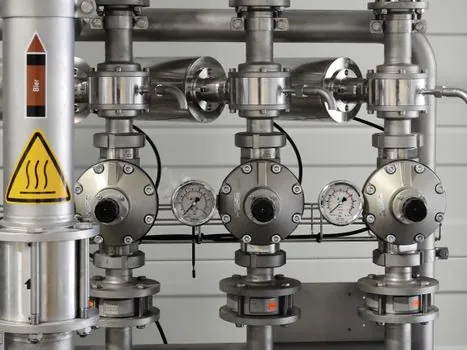
Use this short matrix as a first-pass filter before opening a catalogue page. All three options are real, current, and stocked, but they optimise different numbers. [S3]
Single-stage pneumatic ejector (Mindman VH/VS, GIMATIC VN): lowest unit cost, fastest pump-down on small sealed volumes, simple 0.15 to 0.7 MPa supply, no electrical wiring, but wastes air continuously when held under vacuum and tops out around -60 to -85 kPa ultimate depending on nozzle size [S4][S1]. Multistage pneumatic cartridge (GIMATIC EJ-MEDIUM / EJ-LARGE / EJ-BA): reaches -73 to -94 kPa, halves air consumption versus a single stage for the same grip force, and is the right answer for porous cardboard or rough castings; the trade-off is higher cartridge cost and a silencer that must be kept clear [S1]. Electric vacuum generator / pump (Schmalz electric line, IO-Link): best when no compressed-air ring main exists, or when the cell needs per-cycle energy data via IO-Link; Schmalz positions these for both airtight and porous workpieces, with systems reaching suction capacity up to 250 m³/h and vacuum down to -980 mbar depending on the chosen pump [S3]. Rotary vane pump (BECKER VT 4.2 to VT 4.8, 150 to 400 mbar ultimate, 1.9 to 9.1 m³/h): continuous-duty rough vacuum, oil-free self-lubricating graphite vanes, integrated regulating valve for set-point control, but requires more installation space and is over-spec for any pick-and-place under a few seconds cycle time [S1].
For a quantified cross-reference on similar pneumatic-circuit sizing decisions, the FRL unit vs pneumatic tubing match-up guide walks through how the upstream air treatment train constrains ejector supply pressure and noise. Where flow instrumentation is part of the same cell, the thermal mass flow meter selection guide covers the sensor-side accuracy gates that often sit next to the vacuum manifold.
Who should NOT pick the cheapest single-stage ejector
Single-stage ejectors are the wrong choice for three classes of duty. First, porous or fibrous workpieces (cardboard trays, textile stacks, raw MDF) where leak rate is high: a single stage will cycle endlessly trying to hold vacuum and the air bill will dominate total cost of ownership. Second, applications requiring a holding vacuum below about -85 kPa, which excludes vacuum clamping of glass, dense composites, and most injection-mould suction cups on deep-draw parts. Third, any cell with strict energy accounting or where the air header is congested, because a single-stage ejector draws supply air continuously while the cup is gripped; an IO-Link electric pump or a multistage ejector with a vacuum switch that drops to a low-hold mode will cut air consumption dramatically on long hold cycles [S3][S1].
For cleanroom and lab-grade flows where a vacuum generator sits inside a satellite or semiconductor build, the satellite manufacturing equipment spec map covers how thermal-vacuum chamber sizing compares against the same ejector/pump envelope used on the factory floor.
Standards, monitoring, and the IO-Link shift
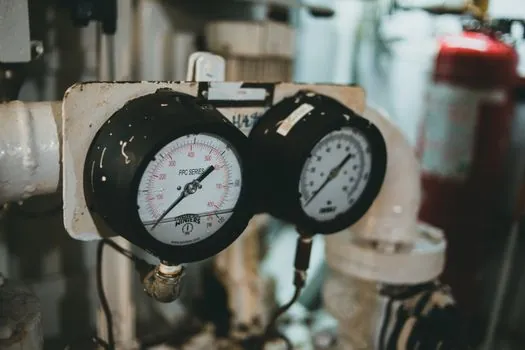
Compressed-air quality and supply-pressure tolerance for pneumatic vacuum generators typically follow the ISO 8573-1 cleanliness classes used elsewhere in the pneumatic circuit, while the ejector's own pressure rating is set by the manufacturer (Mindman specifies 0.15 to 0.7 MPa for the VH/VS, which is the standard SMC / Festo / Camozzi band as well) [S4]. For electric vacuum generators, IO-Link is now the de-facto parameterisation and condition-monitoring bus, and Schmalz positions IO-Link as a standard feature of its compact electric line for exactly that reason: pressure setpoint, leak diagnostics, and energy-per-cycle are all readable from the PLC without extra analogue wiring [S3].
Marine and mobile duty is a separate envelope entirely. The Dometic SeaLand VG4 J-Series, sold as a 24 V / 4 A DC self-priming unit, regenerates vacuum up to 33% faster than its VGII / VG III predecessors, lifts 6 ft and self-primes horizontally to 50 ft, and is remotely mounted outside the head compartment for ultra-quiet operation [S5]. That is the spec pattern to follow for any vehicle, vessel, or remote-cabinet application where 24 VDC is the only power available and the generator has to live outside the work envelope.
Selection shortlist logic and what to track next
Run the four-number sizing test before opening any catalogue: (1) sealed cup volume in cm³, (2) worst-case leak rate in kPa/s, (3) minimum working vacuum in -kPa for the gripper, (4) cycle time in s. If (3) is shallower than about -60 kPa and (4) is under 1.5 s on a small volume, specify a single-stage inline ejector such as the Mindman VH/VS or a GIMATIC VN at the end-of-arm tool, with supply regulated to 0.4 to 0.6 MPa [S4][S1]. If (3) needs -70 to -90 kPa or (2) is non-trivial, step to a two- or three-stage cartridge (GIMATIC EJ-MEDIUM or EJ-LARGE), accepting the silencer maintenance burden [S1]. If the cell has no shop air or needs IO-Link energy data, jump to a Schmalz electric pump; if the duty is continuous rough vacuum at high flow, specify a BECKER VT-series rotary vane at 0.09 to 0.44 kW, sized to the actual m³/h load [S3][S1].
Track two signals through the rest of 2026: the IO-Link vacuum switch / generator share of new cells (rising, per the Schmalz product framing) and the displacement of single-stage ejectors by multistage cartridges on porous-workpiece lines, where the air-cost crossover typically occurs within one to two years of two-shift running [S3][S1]. For related factory-floor spec decisions, the positive-displacement flow meter price and cost guide covers the flow-instrumentation side of the same compressed-air and process-gas circuits.
For component-level specifications, see vacuum generator, lighting equipment and electric lamps, and linear guide.