
Selection hinges on three coupled numbers: substrate hardness, compressor CFM, and the cabinet or pot's daily duty cycle (DDC). A 5 HP compressor needs roughly 1 hour to do what a 20 HP unit finishes in 7 minutes, and doubling CFM roughly triples productive output on a sand blasting machine [S3].
Match the abrasive to the substrate first, then size the air supply, then pick the feed system. Skipping any of the three is the most common way buyers end up with a machine that either underperforms or destroys the part, especially on softer workpieces like wood or aluminium [S1][S2].
Feed System: Siphon vs Pressure vs Gravity vs Cabinet
Siphon-feed blasters draw abrasive by suction, run at moderate CFM (around 10–15 CFM per gun), and stay gentle on substrates, which makes them the default pick for furniture restoration and reclaimed-wood work [S1]. Pressure blasters push abrasive under positive pressure from a sealed pot, raise cleaning speed sharply, and demand 15–25+ CFM at the nozzle, the right choice for thick paint, heavy mill scale, or structural steel [S1][S3].
Gravity-feed pots sit above the gun and dribble media through a small orifice, which keeps them portable and cheap but limits media capacity, so they fit spot repairs and detail work rather than production runs [S1]. Blast cabinets enclose the workpiece, recover media, and capture dust; their value is dust control and consumable reuse, not raw throughput, and the DDC rating on the cabinet determines whether a unit is light duty, general purpose, or production class [S3]. The DDC calculation in production cabinets is governed by gun CFM, separator capacity, dust collector blower CFM, and filter surface area, all of which must scale together or the cabinet chokes on heat and dust [S3].
Sizing the Air Compressor and DDC
Compressed-air requirement scales with gun size, and gun size in turn scales with abrasive flow and frictional heat, the two factors that actually drive cycle time. Industrial guns running at 20 CFM generate enough frictional heat to cut an 8-hour job to under 1 hour, but only if the cabinet is rated for that CFM; light duty cabinets cap out near 20 CFM because they lack separator and dust-collector support [S3]. Compressor duty cycle is rated on a 10-minute window, much shorter than cabinet DDC, so buyers should look for 100% compressor duty cycle ratings to avoid pump overheating on full-day work [S3].
For a stationary sand blasting machine tied to a fixed shop loop, planning for a 15–25+ CFM reserve is a common baseline; small mobile setups can drop to 5–8 CFM on gravity feed, but anything labelled production class should be paired with at least a 10 HP compressor to keep cycle times honest [S1][S3]. Buyers shopping for the broader compressed-air package can cross-check vendor and spec shifts in the Compressed Air System Landscape 2026: Vendors, Drivers, Spec Shifts reference.
Abrasive Media by Substrate

Silica sand is still around but should be treated as a legacy option, since dry silica blasting creates respirable dust hazards and many jurisdictions restrict uncontained dust plumes, which is why wet/dustless pot systems and softer media now dominate professional work [S2]. Crushed glass, glass beads, steel grit, garnet, baking soda, walnut shell, and corn cob are the workhorse alternatives that a wet/dry dustless pot can switch between without retooling, while a basic siphon pot is more limited by media density and moisture sensitivity [S2].
On wood, walnut shell and corn cob are the two go-to media: walnut shell gives gentle cleaning with reusable grain, corn cob is the lightest touch and is widely used for polishing and coating lift-off on softwoods [S1]. On metal, the same dustless pot can run garnet or steel grit for fast cut, baking soda for coatings where the substrate must survive, and glass beads for a peened finish; the media choice often matters more than the machine brand once the air supply is right [S2].
Wet, Dry, and Dustless Configurations
A wet/dustless pot mixes water and abrasive inside a pressure vessel so the water encapsulates spent abrasive and stripped coating, which drops airborne dust dramatically and makes cleanup faster than a dry plume [S2]. Local regulators have been shutting down dry blasting operations that create visible plumes, so a wet/dustless configuration is increasingly the default for outdoor contract work, not just an emissions nicety [S2]. The trade-off is water in the abrasive stream, which can flash-rust fresh steel and forces the operator to manage slurry recovery instead of dry media recycling.
For a buyer comparing wet versus dry head-to-head, the practical axis is dust regulation versus flash rust versus media cost. Dry systems keep abrasive dry, recyclable, and cheap, but they need a blast room or cabinet with proper dust collection to stay legal; wet systems suppress dust at the nozzle but require slurry handling downstream [S2].
Selection Criteria and Comparison
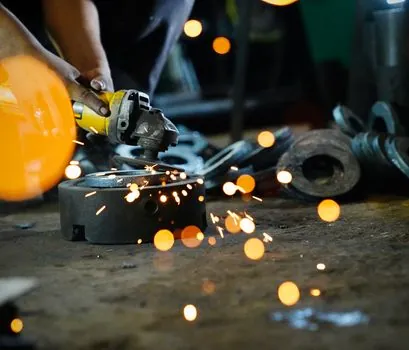
Four main variants cover the bulk of the market, and they line up cleanly against substrate, duty, and CFM. A buyer should walk the matrix below before looking at brand. [S3]
Siphon-feed, 10–15 CFM: low cost, gentle on substrate, ideal for wood and light paint, but slow on heavy scale [S1]. Pressure pot, 15–25+ CFM: high throughput, suits structural steel and thick coatings, needs a 100% duty cycle compressor and matched DDC-rated cabinet [S1][S3]. Wet/dustless pot, mid-range CFM: best for coating-strip and regulated outdoor sites, multi-media capable, but adds slurry handling [S2]. Blast cabinet, sized to gun CFM: best for small parts, indoors, media recovery, with DDC the deciding spec not advertised horsepower [S3].
Who Should NOT Pick the Cheapest Option
A budget siphon pot is the wrong call for any operator running more than a few hours a day, stripping structural steel, or working near occupied buildings, because the CFM shortfall, dust exposure, and slow cycle time will burn the labour savings within a month [S2][S3]. On the other end, a heavy industrial pressure cabinet paired with a 5 HP shop compressor is a stranded asset: the cabinet will sit idle waiting for air, and the DDC rating on the cabinet becomes meaningless if the compressor cannot feed it [S3]. Light duty cabinets marketed as industrial, heavy duty, or robust are usually mislabelled at the DDC level, so ignore those adjectives and read the actual CFM and filter area numbers [S3].
For wood-only work, a pressure blaster without a wet-mode pot is also the wrong tool, because even walnut shell at high pressure can fuzz softwood grain; the combination of lower pressure, finer grit, and gentle media is what protects the substrate, not the brand of gun [S1].
Standards, Safety, and Sourcing
No single ISO or ASTM number governs a complete sandblasting machine; instead the machine is the integration point for respiratory protection (NIOSH-approved respirators are typically required whenever dry blasting), abrasive selection, and dust control under local occupational health rules [S2]. The recurring sourcing red flag is silica sand in any dry, uncontained setup, which the industry has been moving away from for two decades because of silicosis risk and because regulators now treat visible dust plumes as a violation rather than a nuisance [S2]. Buyers should also confirm that the compressor's stated CFM is measured at the operating pressure of the blaster, not at free delivery, since CFM drops significantly as pressure rises.
Trackable next signals to watch on the foundry and process side, where blasting often feeds into mould prep, include the Sand Cooler Suppliers and Manufacturers: 2026 Spec Map for Foundry Buyers reference and the Sand Cooler Selection: Throughput, Outlet Temp, Footprint guide, both of which address the upstream thermal conditioning that determines whether reclaimed abrasive can be reused or must be discarded.
Detailed specification references: shot blasting machine, and sand cooler.