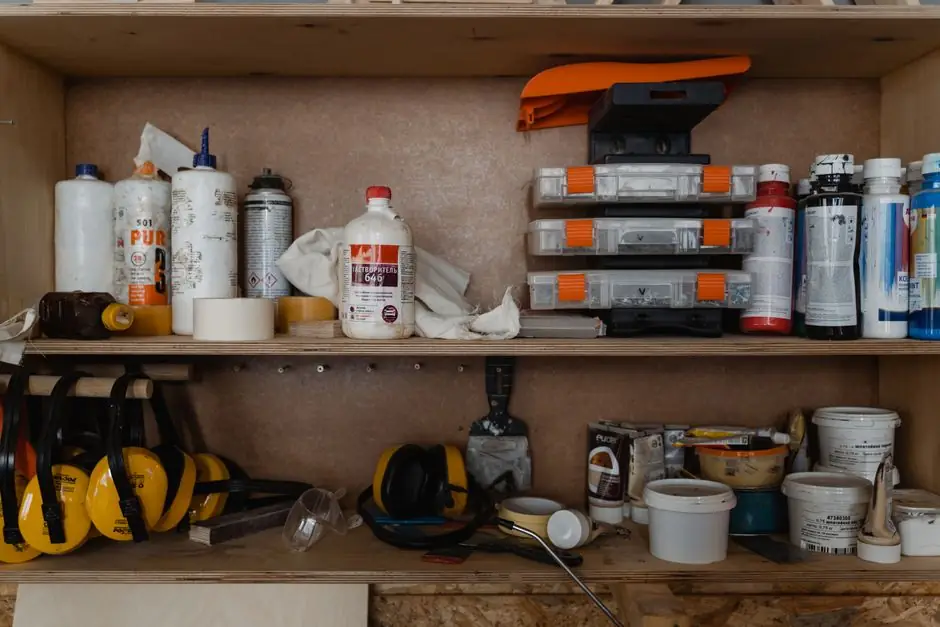
Industrial adhesive procurement in 2026 routes through a two-tier structure: global chemistry majors that own the polymer platforms, and regional formulators or specialty distributors that adapt those platforms to substrate- and process-specific jobs [S1][S2][S3].
The U.S. supplier landscape, as catalogued by Thomas, lists more than 3,200 adhesive and sealant manufacturers and distributors, with the ASI Top 25 historically anchored by 3M (estimated 2015 revenue $30.3 billion), Henkel AG, Huntsman, Avery Dennison, and Wacker Chemie AG [S3]. The named leaders have not lost their top-of-list positions in subsequent ASI surveys, and the same five firms remain the reference baseline most procurement engineers compare new entrants against [S1][S3].
Chemistry Families and What Each One Actually Bonds
Adhesive selection begins with chemistry, because cure mechanism, gap tolerance, and temperature ceiling all follow from the resin platform rather than from the brand label on the cartridge [S4][S9]. Epoxies are thermosetting two-part systems that deliver structural bonds on metal, composite, and concrete substrates, and are the default choice where lap-shear strength and chemical resistance dominate the spec; Adhesives Technology Corporation (ATC) produces epoxy, urethane, acrylic, and ester-blend systems specifically for construction and industrial anchoring work [S9]. Cyanoacrylates (instant-cure single-part) and anaerobic threadlockers (cure-in-the-absence-of-air, metal-only) are stocked by every major distributor for low-volume fixture and fastener-locking jobs, and Henkel LOCTITE 243 medium-strength threadlocker is a typical catalog line item in 50 mL bottles [S2]. Silicone adhesives (polydimethylsiloxane-based, moisture-cure) carry continuous service temperatures typically in the 200-260°C range and are used where flexibility and thermal cycling dominate, which is why Dow SILASTIC RTV4136-P bases and DOW 3145 RTV adhesives are stocked alongside engineering adhesives by full-line distributors [S2]. Hot-melt adhesives (thermoplastic, solid at room temperature, applied at 150-180°C) and pressure-sensitive adhesives (tack-at-room-temperature, no chemical cure) round out the main families, with the former dominant in packaging and product assembly and the latter in tape and label converting [S2][S4][S5].
Tier-One Global Manufacturers: Who Owns the Polymer Platform
The ASI Top 25 ranking provides the structural reference for any sourcing decision, because the firms at the top own the upstream polymer or formulation IP that downstream converters and distributors repackage [S3]. 3M, headquartered at 3M Center, St. Paul, MN 55144-1000, employs roughly 90,000 people and operates a West Region Technical Center in Chengdu, China, opened in November 2015 to serve the western-China industrial base [S3]. Henkel AG & Co. KGaA runs the LOCTITE brand, which is the single most-stocked specialty-adhesive line in U.S. industrial distribution; Ellsworth Adhesives alone lists LOCTITE 402 cyanoacrylate ($447.18 per 20 g bottle at 1-7 qty, dropping to $341.20 at 40+ qty), LOCTITE 243 threadlocker ($59.67 at 1-4 qty), and a LOCTITE 2564842 Pro-Pump handheld dispenser ($60.89 at 1-3 qty) on its catalog front page [S2]. The other recurring top-tier names in the ASI list and in U.S. distributor rosters are Bostik (hot-melt and pressure-sensitive), Dow (silicone RTV and engineered polymers), Sika (polyurethane and epoxy for construction and transport), Parker LORD (modified acrylic and structural adhesives, e.g. Parker LORD 406-19 at $30.69 for a 50 mL cartridge at 1-9 qty), Dymax (light-cure acrylics), and HumiSeal (conformal coatings) [S2][S3].
Specialty and Regional Manufacturers: Where Customization Happens
Regional formulators fill the gap between off-the-shelf catalog SKUs and a one-off engineered spec, and most procurement engineers end up qualifying at least one regional source for every critical bond on the bill of materials [S1][S4]. Adhesive Products Inc. (API), founded 1878 in San Francisco and operating from Albany, California and Seattle, Washington, supplies hot-melt, liquid, and protein-cake glues for folding cartons, envelope gums, paper-converting, woodworking/abrasives, and product-assembly markets, and is a useful reference point for protein-based and water-activated adhesives that the global majors treat as a sideline [S5]. Technical Adhesives, operating since 1961 across Canada, the United States, and Mexico, builds commercial and industrial adhesive products, including custom-engineered formulations, and is typical of the mid-size regional supplier that engineers engage when a Henkel or 3M catalog line does not match the substrate or cure window [S7]. Chemical Concepts, ATC, and Celanese (which markets a broad range of industrial adhesives for paper packaging, converting, laminating, and woodworking) round out the typical shortlist a U.S. process engineer will pull when qualifying a new bond [S6][S8][S9].
Distributors: How the Catalog Actually Reaches the Shop Floor
Most small- and mid-volume buyers do not purchase direct from the manufacturer; they route through specialty distributors whose value is stock depth, technical support, and consolidated shipping rather than lowest unit price [S1][S2]. Ellsworth Adhesives is a representative full-line U.S. specialty distributor, with the company self-describing as a "Global leader and trusted distributor for over 50 of the industry's top manufacturers" and quoting "more than 800 years of combined adhesive, specialty chemical, and dispensing expertise" across its workforce [S2]. Its manufacturer roster includes Dow, Henkel/LOCTITE, 3M, Bostik, Dymax, Glue Dots, HumiSeal, Parker LORD, and Sika, which is the same top-tier chemistry set the ASI ranking names as market leaders [S2][S3]. The practical read is that the 20-50 unit break is where distributor pricing starts to move meaningfully, which matters when engineering a multi-station assembly line.
Selection Criteria: Matching Adhesive to Substrate, Process, and Spec
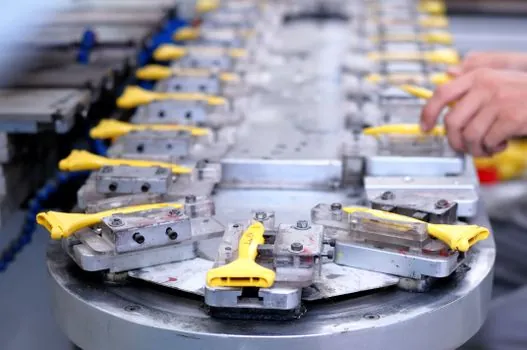
A defensible adhesive selection lines up four hard criteria in order: substrate compatibility (surface energy of the part, presence of release agents or oils), cure mechanism (room-temperature moisture, two-part mix, UV/visible light, heat, or anaerobic), service environment (temperature range, chemical exposure, UV, vibration), and qualified-supplier scale (does the manufacturer or its distributor have the capacity to ship the volume the line needs) [S4][S9]. A typical decision matrix reads: structural metal-to-metal or composite-to-composite favors two-part epoxy or methacrylate (Parker LORD 400-series, ATC epoxies); high-speed packaging favors EVA or metallocene hot-melt (Bostik Thermogrip series, API hot-melt lines); electronics potting and staking favors UV-curable acrylic (Dymax) or silicone (Dow RTV); and fastener locking on threaded joints favors anaerobic chemistry (LOCTITE 243 medium, LOCTITE 271 high-strength) [S2][S5][S9]. Procurement engineers should also reference the broader industrial adhesive spec page for cure-time, gap-fill, and substrate-preparation ranges, since those are the parameters that drive a bond-line failure on the line rather than the catalog SKU number.
Common Failure Modes and Sourcing Pitfalls to Engineer Out
Most production-line adhesive failures fall into a small set of recurring causes: inadequate surface preparation (oils, mold release, or dust on the bond face), wrong cure mechanism for the gap geometry (anaerobic products will not cure in gaps above ~0.5 mm, and one-part epoxies need heat), mismatched thermal expansion (a stiff epoxy on a high-CTE plastic will crack the substrate long before the bond fails), and shelf-life management (cyanoacrylates and one-part urethanes degrade with humidity exposure) [S4][S9]. A second, less obvious failure mode is the dual-source trap: qualifying only one catalog line for a critical bond makes the line hostage to that supplier's price moves and stockouts, so the standard practice is to qualify a primary (typically a top-tier global like Henkel/LOCTITE or 3M) and a secondary (typically a regional formulator or a different chemistry family) for every safety-critical or line-stopping bond [S1][S2][S9]. Finally, buyers should treat construction-machinery-and-equipment and lamps-and-light-fittings bond-line specs as adversarial environments (vibration, dust, temperature swing, UV) and over-spec the adhesive rather than under-spec it, because the cost of an extra $2 of adhesive per joint is two orders of magnitude smaller than the cost of an unscheduled line stop.
Trackable Signals: What to Watch Through Year-End 2026
Three signals are worth monitoring as the 2026 sourcing cycle closes. First, watch the published 2026 ASI Top 25 update for any change in the top-five ordering relative to the 2016 baseline (3M, Henkel, Huntsman, Avery Dennison, Wacker Chemie AG); any reshuffle is a 5-10 year indicator of where polymer-platform IP is consolidating [S3]. Second, track distributor price moves on the workhorse SKUs (LOCTITE 243, LOCTITE 402, Parker LORD 406-19, Dow 3145 RTV), since the volume break-points in the Ellsworth catalog page are a real-time read on whether the majors are pushing for share or holding margin [S2]. Third, monitor the regional-formulator landscape (ATC, API, Technical Adhesives, Chemical Concepts, Celanese channel partners) for custom-engineered qualifications on EV battery, wind-turbine blade, and aerospace composite bond lines, because those three end-markets are the most reliable demand pull for higher-margin specialty adhesive volume in 2026 [S1][S5][S6][S7][S8][S9].
Background reading: Polycarbonate Selection for Marine Engineering: Grade, Coating, and Failure-Mode Map.