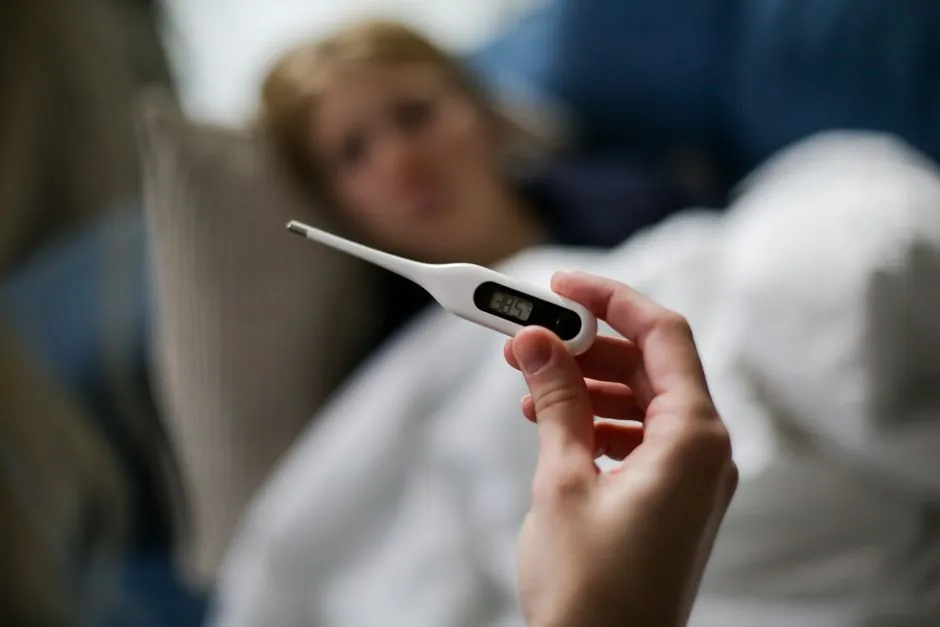
A suitable temperature monitoring device should be selected by defining the measured temperature range, required accuracy, installation constraints, power source, and data destination before comparing sensor and communication options [S1][S8].
Temperature monitors serve very different duties, from ambient room monitoring to refrigeration, pharmaceutical storage, telecom equipment, data centers, and switchgear, so the correct device depends on application, facility size, regulatory obligations, and whether continuous remote records are required [S2][S3][S4].
Define the Measurement Duty Before Choosing Hardware
Start with the object being measured rather than with a preferred instrument. Ambient air in a room or enclosure, a pipe surface, an electronic cabinet, a refrigerator, and a refrigerated shipment have different heat-transfer characteristics, response requirements, and installation constraints [S8].
For a laboratory or embedded electronics application, the selection variables include temperature range, accuracy, power consumption, physical size, budget, and communication protocol, with examples of digital interfaces including SMBus, SPI, I2C, and 1-Wire [S1]. Industrial buyers must also define accuracy and resolution, sensor technology, placement, environmental exposure, and the consequence of a missed reading [S5].
The monitoring architecture also has to be defined. Manual thermometers require no network or battery, while wired sensors transmit through physical connections, commonly using Ethernet, and wireless sensors use radio-frequency signals [S4][S5]. Continuous monitoring should be used where the facility or process cannot be checked routinely by personnel, particularly where an alarm must identify when an excursion began and how severe it became [S4].
Match Sensor Construction to the Measured Environment
Probe, data-logger, and wireless sensor formats cover different installation and mobility requirements, so a cold-chain buyer should compare the physical mounting method, stored measurement capability, communications, and alerting functions as one package [S6]. A probe may suit a vessel, refrigeration return, or product core, while a wireless node can cover distributed rooms without a new cable route, subject to radio range and battery life.
Accuracy alone does not determine whether a device will represent the process correctly. A sensor mounted in moving air, directly on a hot surface, or inside an enclosure can show a valid electrical reading while measuring the wrong thermal condition. Airflow monitoring is used in HVAC duties because temperature combined with airflow can indicate compressor output and reveal a clogged filter [S5].
For electrical equipment, surface-contact monitoring must be considered separately from ambient sensing. A switchgear thermal-monitoring design must account for the measured joint or component, the alarm behavior, and the operating current rather than treating every cabinet as a single homogeneous air volume.
Compare Manual, Wired, and Wireless Systems
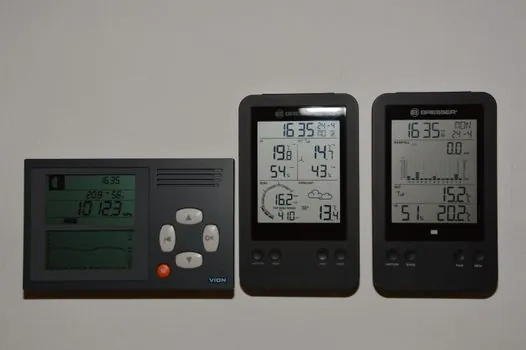
Manual monitoring wins on acquisition cost, simple installation, and no network or battery requirement, but scheduled readings introduce calibration, transcription, and interpretation errors and can produce incomplete records [S4]. This approach is defensible for low-consequence observations where no continuous alarm trail is required, not for critical refrigeration or equipment protection.
Wired systems avoid dependence on Wi-Fi and are generally suited to continuous infrastructure-based monitoring, but installation cost depends on the area, number of sensors, and physical difficulty [S4]. Bus-powered sensors can also remove the need for a separate power supply or voltage converter, which reduces field wiring in suitable installations [S5]. A wired architecture is the stronger choice where continuous records, predictable availability, or integration with an existing building network are priorities.
Wireless systems reduce cabling and suit distributed facilities, but radio coverage, battery service, interference, and gateway placement become part of the engineering design. A platform listed at $5 per device per month, with volume discounts and site-based pricing, also introduces a recurring software and connectivity cost that should be compared with the hardware and installation budget [S3].
Decision criteria should be applied consistently. Manual systems score well on low capital cost and simple installation, but weakly on continuous coverage and traceable records. Wired systems score well on availability and data continuity, but require more installation labor. Wireless systems score well on distributed retrofit speed, but add radio, battery, and gateway dependencies [S3][S4][S5].
Verify Accuracy, Resolution, Calibration, and Records
Accuracy and resolution are separate purchasing criteria, and both must be checked against the alarm band that the process can tolerate [S5]. Resolution is the smallest detectable temperature change, while accuracy describes closeness to the reference condition; a highly resolved sensor can still be biased if it is poorly calibrated or poorly coupled.
Calibration access and traceability should be specified for instruments used in quality-controlled environments. One monitoring platform provides in-application calibration, configurable temperature thresholds, real-time capture, and alerts through SMS, app, and email, showing why device and software capabilities must be evaluated together rather than treating the probe as the complete system [S3].
Data handling is part of the device selection. Remote systems should define where readings are stored, how long they are retained, who receives alarms, and whether escalation proceeds to multiple stakeholders [S2][S3]. The platform described in the research supports 24/7 alerting, alert escalation, enterprise user management, public APIs, and mobile and web access [S3].
For continuous installations, ask for an example audit trail containing measurement time, sensor identity, threshold status, and alarm history. Without those fields, a temperature display may still be useful for operations, but it will not provide defensible evidence for continuous monitoring or regulated quality workflows [S2][S4].
Select Communications and Power for the Installation

Communications selection should follow the distance, data volume, update interval, network architecture, and required integration. Low-level electronic sensors may use SMBus, SPI, I2C, or 1-Wire, while facility systems may use Ethernet, cellular, Wi-Fi, or radio links [S1][S3][S5]. These interfaces serve different layers, so the final architecture should specify whether the requirement is direct sensor communication, local logging, remote telemetry, or API integration.
Power also determines maintainability. A wired, bus-powered sensor can reduce electrical infrastructure where the bus supports the load, whereas a wireless device needs a battery plan covering the specified service interval [S5]. Remote solutions described for distributed monitoring support cellular, Ethernet, and Wi-Fi connectivity, plus Bluetooth devices used with mobile forms and checklists [S3].
Do not select a protocol from familiarity alone. Record the required update frequency, maximum acceptable data loss, local operation during internet outages, alarm delivery method, and API or historian interface. A device that measures accurately but stops reporting during a network interruption has failed the monitoring duty, not merely the communication preference.
Check Compliance, Reliability, and Maintenance Burden
Regulatory requirements depend on the industry, facility size, and monitored process, so a buyer for food, healthcare, or pharmaceutical storage should identify the specific quality framework that applies before choosing a platform [S2]. One remote-monitoring solution states support for HACCP and CDC workflows, but product availability and software features do not replace the facility's own validation of limits, records, and corrective actions [S3].
Reliability review should cover hardware warranty, manufacturer service expectations, operating-life claims, environmental suitability, and calibration support [S3]. For 24/7 telecom, utility, and government operations, reliability and longevity can outweigh the lowest purchase price because a site visit or outage can cost more than the monitoring device [S5].
The temperature monitor should also be evaluated as part of the maintenance system. Ask how alarms are acknowledged, who resets or calibrates the sensor, what happens after a failed battery or lost connection, and whether records remain available during service. A device that creates an alert but provides no defined response workflow is operationally incomplete.
Build a Shortlist from the Operating Requirement
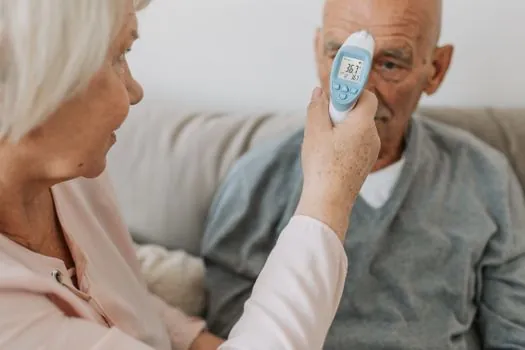
Use manual monitoring only where infrequent observations carry low consequence and no defensible continuous history is required. Choose a wired system for permanent points that need predictable transmission, structured records, and integration with fixed infrastructure. Choose a wireless system for distributed sites where cable installation is disproportionate, provided radio coverage, battery intervals, and gateway redundancy are engineered [S4][S5].
The strongest shortlist begins with the measured duty, not the catalog category. A refrigerator or cold room calls for a probe or logger with the required range, alarm thresholds, local data retention, and remote notifications [S6]. An electronics enclosure calls for a small, low-power sensor with a suitable digital interface [S1]. A server room or telecom site calls for continuous monitoring, equipment-level placement, remote reporting, and serviceable power [S5].
Require each candidate to pass the same test: correct temperature range, stated accuracy and resolution, suitable sensor construction, defensible placement, available power, proven communications, traceable records, and a clear maintenance and alarm path. A digital panel meter can serve a local display duty, but it should not be accepted as a complete monitoring system unless the specification also covers logging, remote notification, and record retention.
Before purchase, freeze the alarm limits, define the reading interval, list every required output, and document the response time for a failed sensor or disconnected network. Then verify quoted accuracy and operating limits against the actual application, rather than relying on a generic monitoring-device description [S1][S5].