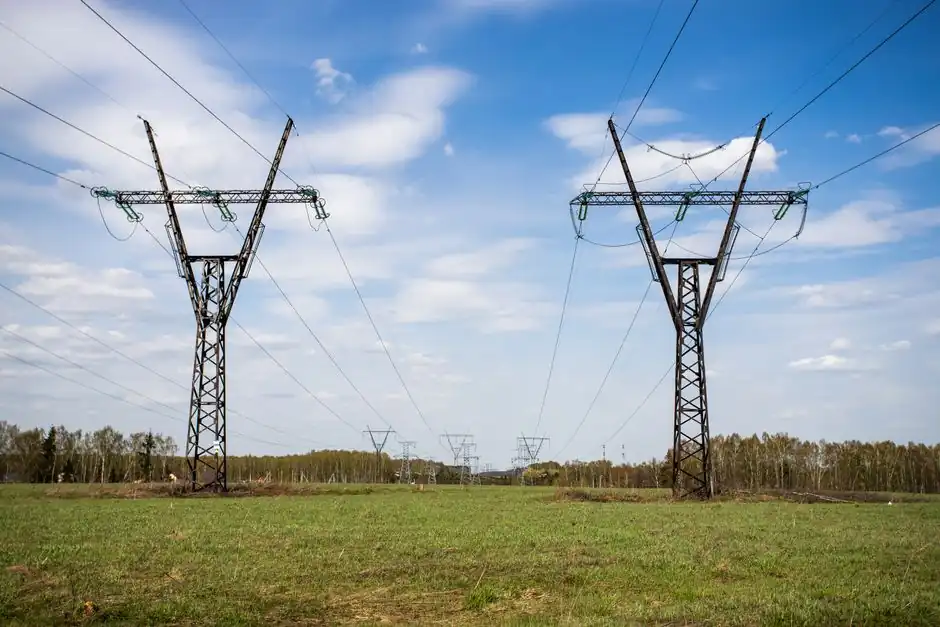
The HVDC transmission market enters 2026 at an estimated US$15.50 billion, while separate research puts the broader 2026–2035 growth rate between 9.5% and 9.7% [S5][S1].
Converter stations remain the largest equipment segment, but reported market values range from US$7.73 billion to US$13.12 billion for 2026, making project scope and segment definitions essential when comparing converters, cables and transformers [S2][S3].
HVDC market definition and 2026 boundary
HVDC systems convert between AC and DC to transmit bulk power over long distances, submarine routes, underground corridors and weak-grid interfaces. The transmission market includes converter stations, subsea and land cables, overhead lines, and control and protection systems [S1].
Published estimates show US$16.15 billion for 2025 and US$37.24 billion for 2035, a 9.7% CAGR over 2026–2035 [S1]. A separate forecast starts at US$15.50 billion in 2026 and reaches US$35.08 billion in 2035 at 9.5% CAGR [S5]. These are market-analysis outputs, not audited project totals, so figures should not be combined as if they covered identical scopes.
Converter stations: the largest value pool
Converter stations held 59.1% of the converter-station market by technology in 2025 for line-commutated converters, while converter valves represented 34% of 2025 component revenue [S2]. The estimate for above-800 kV equipment grows at 8.5% CAGR from 2026 through 2031 [S2].
The converter-station estimates themselves are divergent. Mordor Intelligence values the segment at US$7.73 billion in 2026, rising to US$10.85 billion in 2031 at 7.01% CAGR [S2]. Fact.MR gives US$13.12 billion for 2026 and US$19.60 billion for 2036 at 4.1% CAGR [S3], while Spherical Insights estimates US$6.31 billion for 2025 and US$9.35 billion for 2035 at 4.01% CAGR [S4].
That spread is material for procurement planning. A buyer comparing a converter package should state whether the quote includes valves, converter transformers, cooling, filters, control and protection, auxiliary services, commissioning and civil interfaces. Converter systems are not interchangeable with a standalone DC-DC converter, which performs a different conversion function and does not represent an HVDC grid converter station.
LCC, VSC and hybrid architectures
LCC HVDC held 59.4% of the broader transmission market in 2025, while VSC HVDC is the faster-growing converter technology, supported by offshore wind exports, weak-grid connections and underground routes [S1]. The selection hinge is not converter naming alone, but network conditions, controllability, footprint and terminal configuration.
For offshore wind and multi-terminal applications, VSC hardware is selected for controllable operation, compact converter stations and grid-support functions [S1][S2]. For very large point-to-point bulk transfer, LCC remains commercially established where the connected AC systems provide the required operating conditions [S1].
Cables and transformers: two different bottlenecks
Submarine HVDC systems are forecast to grow at 12.0% CAGR through 2035, faster than the overall transmission market, as offshore export routes displace constrained onshore rights-of-way [S5]. The 400–800 kV voltage class represented 48.7% of installed capacity in 2025, while above-800 kV equipment is forecast to grow at 12.3% annually [S5].
Cable specifications and converter-transformer specifications sit on different technical axes. Cable procurement is driven by voltage rating, insulation system, conductor size, length, installation route and thermal rating. Converter transformers must also be matched to converter topology, valve-group configuration, insulation level, tap control and harmonic duty. The converter market segmentation separately identifies valves, transformers, filters, and control and protection systems as component groups [S3].
Market data assigns 30% of converter-station component value to valves in 2026 [S3]. This makes converter valves the larger disclosed component pool, but it does not establish that cables or converter transformers are minor. Cable contracts follow separate project awards, and transformer pricing depends on voltage, MVA rating, transport constraints and project configuration.
Regional and application demand
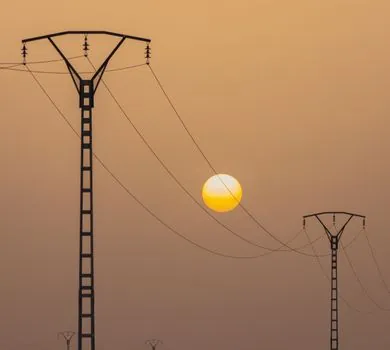
Asia-Pacific held 39.4% of the broader HVDC transmission market in 2025 and is projected to grow at 12.1% CAGR through 2035 [S1]. A separate converter-station study assigns the region 66.8% of 2025 revenue and a 7.6% CAGR through 2031, supported by 45 energized Chinese ultra-high-voltage links [S2].
Europe is the main offshore-wind and interconnection market. Asia-Pacific is the principal UHV and bulk-transfer market, while North America contributes cross-regional and offshore-wind links [S1][S5]. Offshore wind export was identified as the fastest-growing application in the broader market [S1], and the forecast impact assigned to offshore-wind HVDC links is +1.8 percentage points over 2026–2031 [S2].
These regional rankings also explain supplier differences. Chinese equipment bids are reported at 20%–30% below Western incumbents in the converter-station market, creating a price-versus-technology and execution trade-off [S2]. Project owners still need to examine control, protection, lifecycle service, interoperability and delivery capability rather than compare headline converter prices.
What HVDC is suitable for
HVDC is suitable for bulk transfer over distances beyond 600 km, offshore wind export, cross-border interconnection and urban supply where compact VSC stations and underground routes justify the additional converter equipment [S3]. LCC remains appropriate for large bulk-transfer corridors with stable grid conditions, whereas VSC fits applications requiring black start, stronger grid support or multi-terminal flexibility [S1][S3].
It is not automatically the lower-cost choice for every transmission project. A new HVDC link requires converter stations at the relevant ends, DC cable or overhead infrastructure, transformer arrangements, protection, controls and grid-code compliance. Existing AC infrastructure may remain preferable for short routes or where the receiving system does not support the required DC controls.
Urban and weak-grid projects also need early confirmation of harmonics, fault behavior, black-start requirements and control interaction. A converter specification that meets voltage and capacity targets can still be unsuitable if the host grid requires functions not included in the equipment scope.
Forecasts, standards and procurement discipline
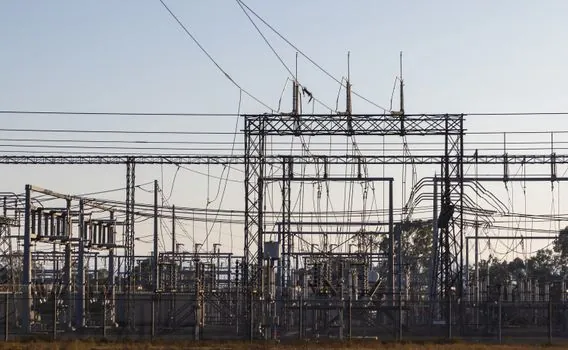
The market evidence supports three trackable signals: converter-station growth of 4.01%–7.01% CAGR across the published 2031–2036 forecasts [S2][S3][S4], above-800 kV equipment growth of 12.3% annually in one transmission forecast [S5], and submarine-system growth of 12.0% CAGR through 2035 [S5].
Forecast differences require disciplined scope control. One study places LCC at 59.1% converter-station technology share in 2025 [S2], while another assigns VSC 60% of the 2026 technology segment [S3]. Those figures cannot be averaged because the denominators differ, including broader HVDC transmission versus converter stations alone.
For procurement, the cleanest next step is to build a common bill of quantities covering converter voltage, rated power, link length, cable voltage and length, transformer MVA and voltage ratio, topology, cooling, control scope, grid-code requirements and commissioning milestones. Converter valves, converter transformers, cables and protection systems should then be quoted against that common project definition, with market forecasts used for budget context rather than equipment justification.