
Pharmaceutical pump selection should match the required flow rate and pressure to fluid viscosity, shear sensitivity, cleanability, chemical compatibility, and containment level.
The suitable family ranges from 316L centrifugal pumps for large-volume transfers to positive-displacement pumps for viscous, low-shear, high-pressure, or highly contained duties [S2][S3][S4].
Pump Family by Process Duty
Centrifugal pumps are the practical default for large-volume transfers of low-viscosity Newtonian liquids, including utility-water duties, because their construction is simple and their service life can be long when the hydraulic condition is correct [S2][S4].
Positive-displacement pumps cover the cases where centrifugal performance becomes unsuitable. A lobe pump fits high-viscosity creams and lotions, a mechanically actuated diaphragm pump fits high-pressure, low-flow service, and a peristaltic pump fits low-pressure, low-shear service [S4]. Peristaltic designs isolate the product in flexible tubing, while diaphragm designs isolate it behind a flexible chamber [S2][S4].
A sanitary centrifugal hydraulic pump is therefore not a universal pharmaceutical solution. Use it for suitable bulk-transfer and utility duties, then shift to positive displacement when pressure generation, viscous flow, product protection, or containment requires it [S2][S4].
Flow, Pressure, Viscosity, and Shear
The hydraulic data sheet must state minimum and maximum flow, shut-off or differential pressure, fluid viscosity over the operating range, specific gravity, suction pressure, line size, pumping distance, and inlet and outlet conditions [S4]. These variables determine pump size and prevent cavitation, overload, excessive wear, and loss of batch reproducibility.
Centrifugal pumps deliver flow through impeller-generated velocity head and lose efficiency as viscosity rises, while positive-displacement pumps move a defined volume per cycle and create pressure through resistance from the discharge system [S2][S4]. Neither family can be selected from flow rate alone.
Shear sensitivity must be handled as a product constraint rather than an energy preference. Biopharmaceutical duties can include shear-sensitive cell culture, solvent mixtures, and hot cleaning media, so pump geometry, tubing, valve timing, recirculation, and agitation all need review together [S3]. The hydraulic actuator, if any, must also avoid introducing damaging motion or contamination risk.
Comparison of the Main Pump Options

Against four decision criteria, centrifugal pumps offer high-flow efficiency for low-viscosity Newtonian liquids, limited positive-displacement pressure capability, and relatively low complexity. Lobe pumps suit viscous products but introduce a tighter clearance and shearing risk. Diaphragm pumps provide strong containment and high-pressure capability with pulsating flow. Peristaltic pumps provide excellent isolation and low shear at low pressure, with tubing life and pressure limits [S2][S4].
Materials, Seals, and Cleanability
316L stainless steel is the common metallic wetted material for hygienic pharmaceutical pumps, combining corrosion resistance with compatibility with CIP and SIP exposure [S2][S4]. The material set must also withstand sodium hydroxide, hydrogen peroxide, peracetic acid, cleaning temperatures, product chemistry, and the selected elastomers; checking stainless steel alone does not establish compatibility for seals, gaskets, liners, or hoses [S3].
Biopharma pumps should support sterility and cleanability, be compatible with aggressive or oxidizing CIP fluids such as NaOH and H₂O₂, tolerate process pressures and temperatures, and maintain seal integrity. These requirements connect pump selection to the surrounding sanitary piping, valves, gaskets, and drainability rather than treating the pump as an isolated component.
For example, an EPDM seal configuration with silicon-carbide seal faces is presented as suitable for pharmaceutical water pumping and CIP/SIP exposure, subject to compatibility with the actual product and cleaning regime [S2]. Elastomers must still be checked for steam temperature, sanitizers, and contact duration. A hydraulic valve used with a sanitary pump also needs compatible sealing and an installation that preserves drainability and containment.
Sterility, Containment, and Validation
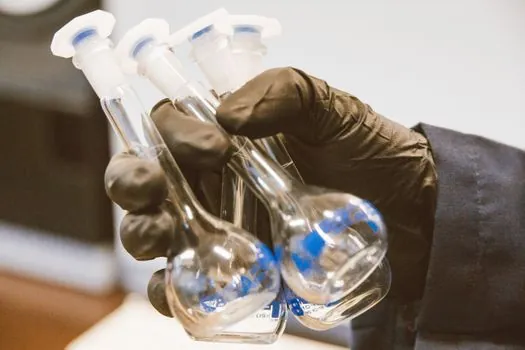
Containment strategy determines whether a conventional sanitary pump is acceptable or whether a contained or single-use architecture is required. A diaphragm liquid chamber machined from stainless components and without mechanical seals can reduce leakage and contamination paths, while PTFE components support disposable batch configurations [S4]. Single-use tubing and disposables also reduce cleaning effort, but require compatibility and disposal planning [S4].
The validation file should connect the selected pump to the intended product, operating range, cleaning chemicals, sterilization method, surface finish, elastomer grade, seal arrangement, and change-control strategy. Selection material identifies sterility, cleanability, material compatibility, pressure and temperature tolerance, seal integrity, and energy performance as core biopharmaceutical criteria [S3].
Do not select a pump only because it carries a hygienic label. Confirm that its drainable geometry, surface finish, joint configuration, seal strategy, and cleaning sequence fit the complete system. For high-containment applications, compare a hydraulic valve actuator only when its failure mode, wetted isolation, and cleaning access remain compatible with the validated process.
Application Fit and Common Failure Modes
Centrifugal pumps are a poor fit for highly viscous products, difficult-to-clean transfer paths, or duties requiring an unbroken product barrier [S2][S4]. Peristaltic pumps are a poor fit when the line requires pressure above the tubing rating or when tube replacement is incompatible with operating time. Diaphragm pumps need scrutiny when pulsation can affect downstream filtration or dosing accuracy, and lobe pumps need scrutiny when rotor-to-rotor clearance creates leakage or shear risk [S4].
Common failures include micro-leakage, seal wear, cavitation, contamination, loss of flow performance, and reduced time between failures [S3]. Cavitation is addressed by correcting suction conditions, not by oversizing the impeller. Contamination is addressed through geometry, finish, seals, and cleaning. Flow instability is addressed by reviewing suction, viscosity, air removal, discharge resistance, and the pump curve together.
For biopharma metering or transfer, a positive-displacement hydraulic pump may be required, but pharmaceutical pumps are also frequently classified as sanitary process pumps rather than industrial hydraulic equipment. The governing selection document should state whether the application needs process-fluid pumping, controlled dispensing, or an external hydraulic power circuit, because each has a different performance specification.
Shortlist Logic for Qualification

A sound pharmaceutical shortlist begins with the process envelope: flow, pressure, viscosity, temperature, pH, shear sensitivity, particle risk, cleaning chemicals, sterilization method, and containment level. It then reduces the candidates to a centrifugal pump for suitable high-flow low-viscosity service, a lobe pump for viscous product, a diaphragm pump for high-pressure or contained low-flow service, and a peristaltic pump for low-pressure, isolated, low-shear transfer [S2][S4].
The final gate is validation readiness, not purchase price. Every candidate should have a documented material list, surface-finish specification, seal and elastomer compatibility, CIP/SIP limits, pulsation or shear assessment, utility demand, and maintenance plan. Track whether the selected pump holds its specified flow, pressure, and product quality across the validated operating range.