
Pharmaceutical centrifugal pumps should be selected against the maximum process flow, required head, suction conditions, and the preferred operating region rather than by nominal size alone [S1].
Sanitary centrifugal designs serve high-flow, low-viscosity duties such as purified water transfer, circulation, and aqueous solutions, while positive displacement pumps remain preferable for viscous or precisely dosed liquids [S4][S5].
Define the pharmaceutical duty before choosing the pump
A centrifugal pump converts impeller-generated kinetic energy into pressure and is suited to continuous movement of low-viscosity liquids at comparatively high flow rates [S4][S6]. Pharmaceutical applications include bulk transfer, circulation, purified water, water-for-injection systems, and other water-based processes [S3][S5].
The minimum process definition should include maximum flow, normal flow, discharge pressure or required head, suction pressure, liquid temperature, viscosity, solids content, chemical composition, and required cleanability. Selection should cover the maximum process flow with one pump or with parallel or series units whose performance curves satisfy the duty [S1].
Do not use a centrifugal pump for a duty defined only by “high pressure” or “precise dosing.” Positive displacement pumps are better suited to metering because they displace a defined volume, while centrifugal-pump flow changes with the system curve [S3][S4].
Compare sanitary centrifugal, magnetic-drive, and positive displacement options
Sanitary centrifugal pumps are suitable for high-volume, water-like pharmaceutical liquids, and hygienic designs use smooth surfaces that are easy to clean [S4][S7]. Magnetic-drive centrifugal pumps are among the centrifugal pump types offered for pharmaceutical applications [S5].
For a conventional comparison, sanitary centrifugal equipment offers continuous high-flow handling, a relatively simple layout, and lower mechanical complexity than metering pumps. Magnetic-drive centrifugal equipment adds a non-contact barrier between the rotating and wetted parts. Rotary-lobe, piston, diaphragm, and peristaltic positive displacement equipment provide stronger metering behavior and accommodate viscous duties, but they require positive-displacement sizing and appropriate relief protection [S3][S4].
The mainstream centrifugal option should not be selected for a high-viscosity product or a strict metering duty. Published pharmaceutical guidance positions positive displacement pumps for viscous fluids and precise dosing, while centrifugal pumps are intended for high-flow, lower-viscosity service [S4][S9].
Protect product quality with hygienic hydraulic design

Pharmaceutical pump validation depends on material compatibility, avoidance of dead-end and stagnant zones, product-friendly hydraulics, and a design that can be emptied effectively [S3]. The pump should therefore be specified as a hygienic assembly, not only by its hydraulic curve.
Product-contact surfaces should have smooth, crevice-free geometry to support cleaning and sterilization [S2][S7]. Self-draining is identified as an optimum feature because it reduces residual liquid in equipment after a batch [S3]. Where applicable, the design should also avoid toroidal dead zones and permit complete drainage through the casing, connections, seal area, and discharge path.
Validation packages must address installation qualification, operational qualification, and performance qualification, with test evidence for flow accuracy, pressure consistency, and cleaning effectiveness [S2]. Material certificates and wetted-part traceability should be defined before purchase, since material selection must prevent leaching, corrosion, or contamination [S2][S3].
Control cavitation, vibration, and operating-range risk
A pharmaceutical centrifugal pump should operate inside a defined preferred operating region with NPSH margin above NPSHR and vibration within acceptable limits [S1]. ANSI/HI 9.6.1 addresses NPSH margin, ANSI/HI 9.6.3 addresses operating regions, and ANSI/HI 9.6.4 addresses vibration measurements and allowable values for rotodynamic pumps [S1].
Reliable selection requires the maximum flow duty, the system curve, NPSHR at the selected flow, available net positive suction head, and vibration limits to be considered together [S1]. Operation near the best efficiency point generally limits hydraulic forces and vibration, which supports mechanical reliability and energy performance [S1].
Do not accept a curve that crosses only the average-flow point. Check minimum, normal, and maximum process flows, plus clean-in-place and sterilization conditions, against the pump curve [S1]. For a practical selection basis, the centrifugal pump should be documented with one operating point in the preferred region and verified for expected suction-pressure loss and system variation.
Match sealing and materials to the contamination risk

A sanitary centrifugal design addresses these risks through cleanable surfaces, controlled sealing, suitable materials, and validated cleaning rather than through pump capacity alone.
Mechanical seals, magnetic couplings, casing geometry, gaskets, and exposed product-contact materials must be reviewed as one contamination-control system. Magnetic-drive centrifugal pumps remove the need for a rotating mechanical seal at the wetted boundary, while sanitary centrifugal pumps can use appropriately selected sealing arrangements where the process permits [S5][S7].
Material selection is a process-specific requirement rather than a universal grade decision. The pharmaceutical literature identifies material suitability, cleanability, and avoidance of stagnation as core pump-design criteria [S3]. For ultrapure water and WFI service, the cited design discussion sets a microbiological limit below 10 KbE/ml and emphasizes material choice, wiring and controls, sterilization, and cleaning capability [S3].
Map duties to realistic operating modes
Use hygienic centrifugal pumps for bulk transfer, recirculation, purified water, thin solvents, and aqueous solutions where the required flow is continuous and the liquid viscosity permits efficient hydraulic operation [S4][S5]. These duties benefit from a simple rotating-impeller arrangement, comparatively low maintenance demand, and fewer replacement parts than complex positive displacement systems [S4].
Use rotary-lobe or another positive displacement arrangement for viscous media, including syrups and formulations requiring defined volume per revolution [S3][S4]. Use diaphragm, piston, or peristaltic arrangements when metering accuracy, containment, or product compatibility requires them. No centrifugal variant should be selected solely from viscosity labels; compare the complete duty, including suction lift, temperature, solids, and chemical exposure.
For utility-water transfer rather than a direct-product duty, the broader centrifugal pump selection for water treatment framework can support system-curve and capacity work, but pharmaceutical acceptance still requires hygienic construction and validation documentation.
Specify procurement, qualification, and acceptance criteria
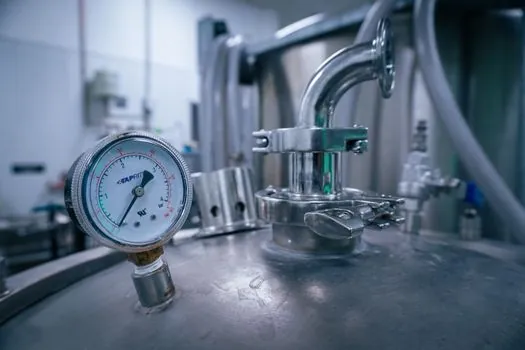
A pharmaceutical pump data sheet should require the pump curve, rated flow, head, NPSHR, motor details, material grade, seal arrangement, connections, drainability, cleaning method, and test documents. The motor operating point must be selected so normal process operation falls within the certified curve, with parallel and series arrangements explicitly evaluated where required [S1].
Acceptance testing should connect three measurement records: installed performance against the process duty, mechanical condition including vibration, and hygienic condition including cleaning and drainage. Qualification then addresses installation, operation, and performance as separate activities [S2].
Standards and regulatory references must be applied to the exact scope of the equipment. The pharmaceutical literature identifies GMP and FDA rules, 3-A standards, EHEDG guidance, and DIN EN 12462 for biotechnology applications as relevant reference frameworks, while confirming that the selected standard edition applies to the intended duty [S3].
Final purchase order review should close 4 technical gaps: maximum versus normal flow, NPSH margin with suction piping losses, product-contact material traceability, and clean-in-place or sterilization compatibility. Resolve any unresolved item before approving the vendor, because replacing a mechanically sound but hygienically unsuitable pump after installation is more costly than specifying it correctly at the data-sheet stage.