
Hydraulic drum drives are the dominant ready-mix solution because they remove exposed chains and sprockets, reduce maintenance, and safely transmit engine power through a hydraulic gearbox [S2].
The comparison covers drum rotation, power transmission, maintenance exposure, installation requirements, and suitability for fleet or specialized mixer applications.
Core Differences in Drive Architecture
Hydraulic drive uses the truck engine through a power take-off to operate a hydraulic pump, with a hydraulic motor and gearbox turning the drum. A mechanical chain drive instead transfers rotation through a chain, sprockets, and related shafts or mounts. [S4]
Both arrangements drive the same inclined drum and internal spiral blades, but they place wear and failure points in different systems. Hydraulic systems concentrate wear in the pump, motor, hoses, seals, and fluid, while chain systems place it in the chain, sprockets, bearings, and alignment points [S6].
A transit mixer normally has a drive at the closed end of the drum and supports near the raised loading and discharge opening. The drum rotates about its own axis while the truck is stationary for mixing and discharge [S5].
For fleet procurement, the decisive point is not chain strength versus hydraulic pressure. It is total operating exposure. A hydraulic route keeps the rotating power path enclosed and eliminates the chain-and-sprocket maintenance class associated with the older arrangement [S2].
Hydraulic and Chain Drives Compared
On maintenance exposure, hydraulic drives lead because they avoid exposed chains and sprockets and are described as efficient, low-maintenance, and safe [S2]. Chain drives are simpler in principle, but each sprocket, bearing, and tension point requires inspection and lubrication.
On installation integration, hydraulic drives require an engine-driven pump, hydraulic circuit, motor, gearbox, fluid supply, controls, and leak-resistant connections. Chain drives require a mechanically aligned power path and sufficient space for sprockets, shafts, guards, and chain tension adjustment.
On speed and motion control, the hydraulic architecture can integrate with the truck's control architecture and supports electric or hydraulic versions at the drive-unit level [S1]. A chain drive depends on compatible rotational speeds between the engine or auxiliary drive and the drum.
On service suitability, hydraulic drives fit ready-mix fleets that operate continuously in abrasive concrete residue. Chain drives remain relevant where low acquisition cost, simple mechanical construction, or local repairability outweigh maintenance exposure.
Maintenance and Operating Burden

Hydraulic mixer maintenance must address three systems as one operating package: the mixing drum, the drive system, and the hydraulic components. Concrete residue, drum rotation, high-pressure hydraulics, and vehicle weight create overlapping wear conditions [S4].
The research recommends daily washout with a high-pressure washer at a minimum of 2,500 PSI, weekly inspection of fins and flights, and drum lubricant application to the rear drum ring every 40 operating hours. Concrete buildup inside the drum can reduce capacity by as much as 20% [S4].
For the hydraulic side, inspect the power take-off engagement daily, lubricate it and check driveshaft universal joints every 500 hours, check the drive hub for oil leaks weekly, and rebuild the hydraulic motor every 3,000 to 4,000 hours [S4]. The slew-ring grease fittings are specified for service every 100 operating hours with NLGI No. 2 lithium grease [S4].
A chain-driven mixer replaces those hydraulic checks with chain lubrication, sprocket inspection, guard inspection, and tension verification. It still needs the PTO, driveshaft, drive hub, bearings, slew ring, drum shell, and flights maintained, so the mechanical alternative reduces hydraulic dependence but does not eliminate driveline maintenance.
Application Fit and Sizing Constraints
Hydraulic drives are for ready-mix fleets that need dependable continuous agitation, controlled drum operation, and reduced exposure of moving transmission components. They are less attractive for a small, low-hour machine carrying a budget sufficient only for the simplest drivetrain. [S4]
Chain drives are for specialized mixers, mobile batching equipment, or low-duty applications where the owner accepts periodic chain and sprocket service in exchange for a mechanically direct and potentially economical installation [S2] [S3].
The concrete mixer truck category includes both ready-mix and specialized configurations, so drum capacity alone does not determine the drive. The operating duty cycle, maintenance policy, hydraulic capacity, drum geometry, and required rotation speed must be considered together.
For stationary production, a concrete batching plant may use a driven-shaft mixer rather than the inclined drum arrangement of a transit mixer. Sizing a hydraulic drive for that equipment therefore requires the batch volume, agitator torque, speed, and duty cycle rather than transit-mixer assumptions [S5].
Failure Modes and Selection Controls
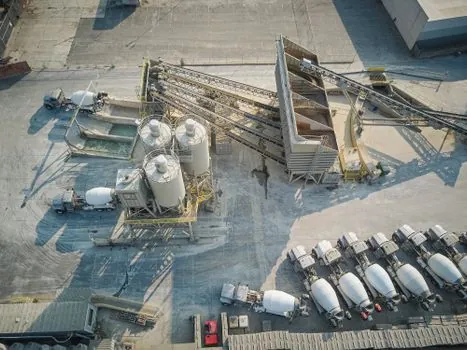
Hydraulic drive failures typically begin with leaks, contaminated fluid, worn seals, reduced pump output, or motor wear, and they can remove drum agitation while the vehicle remains mobile. The hydraulic motor and pump are identified as core mixer components, alongside the spiral blades and drum support system [S6].
Chain-drive failures typically begin with chain wear, sprocket wear, misalignment, inadequate lubrication, or loss of tension. Concrete residue accelerates inspection requirements because the chain path can be exposed to abrasive material during service.
A hydraulic specification should define the pump and motor duty ratings, fluid type, filtration, hose and seal materials, cooling provisions, and the inspection interval for the drive hub, which is called out for rebuilding every 3,000 to 4,000 hours [S4]. A chain specification should define chain size, sprocket tooth count, material grade, tension method, guarding, and lubrication intervals.
No single research source establishes a universal service-life comparison between the two systems. The defensible maintenance distinction is narrower: hydraulic drives eliminate the exposed chain-and-sprocket system, while chain drives eliminate the hydraulic pump, motor, hoses, seals, and fluid circuit from the mixer drive [S2] [S4].
Procurement Decision by Operating Profile
Choose hydraulic drum drive for a high-utilization ready-mix fleet when availability, controlled operation, and low exposed-chain maintenance are the main requirements. Bonfiglioli offers transit-mixer drum drives in hydraulic and electric versions, confirming that the hydraulic approach remains an active machine-builder architecture rather than a legacy-only arrangement [S1].
Choose chain drive for a low-utilization or specialized machine when acquisition cost and mechanical simplicity dominate, the owner can inspect and lubricate the chain, and the operating environment does not justify the hydraulic system. A truck-mounted concrete mixer should be evaluated under the same duty-cycle test, including payload, agitation time, and service access.
For procurement review, record the expected operating hours per year, washout frequency, average batch size, required drum speed, maintenance labor rate, and local parts availability. Track the drive hub, PTO, driveshaft, slew ring, motor or chain, and drum condition at defined service intervals, then use replacement cost and downtime rather than purchase price alone to judge the better architecture.
The actionable signal is the drivetrain configuration on the next mixer ordered or replaced: a hydraulic unit with documented pump, motor, oil, and hub service intervals supports a lower-maintenance fleet decision, while a chain-equipped machine should arrive with defined chain, sprocket, tension, guard, and lubrication requirements [S2] [S4].