
New concrete mixer trucks with capacities from 7 m³ to 12 m³ are generally priced at $120,000–$250,000, depending on drum size, chassis, axle layout, and mixer configuration [S4].
A 12 m³ truck is a high-volume rigid mixer intended for large pours, and its practical payload is about 28.8 tonnes with normal-weight concrete at 2,400 kg/m³ [S5].
What a 12 m³ concrete mixer truck costs
New concrete mixer trucks typically fall within a $120,000–$250,000 price band, with capacity and configuration accounting for the variation [S4]. A rental listing covering 7 m³ to 12 m³ drums confirms 12 m³ availability but directs buyers to request a specific price, rate, and delivery quotation, so it does not establish a fixed 2026 rental figure [S2].
Used listings span a much wider market. Marketplace entries for mixer and ready-mix trucks range from $7,100 to $322,500, with gross vehicle weight rating, axle count, condition, and manufacturer among the available filters [S6]. That spread should not be treated as a 12 m³ price range because the listing does not isolate drum capacity or configuration.
For a 12 m³ buyer, the defensible planning number is $120,000–$250,000 for a new unit, followed by a quote that separates the mixer package, chassis, taxes, registration, financing, and delivery. The manufacturer’s concrete mixer truck configuration defines the complete machine, including the chassis and rotating drum assembly.
Why a 12 m³ drum changes the price
A 12 m³ rated mixer carries about 24–28.8 tonnes of concrete, while an 8–9 m³ truck carries 19.2–21.6 tonnes, using a concrete density of approximately 2,400 kg/m³ [S5]. The larger drum therefore requires more chassis and axle capability, which raises the vehicle cost even if the mixer maker is unchanged.
The 10–12 m³ class is normally paired with an 8x4 four-axle chassis, while 8–9 m³ drums commonly use 6x4 chassis [S5]. A four-axle arrangement adds mechanical content and operating complexity, but it is the configuration that supports large pours, infrastructure work, and high-volume batching-plant dispatch [S5].
A representative rental specification lists a 15,000 kg operating weight, 5,480 kg empty drum weight, 1,200-litre water tank, 560 l/min water pump, 14 rpm drum rotation, four axles, diesel power, and either PTO or separate-engine drum drive [S2]. These figures show why “12 m³” alone is not a procurement specification: chassis, water system, drive arrangement, and mixer geometry all affect the quotation.
12 m³ versus 8–9 m³ and volumetric mixing
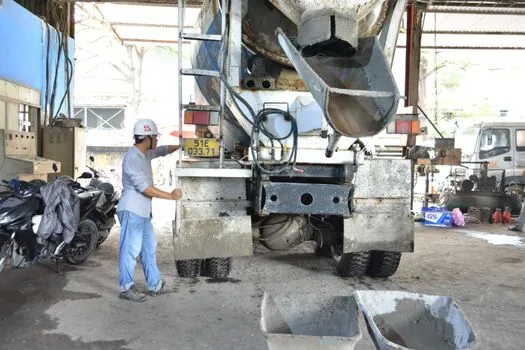
On capacity alone, a 12 m³ truck reduces the number of loads needed for a fixed pour against an 8–9 m³ mixer, but it also carries 7.2–10.8 tonnes more concrete per trip at the stated density [S5]. The larger truck is suited to large pours, infrastructure, and high-volume plants, while 8–9 m³ units serve mainstream ready-mix fleets and balance payload, turning radius, and cost per cubic metre more effectively [S5].
Volumetric mixers make concrete on site rather than hauling premixed concrete, allowing batch quantity and mix design to be adjusted by project requirement [S3][S4]. They suit remote or rural sites, multiple strength classes, and workloads where reducing material overages is worth a higher acquisition cost.
Where the 12 m³ price premium comes from
The principal price drivers are the 12 m³ drum assembly, an 8x4-class chassis, greater axle and frame capacity, drum drive, water system, and mixer controls. A comparable rental machine may include a 1,200-litre water tank, 560 l/min pump, automatic mixing adjustments, telematics, and fuel-saving technology [S2]. These are specification choices, not standard inclusions in every quotation.
Volume tier matters because fleet purchases can improve unit economics, but the research does not provide a numeric discount for multiple units. Financing also changes the cash requirement rather than the asset price: down payment, interest rate, and term determine the monthly payment, so a $120,000 machine and a $250,000 machine cannot be compared by instalment size alone.
For mobile volumetric alternatives, the acquisition range is $150,000–$250,000, with advanced controls capable of increasing the price [S3]. Annual maintenance for those units is estimated at $5,000–$10,000, while insurance is estimated at $1,500–$4,000 per year, depending on location and coverage [S3].
Total cost beyond the purchase price
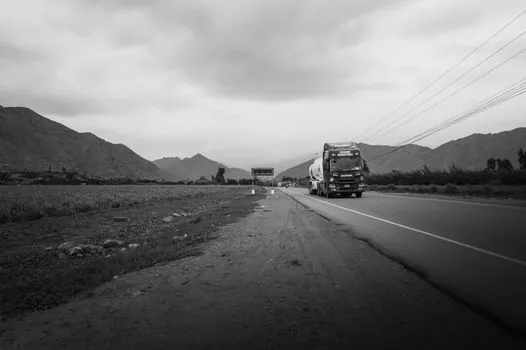
A 12 m³ rigid mixer’s operating cost is dominated by fuel, driver hours, tyre and chassis maintenance, drum wear, insurance, and the number of trips required. The rental specification’s diesel power and 15,000 kg operating mass indicate a substantial vehicle operating load, while 14 rpm rotation is the listed working speed for that 7–12 m³ mixer family [S2].
Installation and commissioning can include operator training, local registration, inspection, and initial mixer setup, but the research gives no fixed 12 m³ installation charge. Those items must be quoted separately rather than hidden inside a headline vehicle price. For volumetric equipment, training and setup are explicit acquisition considerations and may or may not be included by the supplier [S3].
Total-cost comparison should divide fleet operating cost by delivered cubic metres, then include material savings. Volumetric mixing can reduce material waste by 5–10% of total annual material cost, while on-site batching reduces waiting and allows custom production of shotcrete, flowable fill, and high-strength concrete [S3]. A 12 m³ transit mixer is more economical when plant output and pour volume support fuller loads.
Who should buy or rent a 12 m³ mixer
A 12 m³ rigid mixer is suitable for ready-mix producers, infrastructure contractors, and foundations or high-rise projects with enough concrete volume to justify fewer deliveries. The listed 7–12 m³ fleet is explicitly described for foundations, infrastructure, road paving, and major construction projects [S2].
It is less suitable for small residential pours, weight-restricted urban streets, or operators that cannot support a four-axle vehicle. Those jobs often fit 3–4 m³ compact mixers or mainstream 8–9 m³ units, which are designed around smaller chassis, narrower streets, and lower payload [S5].
Rental is sensible for short projects or temporary demand because the supplier can include the operator. The cited 7–12 m³ rental unit is available with operator only, and the commercial model includes financing, credit, or debit payment options [S2]. Used ownership makes more sense where duty cycles are moderate, because depreciation, financing, and maintenance risk differ from a rental period.
How to request a firm 2026 quotation
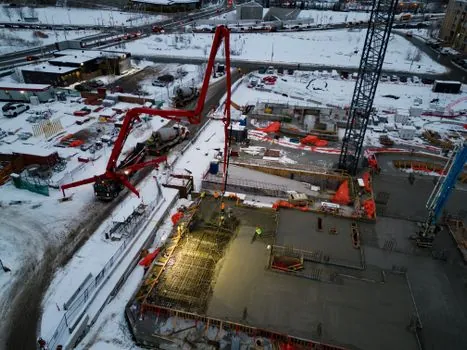
A buyer should request one line-item quotation covering a 12 m³ rated mixing drum, 8x4 chassis, gross vehicle weight rating, axle configuration, drum drive, water-tank capacity, pump output, rotation speed, mixer controls, and delivery jurisdiction [S5][S2]. This specification set prevents a low-priced truck from being compared with a vehicle carrying a different mixer and chassis package.
The purchase order should also state whether the 12 m³ figure is rated mixing capacity or geometric volume. Rated mixing capacity normally represents 45–55% of geometric drum volume, while agitating capacity may be slightly larger because the truck receives already-mixed concrete rather than batching dry constituents [S5].
Before ordering, verify local gross-weight and axle limits, expected average load, concrete density, plant dispatch rate, and pour-cycle time. The drum must be sized to the chassis, not to the nominal pour volume. For further weight-focused analysis, compare the 10 m³ configuration in 10 m³ concrete mixer truck weight: 66,000–72,000 lb fully loaded.
Track three commercial signals for the next purchase decision: the quoted chassis and mixer package against the $120,000–$250,000 new-truck band, local operating-weight approval for a 24–28.8 tonne concrete load, and delivered cost per cubic metre after fuel, labour, maintenance, and waste [S4][S5].