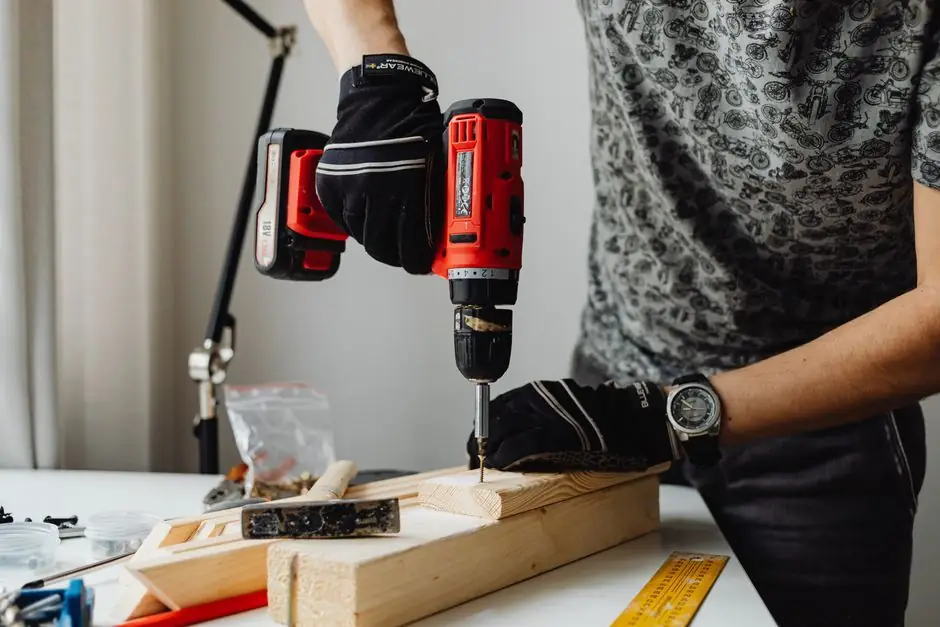
A well-maintained cordless impact drill runs 500-1,500 charge cycles before battery capacity drops below 70% of rated spec, and the motor/gearbox assembly typically lasts 3-7 years under weekly professional use, based on maintenance guidance published August 2026 [S1]. Replacement decisions hinge on four measurable failure points: chuck runout exceeding 0.3 mm, brush length under 6 mm, gearbox backlash above 5 degrees, and battery capacity below 75% of original rated amp-hours [S1][S3].
Tool cost is a real input. Cordless drills and impact drivers span $30-$400 retail, with brushless 18V models from DeWalt, Makita, and Milwaukee clustering at the upper end and consumer-grade brushed units from Kobalt, Porter-Cable, and Ridgid at the lower band [S2]. The price spread maps to motor type, battery capacity, and duty cycle, not just brand premium, which is why a $90 brushed 12V drill and a $280 brushless 18V unit cannot be evaluated on the same lifespan curve.
What "lifespan" means: hours, cycles, and the four failure axes
Lifespan for an impact drill is not a single number; it is a function of four independent wear axes that each have their own service interval. Brush wear on brushed motors reads as reduced torque and visible sparking at the commutator; brushless motors eliminate this axis but shift failure risk to bearing and electronic speed controller (ESC) stages [S2]. Chuck jaws lose grip tension after roughly 2,000 bit changes, with runout degrading from a factory 0.1 mm to 0.4 mm or more, which then loads the spindle bearings asymmetrically [S1].
Gearbox backlash above 5 degrees is the leading mechanical failure mode on impact drivers, because the hammering mechanism adds axial impact loads up to 2,000-3,000 impacts per minute that accelerate planetary gear wear [S2]. Lithium-ion battery packs, the standard chemistry on current cordless models, tolerate 500-1,000 full charge cycles before capacity falls below 80% of nameplate, and partial-discharge cycling extends this further [S3]. Defining the end-of-life threshold on each axis separately, rather than as a single "hours used" figure, is what separates a usable spec from marketing copy.
Maintenance intervals that actually move the lifespan curve
Daily, weekly, and monthly maintenance each target a different failure axis, and the cadence is not interchangeable. Daily tasks (clean tool, inspect cord or battery, check accessory wear) take 2-3 minutes and address the dust-loading axis: concrete, wood, and metal particulates drawn into cooling vents restrict airflow and raise motor operating temperature, which is the dominant cause of premature motor failure on contractor-grade units [S1][S4]. Weekly tasks (clean vents with compressed air, tighten loose screws and guards, inspect moving parts) catch vibration-loosened fasteners before they cascade into misalignment damage [S4].
Monthly tasks (lubricate chuck with a drop of light machine oil, grease internal gears where the manufacturer permits disassembly, test battery runtime, replace worn bits) are where the high-leverage interventions live [S3]. Lithium-ion battery storage matters: keeping packs at moderate temperature (15-25 C), avoiding full discharge, removing the battery from the tool during long idle periods, and using only manufacturer-approved chargers, are the four rules that, applied together, can roughly double pack service life versus unmanaged storage [S3][S4].
When to repair versus when to replace
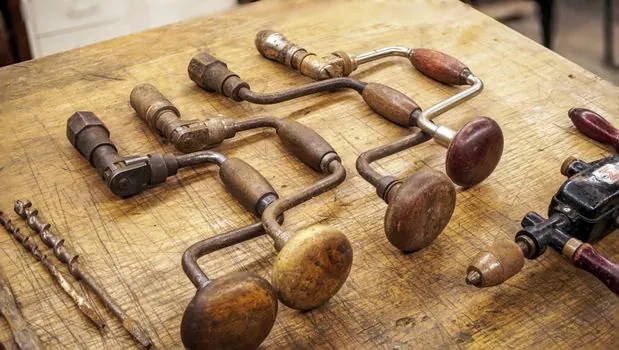
The repair-or-replace threshold on a cordless impact drill maps to unit cost tier and hours-on-tool. A 12V consumer drill in the $30-$90 band is rarely worth a gearbox or motor repair, because parts and labour typically reach 60-80% of replacement cost once the unit has crossed 200-300 hours of use. An 18V brushless professional unit in the $200-$400 band is a different calculation: a $40-$60 brushless motor, $25-$40 chuck assembly, or $80-$150 battery pack replacement can extend service life by 2-4 years, and the OEM battery ecosystem (DeWalt 20V Max, Makita 18V LXT, Milwaukee M18) keeps parts available for 7-10 years post-discontinuation in most cases [S2].
Chuck, brushes, and battery are the three high-wear parts to stock as consumables; motor and gearbox are the two to plan as scheduled mid-life replacement rather than reactive repair [S1][S3].
Brushed versus brushless: how motor type changes the replacement math
Brushed motors on cordless impact drills typically need brush replacement every 80-150 hours of runtime, with commutator resurfacing or replacement at 300-500 hours. Brushless motors eliminate the brush wear axis entirely, but the electronic speed controller, rotor bearings, and stator windings become the new failure points, with bearing failure (audible as a high-pitched whine or rumble) typically surfacing at 800-1,200 hours under professional loading [S2].
Voltage class also matters. A 12V drill delivers enough torque for a few hundred decking screws on a single charge, making it the right pick for homeowner or light-assembly duty where runtime and weight matter more than raw power. An 18V or 20V Max class drill, with brushless motor and 4.0-5.0 Ah battery, drives large lag bolts, bores into brick or concrete with the right bit, and tolerates the higher continuous current draw that professional framing demands [S2]. For pure screw-driving into wood, metal, and cement, an impact driver concentrates torque into short bursts (typically 1,500-3,200 IPM) and is more efficient than a drill/driver, but it is not a substitute for a keyed chuck on hole-saw or large-diameter auger work. The motor type and voltage class together set the maintenance schedule, the parts inventory, and the realistic replacement year, so they belong in the spec, not as afterthoughts.
Failure modes, limits, and what the maintenance guidance does not fix
No maintenance schedule prevents bearing failure from impact loading beyond roughly 2,000 hours, nor does it reverse electrolyte loss in a lithium-ion cell that has been stored fully discharged for more than a few weeks. Water ingress from rain or concrete slurry kills motor windings and corrodes the ESC board, and harsh chemical cleaners degrade plastic housings and seals, which is why manufacturer guidance uniformly restricts cleaning to compressed air and a dry or slightly damp cloth [S3][S4].
Storage environment is the single highest-leverage factor outside of mechanical maintenance. Tools exposed to humidity, dust, or temperature extremes degrade substantially faster than tools stored in a dry, climate-moderated case, and battery packs stored above 40 C or below 0 C lose usable capacity permanently within 30-60 cycles [S4]. Hearing protection is also worth flagging: Consumer Reports testing found that all but the smallest impact drivers exceed safe continuous-exposure sound pressure levels at the operator's ear, and that is independent of tool age, so the maintenance checklist is not a substitute for PPE [S2].
Procurement spec: what to write into the 2026 replacement standard
A serviceable replacement standard for a 2026-vintage impact drill should specify voltage class (12V for light duty, 18V or 20V Max for contractor use), motor type (brushless preferred for any unit exceeding 200 hours/year), chuck type and capacity (keyless 13 mm minimum for professional use, with runout under 0.3 mm at acceptance), battery chemistry (Li-ion, 4.0 Ah or larger for contractor kits), and an impact rate of 1,500-3,200 IPM for impact drivers [S1][S2]. Warranty terms from the major brands run 1-3 years on the tool body and 1-2 years on the battery, and brushless units consistently carry longer coverage because the failure rate is lower in the first 24 months [S2].
Track two signals going forward: brushless cost erosion into the sub-$150 band, which is now reachable on consumer brands, and the next generation of 21700-cell battery packs, which carry roughly 50% more energy density than the 18650 cells still common in 18V platforms. Either shift will reset the mid-life refurbishment-versus-replace threshold on existing fleets. For shop-floor spec work, treat the impact drill as a system (motor, gearbox, chuck, battery, charger) and budget parts replacement on the same calendar as consumable bits, rather than letting the tool fail in service and trigger a downtime event.
Spec-level background on the components involved: linear guide, and air impact wrench.