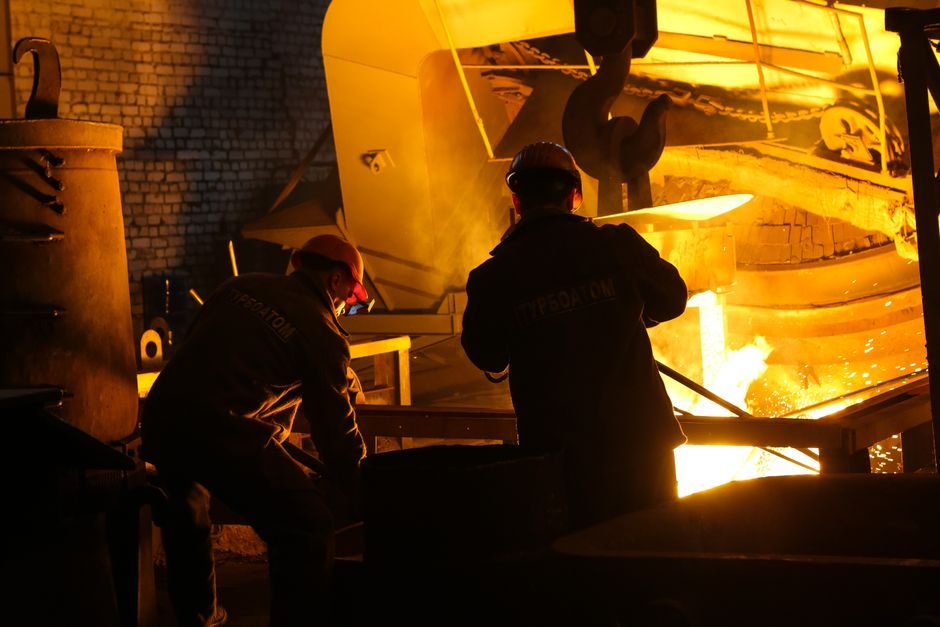
Medium-frequency induction furnaces listed on Chinese export channels in 2026 span a US$6,550–80,000 FOB range per set at 1-set MOQ, with audited suppliers such as Luoyang Shennai Power Equipment offering 10 kW–50 MW power modules for melting and holding duties [S2][S3].
Selection is driven by four hard constraints: charge material (ferrous vs non-ferrous vs precious), melt mass per shift (0.1 t to multi-ton), electrical infrastructure (line frequency vs medium-frequency vs IGBT), and the certifications demanded by destination market (CE, ISO 9001, ISO 14000) [S5][S6].
Power Class and Frequency Architecture
Three frequency bands dominate the 2026 catalog. Line-frequency (50/60 Hz) mains-frequency furnaces handle large steel-shell melts of 0.5 t, 0.75 t, 1 T and 3 T ratings commonly shown on Chinese supplier catalogs [S4]. Medium-frequency units, fed through thyristor or IGBT inverters, cover the 100 Hz–10 kHz band where eddy-current penetration suits 0.1–2 t steel, iron, copper, brass, bronze and aluminum charges [S2].
IGBT intermediate-frequency power supplies paired with melting furnaces are quoted from US$15,000 per piece with CE and ISO 9001 documentation, and the same family scales to 50 MW per APS Induction's KGCL power-supply line covering induction melting, heating and forging feeds [S3][S6]. Buyers specifying an induction furnace for a foundry should map the largest expected charge to kW-per-ton: a workable rule-of-thumb range for steel is 350–600 kW/t, but verify against the OEM's melt-rate curve rather than relying on generic figures.
Capacity Tiers and Steel-Shell Standardization
Standardized steel-shell ratings cluster at 0.5 t, 0.6 t, 0.75 t, 1 T and 3 T per Chinese supplier linecards, with the 0.75 T and 1 T sizes covering the bulk of jobbing foundry and forge-shop orders [S4]. Smaller dual-purpose or precious-metal units diverge sharply: TOPCAST's TIP-series chamber furnaces melt 100 g to kilo-bar gold and silver ingots under vacuum or inert gas at 1,200 °C, a duty cycle that no steel-shell line-frequency unit can match [S1].
For ferrous foundries, the 0.5–1 t band remains the 2026 sweet spot because it pairs with a single 750–1,000 kW medium-frequency supply, fits a standard 20 ft container for export, and consumes crucibles and inductor coils in sizes that are stocked locally. A 3 t steel-shell furnace typically needs a 2–3 MW supply and a hardened-shop floor rated for the dynamic load of tilting spout plus ladle.
Comparison: Main Furnace Types Against Decision Criteria
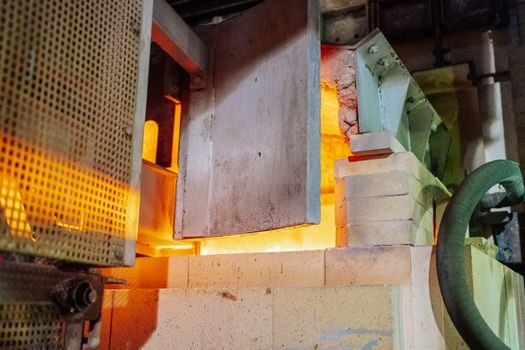
Four architectures compete in 2026 industrial catalogs. The table-style comparison below lines them up against the criteria that actually drive a buy order. [S1]
Line-frequency mains furnaces: lowest capex per ton, suited to 0.5–10 t steel charges, poor for small melts, limited start/stop cycling. Medium-frequency IGBT furnaces: US$15,000–80,000 per set, 0.1–3 t sweet spot, fast cold-start, broad alloy coverage, the default 2026 spec for general foundry work [S2][S6]. Vacuum/inert-gas chamber furnaces (TOPCAST TIP-class): 1,200 °C ceiling, 100 g–kilo-bar precious-metal ingot duty, fully automatic cycle, separate cost line from steel-shell [S1]. Holding / holding furnace electric units: marketed alongside melting furnaces for metal-molding holding at the spout, typically 50–500 kW class for temperature maintenance between melt and pour [S6].
Buyers who only need a metal-molding holding buffer should not size up to a melting-class supply, and buyers who need 1,200 °C clean-melt precious-metal ingots should not try to retask a steel-shell line-frequency furnace. A crucible furnace remains a separate category for small-batch metallurgical labs; for foundry-scale ferrous and non-ferrous melts, medium-frequency induction is the default, with the cross-reference of melt mass, alloy resistivity and duty cycle resolved against the OEM's published melt-rate curve.
Standards, Certification and Destination-Market Gates
CE-marked induction furnaces with ISO 9001 quality-system documentation are the baseline on 2026 export channels, and ISO 14000 environmental management certification appears on the larger IGBT melting-furnace product lines [S6]. Certificates for cast-iron induction furnace models are listed as CE-certified valid since 2026-04-02, signaling recent re-issuance under the EU Machinery and Low-Voltage framework [S5].
For North American and EU destinations, buyers should still verify the certificate scope covers the specific model and kW rating, not just the manufacturer. ATEX/IECEx zone ratings apply only when the furnace sits inside a classified area, not for general foundry halls, and a buyer who needs an ATEX zone-1 furnace should confirm it as a line item rather than assume it from CE alone. Forged or cast lifting yokes, water-cooled induction coils and dual-capacitor banks should each carry their own type-test documentation where the destination inspector will request it.
Use Cases Matched to Furnace Class
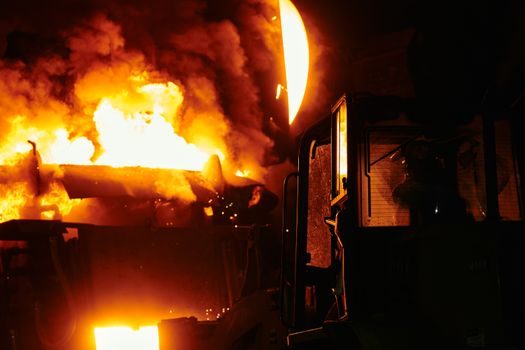
Foundry melting of cast iron, steel and ductile iron: 0.5–3 t medium-frequency IGBT furnace with 750 kW–2 MW supply, tilting spout or lip-pour, and CE/ISO 9001 documentation [S2][S4][S5]. Non-ferrous foundry (copper, brass, bronze, aluminum, stainless): same medium-frequency class at 100–500 kW per ton depending on resistivity and pour temperature, often as a duplex line with a holding furnace at the mold line [S6].
Precious-metal ingot production (gold, silver, dental alloys): chamber / bell furnace under vacuum or inert gas, 1,200 °C ceiling, fully automatic cycle handling 100 g to kilo-bar charges, in graphite moulds with controlled solidification [S1]. Research / small-batch metallurgical labs: crucible furnace class typically below 50 kW, often with controlled atmosphere, separate from the foundry-duty lineup.
Pricing, Sourcing and Total-Cost Signals
2026 export FOB prices for medium-frequency induction furnaces on Made-in-China cluster from US$6,550 per set at the entry level to US$80,000 per set at the upper end, with IGBT-configured melting-furnace pairs commonly quoted at US$15,000–19,999 per piece at 1-piece MOQ [S2][S6]. These figures exclude inductor coils, water-cooling skids, dust collection and installation, which can add 30–60% to the landed cost.
The broader 2026 buying landscape for adjacent equipment — covering die-casting cells, robotic handling and the metallurgical-laboratory side — is mapped in the melting furnace 2026 buying guide, which pairs furnace selection with the upstream and downstream cells buyers tend to specify together. Buyers running ferrous jobbing shops and looking at the full cell layout will find the zinc die casting machine 2026 sourcing map a useful cross-reference on price-band methodology even where alloy differs.
Limitations, Failure Modes and Buyer Watch-Outs
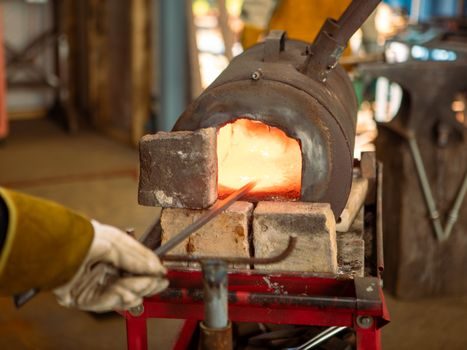
Line-frequency mains furnaces are capital-efficient but cycle slowly between batches, which hurts process flexibility on short-run foundries; medium-frequency IGBT units cycle in minutes but introduce harmonic-distortion and power-factor issues that often require an active or passive filter at the PCC [S6]. Water-cooled copper inductors leak on age, and a refractory lining typically needs re-ramming every 200–400 heats depending on melt temperature and slag chemistry — track the lining-life figure, not the catalogue nameplate kW.
Vacuum chamber furnaces for precious metals are a different cost class: chamber volume, vacuum-pump set and inert-gas reclaim line should each be quoted as line items, not folded into a single turnkey number [S1]. Cross-check the OEM's maximum-temperature and maximum-charge figures against the actual solidification curve of the alloy being poured, since 1,200 °C ratings on paper and 1,200 °C achievable in a hot graphite mould with a 5 kg silver charge are not the same operating point.
Trackable signals for the rest of 2026: CE / ISO 9001 re-issuance dates on audited-supplier listings, FOB price moves on the 0.75 T and 1 T steel-shell lines, and the IGBT supply-voltage tier (380 V vs 480 V vs 690 V) that each audited supplier standardizes on for export builds [S2][S5][S6].