
Industrial adhesive batch mixing fails at predictable points: viscosity drift, trapped air, filler settling, and uneven cure, and each is detectable with a defined QC test before the batch leaves the kettle [S1][S5].
For solvent-based, water-based, and solventless systems, weighing on floor balances for drum quantities and bench-top balances accurate to the hundredths for co-reactants is the first control point, with mix-meter-dispense pump ratio checked by bench balance for solventless lines [S4].
Six Core QC Tests Mapped to ASTM Methods
Viscosity is normally measured with a Zahn cup per ASTM D4212 for fast in-line checks or a Brookfield viscometer per ASTM D789 when a numeric, temperature-corrected value is needed for batch release [S4].
Film treat levels (dyne) of incoming webs are logged using ASTM D2578; coating weight at the start and end of each run is logged using ASTM F2217; nip roller hardness is verified greater than Shore 85 A per ASTM D2240; and finished laminate bond strength is checked off press and through cure using ASTM F904 [S4]. For wood adhesive lines, additional moisture content, gel time, and percent volatiles are added to the same release workflow [S2][S6]. Incoming raw-material control typically runs percent flow, gel time, and percent volatiles on every resin lot before it is released to production [S6].
Mixer Selection by Viscosity Class: Criteria Comparison
High-shear mixers, double planetary mixers, and multi-shaft mixers are the three workhorse platforms in modern adhesive plants, and the right choice is driven by viscosity class, filler loading, and shear sensitivity of the polymer system [S3][S5][S7]. High-shear (rotor-stator) mixers develop a vortex that pulls powder and low-viscosity liquid into the blade, giving fast dispersion of fillers and pigments but at the cost of polymer-chain scission and filler crushing if shear is set too high [S3].
Double planetary mixers use two orbiting blades in a kneading-folding-wiping motion that minimizes dead zones in high-viscosity pastes and putties, with lower shear than rotor-stator designs, but cycle times are long and batch-to-batch consistency depends heavily on operator procedure [S3]. Multi-shaft mixers combine independent agitators (often a low-speed anchor plus a high-speed disperser) on a single vessel, allowing one tool to scrape walls and feed material inward to a second high-shear tool, which is the common solution for all-in-one processing of medium- to high-viscosity adhesives that need both de-agglomeration and wall-wipe coverage [S3]. Selection rule of thumb that maps to published guidance: rotor-stator for viscosities below roughly 10,000 cP with significant powder addition, double planetary for pastes above 50,000 cP that are shear-sensitive, and multi-shaft for the 10,000 to 100,000 cP band where both dispersion and turnover matter [S3][S5].
In-Process Tests That Catch Failures Before the Drum Is Filled
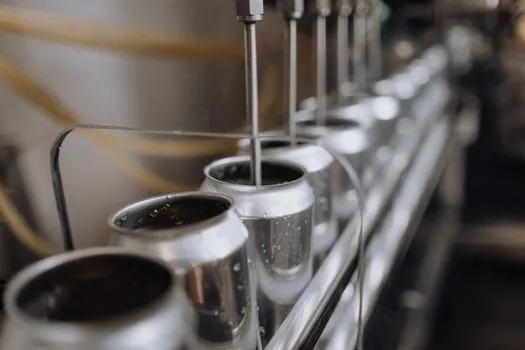
In-process quality control is built around four live signals: structure development of the wet adhesive, dyne level of the substrate, oven drying temperature, and nip temperature, all logged per run so that a drift in any one of them flags a future bond or haze failure before it reaches the laminator [S4]. Viscosity of the mixed adhesive is checked periodically with a calibrated Zahn cup per ASTM D4212 or Brookfield per ASTM D789 rather than trusted to the mixer's timer, because shear heating and solvent loss both shift viscosity between charge and discharge [S4].
For solventless adhesive rolls, pot-life is monitored in real time and the roll is replaced when exceeded; for water-based and solvent-based systems, pot-life is usually at least 8 hours, which is long enough that periodic re-checks rather than continuous monitoring are sufficient [S4]. Oven drying temperature and nip temperature are read from the heater controller and cross-checked with a handheld IR heat gun, then charted, because controller drift of even 5 to 10 degrees Celsius is enough to change residual solvent and bond development on solvent-based lines [S4]. Gas chromatography with headspace sampling confirms residual ink solvent and adhesive solvent in the laminate, which closes the loop between the in-process temperature log and the final bond-strength result [S4].
High-Viscosity Failure Modes and What QC Must Catch
High-viscosity adhesive batches fail in five recurring ways that a QC program must be able to detect, attribute, and trace back to a specific step: viscosity variation between batches, agglomerates and gels from poor dispersion, trapped air voids that weaken bond area, dead zones that leave un-mixed pockets, and uneven cure from shear-heated hot spots [S1][S3]. Each failure maps to a specific test: viscosity variation is caught by periodic Zahn or Brookfield readings, agglomerates are caught by visual inspection and by a filtered-pressure check on the dispense line, trapped air is caught by density or by a gravimetric cup-weight test against a known theoretical value, dead zones are caught by sampling top, middle, and bottom of a finished batch and comparing solids content, and uneven cure is caught by gel time and by percent volatiles on the finished product [S1][S3][S6].
Adhesives in the field are further subjected to shear strength, peel resistance, and environmental exposure tests, which is why bond-strength and cure-profile data must travel with each drum rather than live only in a finished-goods folder [S1]. When a batch fails, deformulation of a retained sample against the approved reference is the formal route to attribute a defect to a specific raw-material lot, a contamination event, or a process drift, and the result feeds back into the supplier scorecard [S8].
Raw-Material Incoming Control: Where the Batch Is Won or Lost
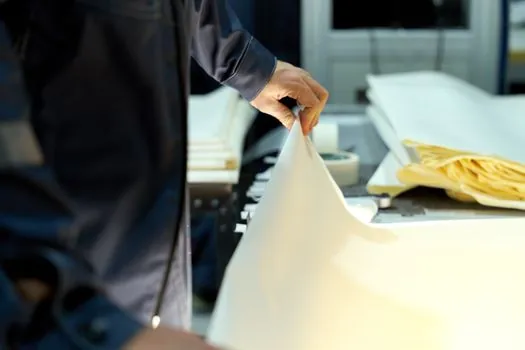
Raw-material incoming control is the cheapest place to stop a bad batch, because once an off-spec resin or filler is charged into the kettle, the cost of finding and fixing the problem multiplies by the size of the batch and the cleanup time on the line [S2][S6]. Incoming tests on resins and polymer emulsions typically include percent flow, gel time, percent volatiles, and pH, with appearance, viscosity, density, solids content, and moisture added when the material is a powder, filler, or aqueous emulsion [S2][S6].
For water-based polymer emulsions, pH and particle-size checks matter because they predict both shelf life and pot-life downstream, and for powder catalysts, moisture content and activity are the two values that decide whether the formulation will cure on schedule [S2]. ISO 9001-certified quality management systems are the common framework inside which these incoming checks are scheduled, signed, and retained, and the same framework is what makes a non-conformance traceable from a customer complaint back to a specific tanker, drum, or bag lot number [S9].
Bond Performance and End-Use Verification
Bond performance is the bottom-line test of every batch, and it is normally run on a universal testing machine using ASTM F904 for flexible laminates and on similar fixtures for wood, structural, and assembly bonds, with the mode of failure (adhesive, substrate, or cohesive) recorded alongside the numeric value [S2][S4]. For wood adhesives, lap-shear and bond tests on representative substrates (plywood, MDF, particleboard, veneer) are run alongside viscosity, pH, and solids to confirm that the wet-stage QC has actually predicted end-use performance [S2].
For high-end reactive systems covered in the related comparison of five reactive industrial adhesive families, the QC stack is heavier, because pot-life, mix ratio, and cure window all interact, and an off-ratio batch can pass every wet test and still fail at the substrate; a working overview of reactive adhesive families shows where the extra QC load sits, while a broader view of the manufacturing flow places the QC gates in their proper position between polymer synthesis and palletized shipment.
Traceability, Records, and the Audit Trail
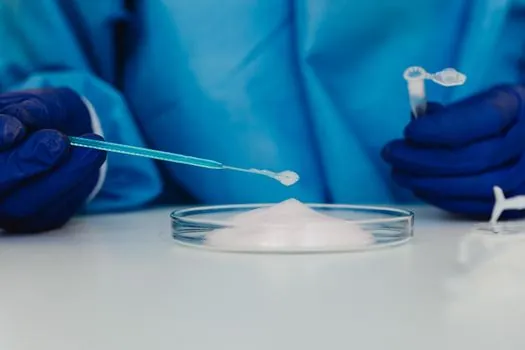
A batch release without a traceable record is not a release in the audit sense, and the records that close the loop are: supplier lot numbers and weights at charge, in-process viscosity and temperature logs, finished-product test results, and a retained sample stored under controlled conditions for the shelf life of the product [S2][S4][S9]. Calibration of the balances, viscometers, and temperature instruments is the precondition for any of those records to be valid, and calibration intervals should match the manufacturer's recommendation plus any internal risk-based tightening on the critical instruments (Zahn cups, Brookfield spindles, bench balances) [S4].
Two trackable signals that a plant can use to monitor QC health over the next reporting period are the rolling percentage of batches that pass the first bond test without re-work, and the trend in the difference between as-charged and as-discharged viscosity, because both numbers move before scrap does and both are easy to pull from the same log files that already record ASTM D4212, D789, F904, and F2217 results [S4]. For shear-sensitive and filler-loaded systems, the trend in standard deviation of solids content between top, middle, and bottom samples is the third signal that catches mixer wear and dead-zone growth before they show up as a customer complaint [S1][S3][S6].
Component reference pages worth checking: industrial adhesive, tensile testing machine, and air quality monitor.