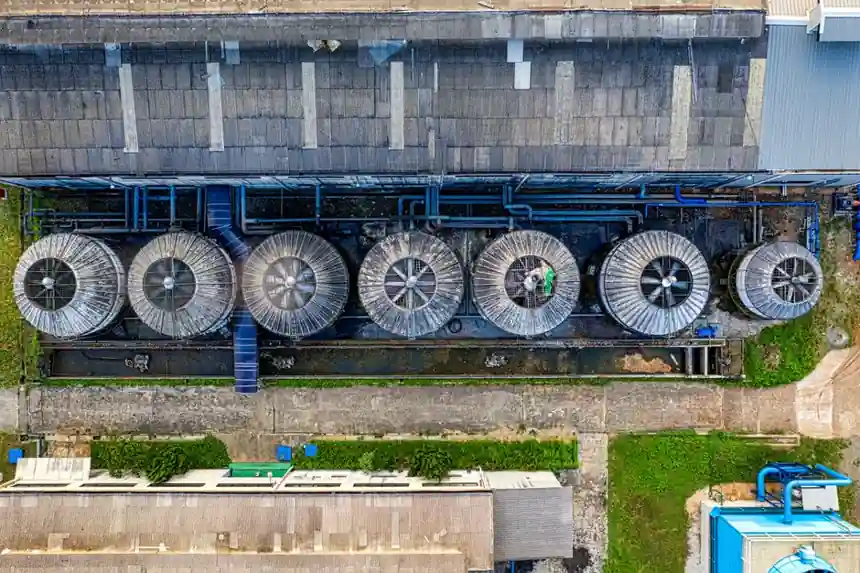
Industrial adhesive manufacturing is a six-stage chain, polymer synthesis, reactor polymerization, mixing/compounding, filtration/de-aeration, filling, and palletized shipping, in which the choice of polymer backbone (acrylic, polyurethane, epoxy, phenolic, cyanoacrylate) governs every downstream parameter from exotherm control to seal-initiation temperature [S1][S2].
Less than 5 percent of the petroleum barrel is used for polymers, yet polymers constitute a high-value-added part of the petroleum customer base and have led to increasing international competition in the manufacture of commodity materials as well as engineering thermoplastics and specialty polymers [S5]. For a procurement or process engineer, the practical question is which family fits the substrate, the converter's line speed, and the end-of-life pathway, because the adhesive layer, not the barrier film, is what limits overall package performance in most multilayer architectures [S1].
Stage 1: Monomer Selection and Polymer Synthesis
Polymer synthesis begins with monomer or prepolymer design, and less than 5% of each petroleum barrel is allocated to polymer production globally, a ratio that has held since the early 1990s and explains why feedstock costs track crude far more tightly than adhesive prices do [S5]. The synthesis route is selected first; AIMPLAS and similar R&D centers scale polymerization in lab reactors before transferring to bulk production, because molecular weight distribution and branching set the final adhesive's viscosity, tack, and open time [S7]. Common packaging-relevant backbones include LDPE, LLDPE, HDPE, PP, PS, and PVC for hot-melt and tie-layer systems, plus reactive prepolymers (isocyanates, epoxides, acrylates) for cross-linking systems [S4]. For a more detailed comparison of the five reactive families (epoxy, polyurethane, acrylic, phenolic, cyanoacrylate) across cure mechanism, gap-fill, and substrate range, see the spec-level family comparison.
Stage 2: Reactor Polymerization and Compounding
Reactor processing is required for thermosetting adhesives: epoxies and polyurethanes are built inside a stirred reactor where polymerization continues until target viscosity and molecular weight are reached, and the reaction may be exothermic (requiring cooling duty) or endothermic (requiring external heat) depending on the monomer system [S2]. Additives, tackifiers, plasticizers, fillers, and stabilizers are dosed in a separate compounding step, either batch (typical for small or highly customized runs) or continuous (preferred at scale for consistency and throughput) [S2]. High-shear and ultrasonic mixers are used when the polymer/additive combination is immiscible; mechanical mixing is adequate for solvent-borne systems. Plasticizers reduce post-cure brittleness, tackifiers raise surface stick, and fillers lower cost while sometimes adding conductivity or flame retardancy, all of which must be balanced against migration limits in food-contact packaging [S2][S4].
Stage 3: Filtration, De-aeration, and Viscosity Trim
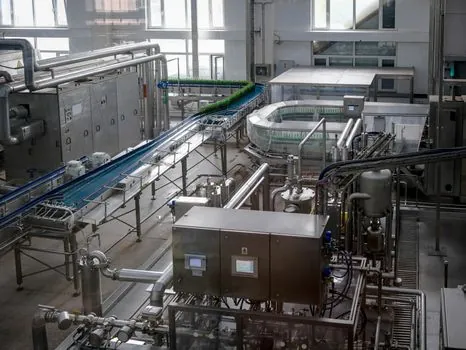
Filtration and vacuum de-aeration follow compounding to remove gels, undissolved particles, and entrained air that would otherwise form voids in a cured bond line or pinholes in a laminated film; the two unit operations are typically paired because a single pass rarely clears both defect classes [S2]. Viscosity is then trimmed with solvent (acetone, toluene, or water for dispersions) to hit the converter's target coat weight and wet-out behaviour, and the resulting liquid adhesive is held in temperature-conditioned tanks awaiting filling. This is also the stage where pressure-sensitive and hot-melt product lines diverge: PSA is shipped as a solvent or emulsion, while EVA- or rubber-based hot-melts are pumped hot into drums or pillow pouches and must not cool below their application temperature in transit, a constraint that shapes pallet pattern and freight class on the outbound side.
Stage 4: Filling, Labeling, and Primary Packaging
Filling is the cleanest handoff in the chain: the finished adhesive is metered into pails, drums, totes (IBC), cartridges, sachets, or blister cups depending on end-use volume and dispenser compatibility [S2]. Cartridges and sachets dominate consumer and MRO channels; pails (5 gal/18.9 L) and drums (55 gal/208 L) dominate industrial; totes (275 gal/1040 L) are used at bulk converting sites that consume by the railcar. Labeling carries the regulatory load, including UN/PG rating for shipment, shelf life, food-contact statements (FDA 21 CFR 175.105 in the US, EU 1935/2004 in Europe for food-contact grades), and any GHS hazard pictograms, since many reactive systems remain classified for skin sensitization or aquatic toxicity even after cure [S1].
Stage 5: Unitization, Palletizing, and Outbound Shipping
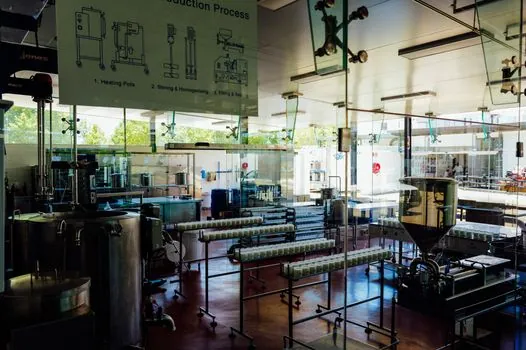
Palletizing is governed by ISTA and ASTM D4169 distribution-cycle testing for the larger pack sizes, with stretch-wrap or shrink-wrap unitization on standard GMA 48-by-40-inch pallets at typical stack heights of four pails or two drums per layer [S2]. Hot-melt drums require insulated or heated freight, and water-based dispersions need freeze protection above about 0°C, both of which constrain the carrier mix. Choosing the right packaging machinery for adhesive filling lines, from volumetric piston fillers to servo-driven cartoning, is a function of viscosity range, fill tolerance, and clean-in-place requirements rather than throughput alone. For pack formats that ship through retail or e-commerce, the primary container's compatibility with logistics and packaging sorting, including barcoded GTIN and warehouse automation, is now a procurement line item, not an afterthought.
Stage 6: Converting at the Customer Site and End-of-Life
At the converter, the adhesive or sealant is applied by slot-die, roller, spray, or extrusion and then activated by heat (hot-melt), pressure (PSA), moisture (silicone, some PU), or UV/radiation (acrylates), with each activation mode defining the converter's line-speed ceiling [S1]. The same adhesive that enables a 400 m/min laminate line can defeat recycling if it ties dissimilar polymers together; recyclability and repulpability are now first-class design constraints, which is why bio-based and water-borne systems are displacing solvent-borne tie-layers in paper and board packaging [S1][S3]. When comparing adhesive-bonded seams against welded alternatives in sheet goods, the hot-air welded seam vs adhesive seam trade-off is the relevant reference for waterproofing and geomembrane applications.
Decision Criteria: Matching Family to Application
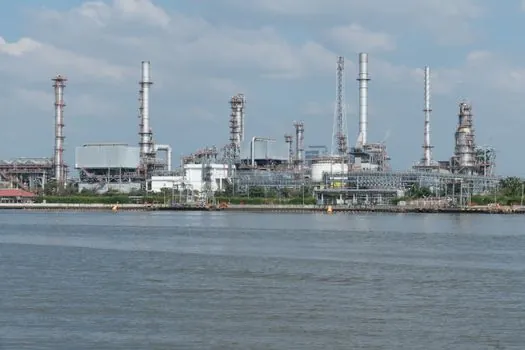
Selection is a four-axis problem: substrate compatibility (surface energy and porosity), cure mechanism (heat, moisture, UV, anaerobic), end-use environment (temperature, chemical, food-contact), and end-of-life pathway (recyclable, repulpable, compostable) [S1][S2]. Hot-melts (EVA, metallocene polyolefin) win on line speed and zero-VOC for carton sealing; pressure-sensitive acrylics win on label and tape applications where no activation is possible; epoxies and polyurethanes win on structural bonds requiring gap-fill and chemical resistance; cyanoacrylates win on small-area instant fixturing; phenolics win on high-temperature and brake/ clutch friction bonding [S1][S2]. Specifiers should treat migration data, hot-tack curves, and seal-initiation temperature (typically 80–140°C for EVA-based hot-melts) as the first-pass filter, not as fine-tuning data applied after chemistry is fixed.
Trackable Signals for the Next Six Months
Two near-term watchpoints: ASC 2026 conference output on solvent-free and bio-based adhesive platforms, and FDA and EFSA migration re-evaluations of polyurethane and acrylic systems in food-contact multilayer film, both of which will reset acceptable formulation windows across 2026 and 2027 [S3]. A second signal is the rollout of pressure-sensitive labels and tapes designed for mono-material PE and PP recycling streams, a category where the adhesive is being re-engineered to release in the wash or repulp step rather than to be permanent.
Component reference pages worth checking: industrial adhesive.