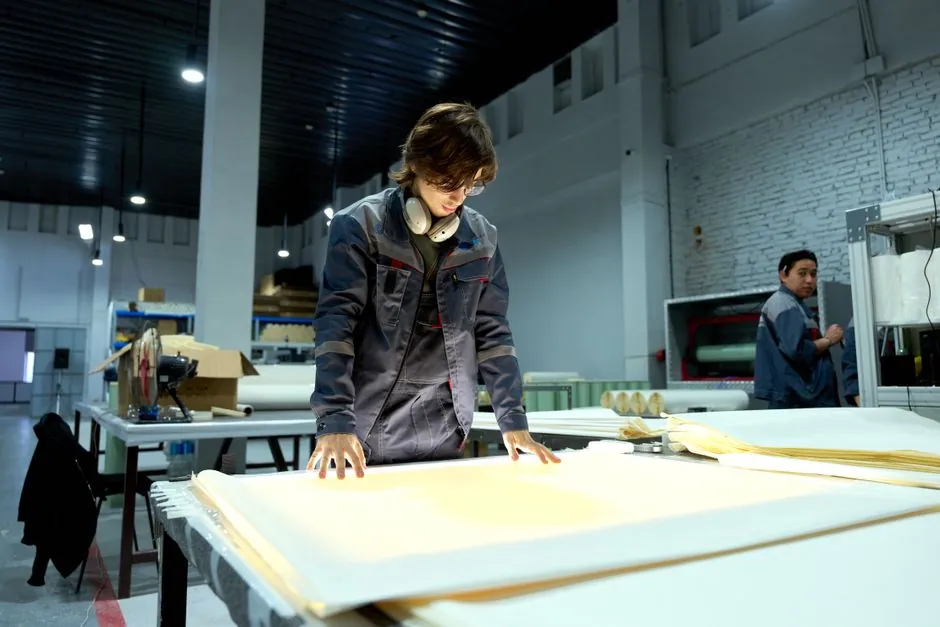
Hot-air welded seams fuse overlapping thermoplastic sheets (PVC, TPO, modified bitumen) at the molecular level, with field welder nozzle temperatures of 900 to 1100 degrees Fahrenheit producing a bond that is commonly stronger than the parent sheet [S1][S2][S4].
Adhesive seams, by contrast, rely on contact cements, seam tapes, or factory-applied pressure-sensitive layers to glue the lap; bond strength is capped by the adhesive film rather than the membrane [S1][S3][S4]. On standard EPDM sheets, seams are chemically bonded rather than welded because EPDM is a thermoset elastomer that does not melt cleanly under hot air, which is the structural reason the EPDM seam debate continues to this day [S3].
Weld Process Parameters and Equipment
Automatic and hand-held hot-air welders feed concentrated heated air into the lap zone, with silicon and steel rollers compressing the softened material immediately behind the nozzle; on PVC roofs the visible melt-zone temperature near the membrane is reported around 538 degrees Celsius at the polymer surface, and minimum overlap width is 32 mm for field seams and 150 mm for end laps [S1]. TPO installations use the same equipment family with a lower set-point; published welding window is 900 to 1100 degrees Fahrenheit at the gun, and the process fuses the sheet to itself rather than to a glue film [S2][S4].
Two-pass hot-air welding is the standard method on vinyl deck membranes, heating both the top and bottom sheet inside the lap with consistent, even energy; the goal is a meld, not a surface stick, and a properly melded seam is roughly twice the sheet thickness at the joint [S5]. The variables that control outcome are the same in every source: nozzle temperature, travel speed, roller pressure, overlap geometry, and substrate dryness. Rubber-based contact adhesive residue on a surface will block molecular welding even at high heat, so contamination control is treated as a weld-killer rather than a cosmetic step [S5].
Strength, Weathering, and Failure Modes
Welded seams are documented to be stronger than the membrane itself in peel and shear: in properly executed welds the sheet tears adjacent to the lap before the seam opens, which moves the failure mode out of the joint and into the field of the membrane [S1][S2][S4]. The bond is a polymer chain interlock that does not depend on a glue line, so it does not soften in summer heat, embrittle in winter cold, or lose cohesive strength under UV the way solvent-based contact adhesives do [S1][S4].
Adhesive and tape seams carry three documented weak points. First, the glue line degrades with UV, moisture cycling, and heat, which shortens service life relative to a fused lap on the same substrate. Second, peel strength is bounded by the adhesive film, so the seam is the weak link, not the sheet. Third, surface contamination (dust, oils, moisture) compromises the wet-out of the adhesive and produces cold bonds that look sealed but fail under thermal movement [S1][S4]. Modified-bitumen sheet systems show the same logic in a different family: open-flame torch and hot-air welders both work because they melt the bitumen compound at the lap, but the hot-air route avoids torch fire risk on combustible decks while still producing a fused, not glued, joint [S7].
Selection Matrix: Membrane Family vs Seam Method
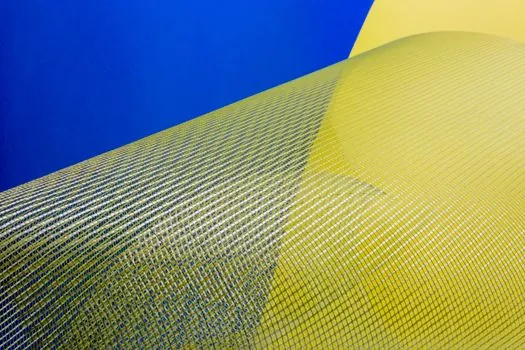
Material chemistry dictates which seam method is even available, so the decision is not really "welded or glued" but "what does this sheet allow". The matrix below captures the working rules engineers apply on bid day. [S2]
1. PVC single-ply: hot-air weld is the default; minimum 32 mm field lap, 150 mm end lap, 900 to 1100 degrees Fahrenheit nozzle set-point, 538 degrees Celsius melt at the polymer surface; 60 mil sheet with 3/4 inch lap is the long-standing proven configuration in the vinyl deck trade [S1][S5]. 2. TPO single-ply: hot-air weld, same equipment and temperature window as PVC but with material-specific set-points; welded seams are the standard, not an option [S2][S4]. 3. Modified bitumen: hot-air welding is preferred over open-flame torch on combustible substrates; both methods still produce a fused lap, not an adhesive lap [S7]. 4. Standard EPDM: hot-air weld is not applicable; seams are chemically bonded with seam tape and primer, and the seam type is one of the main reasons EPDM competes on a different cost/warranty basis than PVC or TPO [S3]. 5. Self-adhered membrane variants (EPDM SA, peel-and-stick modified bitumen, butyl-seamed geomembranes): the adhesive layer is factory-controlled and the seam is made by removing release film and rolling the lap; field hot-air welding is not the primary method on these systems.
Quality Control, Repair, and Standards Hooks
Seam integrity is verified on site with probe testing for both methods, plus destructive peel and shear tests on cut-out coupons for welded laps; non-destructive infrared scanning is also used on larger PVC roofs [S1][S2]. The two governing material standards cited for vinyl deck membranes are CAN/CGSB-37.54-95 and ASTM 4434, both of which set minimum peel strength and elongation thresholds that a fully welded seam must meet; failure to pass is treated as a cold weld, not as a marginal pass [S5]. On welded TPO and PVC, certified installer training is repeatedly emphasized because technique drives outcome more than equipment spec, and a poorly welded lap is described in identical terms across sources: surface bonded, peel strength at risk under thermal cycling, and not salvageable as a true weld later [S2][S4][S5].
Repair logic also splits cleanly along the same line. Welded sheets are patched by welding a new piece of the same membrane over the damaged area, using the same hot-air process and the same equipment, so the repair becomes part of the original molecular system [S4]. Adhesive-seamed systems are typically repaired by cleaning the lap, applying new primer and seam tape, and rolling the patch, which means the patch is only as durable as the new adhesive film and is the weak point in the next inspection cycle. For a related process-control view on adjacent sheet bonding work, see the spec-driven selection guide on paper honeycomb vs rock wool core panel layup, which uses the same quality-by-numbers logic on a different bonded system.
When Adhesive Seam Is the Correct Answer
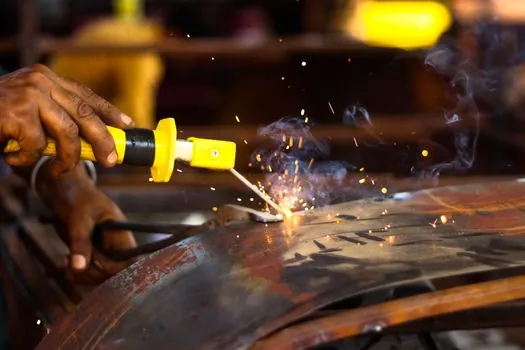
Hot-air welding is the wrong method on standard EPDM, on factory self-adhered membranes, and on any project where the substrate is so uneven or sensitive to heat that a 900-plus degree Fahrenheit nozzle cannot be safely passed across the lap; in those cases the chemically bonded seam is the engineered solution, not a fallback [S3]. Cost also matters: hot-air welding requires trained crews, calibrated automatic welders or hand tools, and a continuous power supply, so on small residential patches the tape-and-primer route is often the practical choice even on a thermoplastic sheet [S1][S2]. For background on why process control, not marketing, decides these calls, the selection logic in dielectric sensor choices for epoxy cure monitoring follows the same rule of letting the material's cure window drive equipment choice.
Track these signals on the next bid cycle: published weld-window temperature on the specific PVC or TPO datasheet versus the 900 to 1100 degrees Fahrenheit field norm; whether the spec calls for 32 mm minimum field lap and 150 mm end lap on PVC; whether the project is a combustible-deck modified-bitumen re-roof where hot-air welding substitutes for open-flame torching; and whether the membrane is EPDM or self-adhered, in which case seam tape and primer remain the correct engineered path [S1][S3][S4][S5][S7]. A short field note on fastener-adjacent process control is in amps-per-mm rule of thumb for drawn arc stud welding, which uses the same data-driven framing for a different joining process.
Component reference pages worth checking: industrial adhesive, thermal waterproofing, and waterproof membrane.