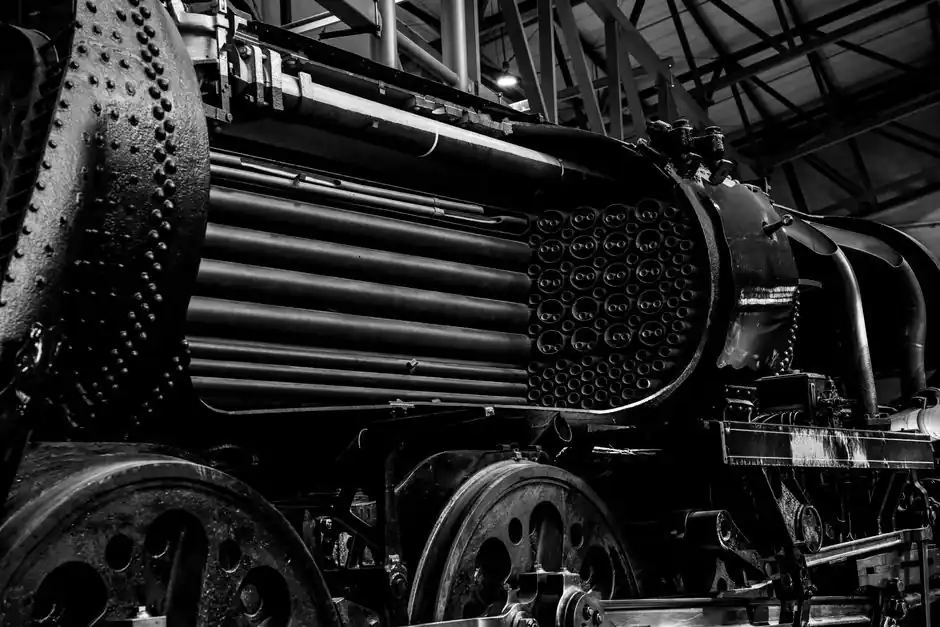
Industrial boiler selection is governed by four hard constraints, working pressure, steam flow in PPH, available fuel, and the ASME Boiler and Pressure Vessel Code envelope, with a 2+1 (N+1) redundancy being standard practice for plant-scale steam plants [S8].
The cheapest unit on a quote sheet is rarely the lowest total-cost option, since fuel cost, efficiency, and emissions compliance usually dominate the 20-year lifecycle figure [S4].
Define the Steam Load First: PPH, Pressure, and Duty Cycle
Steam flow rate (measured in pounds per hour, PPH) and the maximum available working pressure are the two parameters every other spec falls out of, including fuel line sizing, feedwater pump head, and stack design [S6]. For typical saturated-steam service, 10 psi gauge corresponds to roughly 240°F steam temperature, and 200 psi gauge corresponds to about 390°F; higher process temperatures require proportionally higher pressure classes [S5].
For heating, food processing, and commercial laundry, medium- and low-pressure steam (typically under 150 psi saturated) is sufficient and lets the buyer stay with simpler, lower-cost firetube designs, while power generation, chemical processing, and refinery service push into the high-pressure watertube envelope with thicker tube walls and full welded construction [S2]. Industrial steam boiler plants typically run at least two units to meet the steam load, plus a third for N+1 redundancy, which protects a single-unit failure from killing the plant [S8].
Firetube vs Watertube vs Electric vs Condensing: Criteria Comparison
Firetube boilers have a simple design with minimal maintenance, sit at lower operating pressures, and are cost-efficient and robust, making them a fit for smaller industrial facilities and HVAC [S3]. Watertube designs move water inside the tubes against external hot gas, which lets them handle greater pressures and higher temperatures, and they are the default for power, chemical, and refinery duty [S3]. Electric steam boilers deliver zero on-site emissions and very high turndown with thermal-shock resistance, but available electrical power is the restricting factor at high capacity [S3]. Condensing boilers, with a heat exchanger that drops flue gas below the dew point, reach efficiency levels of 90% or higher on hot water loops, a band standard non-condensing units cannot reach [S3].
Fuel Choice and Emissions: Gas, Oil, Biomass, Electric
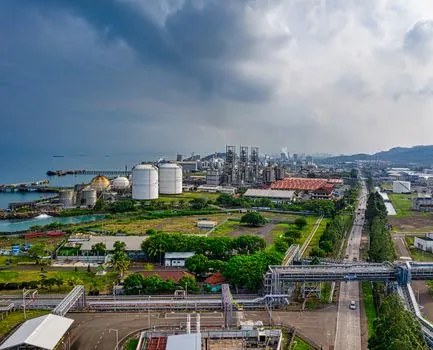
Fuel availability, not boiler capacity, is often the binding decision: a textile dyeing plant with a reliable natural-gas grid, a food plant near a biomass waste stream, and a site in a low-emission zone with cheap renewable power will each end up on a different fuel path [S4]. Ultra-low-NOx burners are increasingly required by local air-quality rules, and this often tips the choice from older atmospheric designs to premix or FGR (flue gas recirculation) burners even when the thermal output is identical [S5].
Boilers are internally fired pressure vessels exporting steam or hot water, and both manufacturing and operation fall under strict codes that include ASME stamping and, in the U.S., state-level operator licensing rules tied to the BTU/hr rating [S3]. For process plants with sensitive product contact, a coil or monotube design producing consistent, dry steam is often picked over a conventional firetube, because carryover and moisture spikes directly translate into batch rejection in pharma and food lines [S5].
Efficiency Upgrades: Economizers, Condensing Economizers, and Heat Recovery
Other boiler types can be complemented with a condensing economizer to capture condensation energy from the flue gas, but the difference between boiler water temperature and exhaust dew point means the condensing process cannot be internalized inside a non-condensing boiler design [S3]. Heat recovery steam generators (HRSGs) sit on the exhaust of gas turbines, cement kilns, steel mill reheat furnaces, and petrochemical process heaters, recovering waste heat that would otherwise vent to atmosphere; they are a separate equipment class rather than a fired boiler [S5].
For most retrofits, the first high-return upgrade is an economizer on the flue gas, which drops stack temperature and lifts overall thermal efficiency without touching the pressure vessel; the second is burner and controls modernization, which reduces excess air and cuts NOx in a single step [S3]. If a site already has a non-condensing firetube running at low pressure and low return-water temperature, adding a condensing economizer is the lowest-capex path to crossing the 90% efficiency band [S3].
Who Should NOT Pick the Mainstream Firetube
Firetube boilers should be ruled out for high-pressure process steam (above roughly 150 psi), for any unit above the medium-capacity range, and for any site that cannot tolerate the longer cold-start ramp, since firetube designs generally take longer to come up to steam pressure than watertube or coil designs [S5]. They are also a poor fit where wet steam or carryover would damage downstream product, for example in pharmaceutical clean-steam loops, where a coil or monotube unit producing consistent dry steam is the more defensible choice [S5].
Electric boilers should be ruled out at any site where the local grid cannot deliver the multi-MW block that high-capacity electric steam generation requires; the technology works well at small and mid capacities, but available power is the restricting factor for any move to large tonnage [S3]. A condensing boiler is the wrong pick where the return loop runs hot (above the flue-gas dew point), because the efficiency gain disappears once the heat exchanger can no longer condense water vapor out of the stack gas [S3].
Shortlist Logic and Sourcing Signals
Build the shortlist by locking the design pressure and the PPH figure first, then filtering the type field (firetube / watertube / coil / electric / condensing), then applying fuel and emissions filters, and only then running the cost model over a 15 to 20-year horizon including fuel, water treatment, maintenance, and stack-compliance retrofits [S4]. Two trackable signals to watch are local NOx and CO2 limits tightening in 2026 air permits, and grid capacity upgrades that would unlock larger electric steam installations in industrial parks over the next planning cycle [S3][S4].
Boilers are pressure vessels and must be selected against the ASME Boiler and Pressure Vessel Code stamping rules, not just vendor literature; for new European chemical-plant builds in 2026, ATEX category 2 + Ethernet-APL dual-certified pressure transmitters are increasingly specified for burner management, per recent OEM guidance [S1]. For a related reference on pressure-vessel spec from process duty to code stamp, see this pressure vessel selection guide.