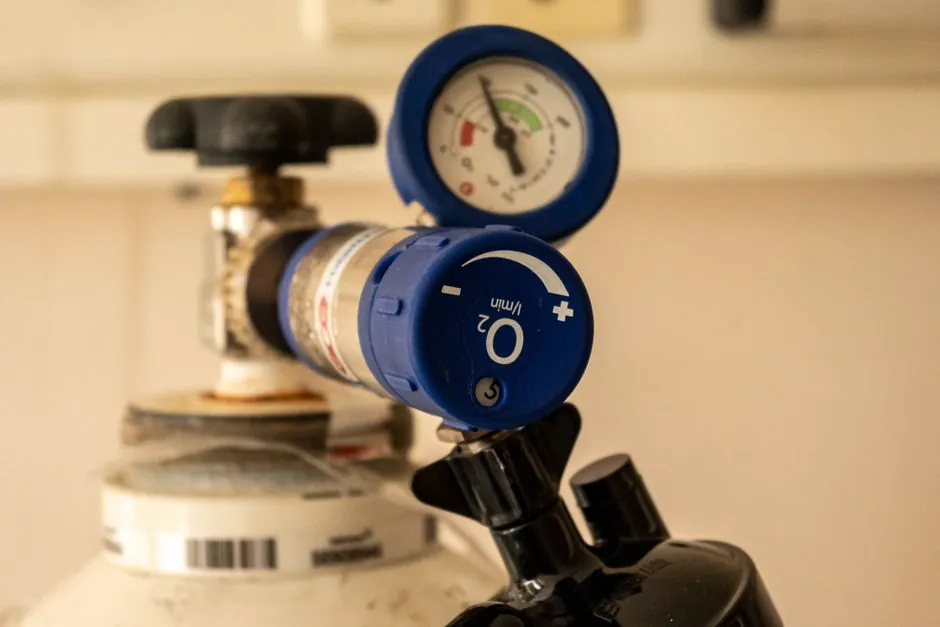
Specifying a pressure vessel is a code-bound engineering decision, not a catalog pick: the same dimensions and pressure rating can produce two very different total cost of ownership outcomes once material, internals, documentation, and inspection regime are factored in [S2].
Selection should start from the process envelope (MAWP, design temperature, MDMT, fluid chemistry, full vacuum, cycling) and work outward to geometry, material, fabrication code, and inspection plan. The most common engineering mistakes happen when a vessel is sized first and qualified later.
Define the Operating Envelope Before Sizing
Every pressure vessel is rated for a specific set of operating limits, and those limits must cover normal operation, startups, shutdowns, cleaning cycles, and process upsets, not just the nameplate condition [S2]. The three numbers that anchor the design are Maximum Allowable Working Pressure (MAWP), design temperature, and Minimum Design Metal Temperature (MDMT), and the last one in particular drives impact testing and material grade selection for low-temperature service.
Working volume, vapor space, residence time, and future production growth all feed into capacity decisions, and configuration has to be sized against footprint, transport weight limits, and lifting access at the site, not just the largest vessel that physically fits [S1][S2]. For most chemical, energy, water, and food plants, vessels range from person-portable cylinders to multi-story reactors and are built to ASME Boiler and Pressure Vessel Code Section VIII [S3][S4].
Match the Code to the Service
ASME BPVC Section VIII is the dominant U.S. pressure vessel code, and it splits into three working divisions based on pressure and design philosophy: Division 1 applies to vessels with internal or external pressure above 15 psig and uses a design-by-rule approach grounded in normal stress theory; Division 2 covers service up to 10,000 psig with more stringent material, NDE, and design requirements under a design-by-analysis, maximum distortion energy theory approach; Division 3 is reserved for high-pressure service above 10,000 psig [S4].
For vessels already in service, API 510 (Pressure Vessel Inspection Code) governs in-service inspection, rating, repair, and alteration, which is the inspection regime most refiners and chemical operators will eventually have to live with [S4]. In a typical procurement, the specifier selects the construction code (ASME Section VIII Div. 1 or 2) and the in-service code (API 510) separately.
Select Material Against Chemistry, Temperature, and Lifecycle Cost
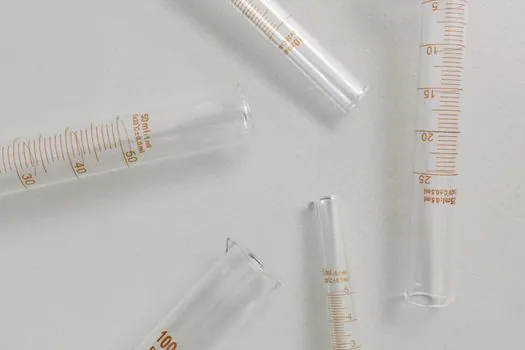
Material choice has to be evaluated against the actual process chemistry, not a generic "corrosive or non-corrosive" label, because operating temperature, cleaning chemicals, chloride exposure, and expected corrosion rates all drive long-term performance [S2][S8]. High-strength, corrosion-resistant grades reduce required wall thickness, can eliminate the need for internal coatings or corrosion allowances, and extend service life [S5].
Carbon steel remains the practical baseline for many non-corrosive industrial services thanks to its strength and lower cost; stainless steel (304/316) is commonly selected where corrosion resistance, product purity, or sanitation matter; more aggressive services push selection toward duplex stainless, nickel alloys, titanium, or glass-lined steel [S2][S5]. Stainless and corrosion-resistant alloys dominate the chemical processing, oil and gas, water treatment, and food and beverage sectors where the metallurgy is the real safety barrier [S3].
Compare the Common Vessel Types Against Duty
Pressure vessel selection rarely reduces to a single "best" type, because geometry and internals are tied to the job the vessel has to do. The most common categories and where they fit: storage vessels for compressed gases or liquids under controlled pressure, including finished products like CNG and liquid nitrogen; heat exchangers for transferring thermal energy between two or more fluids; boilers for generating vapor from a heat source; process vessels for mixing, decanting, distillation, separation, and chemical reactions; and jacketed vessels when external heating or cooling through a jacket is required for process control [S3][S4].
A simple comparison helps an engineer pick the right family quickly:
Storage vessels, optimize for low corrosion rate, large hold-up volume, and low pressure drop on fill/draw; heat exchangers, optimize for thermal duty, allowable pressure drop, and material compatibility on both hot and cold sides; process/reactors, optimize for residence time, agitator fit, internals, and full vacuum capability; jacketed vessels, optimize for jacket pressure rating, heat-transfer area, and cleanability of the jacket side [S3][S4]. Shape follows the same logic: cylindrical shells are the workhorse geometry, and spherical vessels are chosen when the highest volume-to-wall-thickness ratio matters, typically for very large gas storage at high pressure [S4][S6].
When Carbon Steel Is the Wrong Pick

Carbon steel is a poor fit when the service carries chlorides, strong acids, sour hydrocarbons (H2S) per NACE MR0175 considerations, or any fluid where trace iron contamination affects product purity, because the corrosion allowance and coating work needed to make it last often outweigh the upfront material savings [S2][S5]. A higher alloy is not automatically better, but a mismatched alloy (for example 304 where chlorides are present, or a low-nickel alloy in strong acid) is a known failure mode, and the cost shows up as shortened inspection intervals, internal lining replacement, or unplanned shutdowns [S2][S8].
Glass-lined steel is a separate branch: it is specified for highly corrosive chemistry where a metallic alloy is not durable enough and product contamination must be near zero, but it trades away mechanical and thermal shock tolerance, which is why the operating envelope and CIP/cleaning cycle have to be qualified against the lining's limits before purchase [S2].
Documentation, Internals, and Installation Constraints
Two vessels with the same drawing can have very different project cost once documentation, internals, and connection details are added: ASME Section IX welding procedure qualification, material certificates to EN 10204 3.1 or 3.2, NDE extent, and the data book all influence both regulatory acceptance and the engineering hours needed to put the unit into service [S2][S3]. Internals (agitator mounts, baffles, demister pads, distributor plates, heating coils) and connections (nozzle size, flange rating, jacketing, instrumentation taps) routinely move the project from a stock design to a custom build.
Side constraints that should be checked during selection, not after purchase: site footprint and headroom, transport weight and route limits (a vessel legal on the shop floor can be illegal over the road), lifting and rigging access, foundation loads, and the proximity of other equipment that affects inspection access [S1][S2].
Use a Shortlist Logic, Not a Single Winner

For most projects the realistic shortlist is three candidates, not one: a carbon-steel ASME Section VIII Div. 1 baseline for non-corrosive service; a stainless 304/316 upgrade when purity or mild corrosion is the driver; and a higher-alloy or lined option (duplex, nickel alloy, titanium, glass-lined) for aggressive chemistry [S2][S5][S8]. Decide on (a) MAWP/design temperature, (b) material vs fluid chemistry, (c) capacity vs footprint, (d) total lifecycle cost, and (e) in-service inspection regime, then pick the lowest-cost option that passes all five, with API 510 as the default inspection reference once the vessel is in service [S2][S4].
Trackable signals for the next decision: ASME Code Week updates, ASTM A516/A537 plate availability for carbon-steel builds, and duplex stainless lead times vs nickel alloys for the upgrade branch. For pressure-side piping that ties into the vessel nozzles, seamless vs welded pipe selection for high-pressure service is a useful adjacent read.