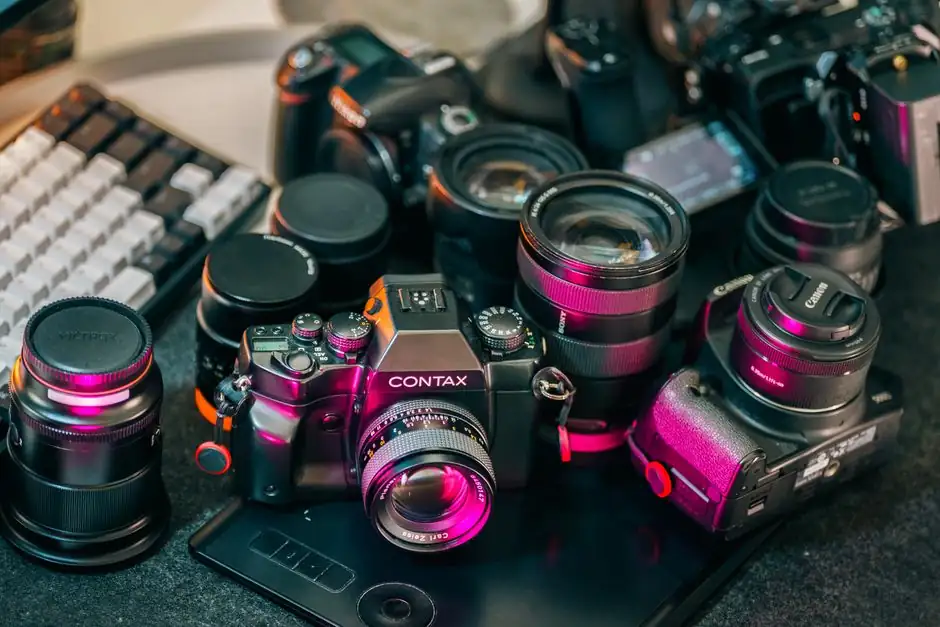
Industrial cameras are engineered for continuous operation, repeatable acquisition, environmental resistance, and system integration, unlike consumer cameras designed mainly for convenient imaging.
The selection depends on resolution, frame rate, exposure, trigger control, data output, connectivity, lighting, and the required inspection method, rather than megapixel count alone.
Continuous Use Requires More Than a Consumer Sensor
A consumer camera generally treats imaging as an automatic visual experience, while an industrial camera must deliver repeatable data for inspection or process control [S2][S3]. Industrial designs emphasize long-term reliability, heat dissipation, customization, and resistance to dust, water, high temperatures, and low temperatures [S2].
Commercial surveillance cameras sit between these categories because they can support continuous recording, better optics, stronger low-light performance, higher recording bit rates, and true wide dynamic range [S1]. This makes them suitable for security monitoring, but not automatically suitable for machine vision where spatial accuracy, timing, calibration, or dimensional measurement may be required.
Consumer cameras commonly optimize automatic settings, burst speed, autofocus, and in-camera color, contrast, and sharpening [S3]. Those features are useful for photography and video, yet they can complicate machine analysis by changing image characteristics between frames. An industrial camera instead prioritizes stable exposure, frame synchronization, low-noise acquisition, raw data, and predictable integration.
Resolution, Speed, and Exposure Set the Application Limit
Industrial camera selection begins with the smallest feature that must be detected, because higher resolution only helps when the lens resolves that feature and the field of view leaves sufficient pixel density [S5]. When selecting an industrial machine vision camera, resolution should match the smallest feature that must be detected, and speed and imaging mode should be chosen according to production-line and inspection requirements [S5].
Fast-moving production lines require enough frame rate and short exposure to prevent motion blur [S5]. Shorter exposure also reduces captured light, so the illumination system must be sized for the inspection rather than left as an afterthought [S5]. Barcode and optical character recognition require contrast and adequate spatial resolution; dimensional inspection places greater importance on stable magnification and low distortion [S5].
For scientific or quantitative work, exposure can extend from microseconds to minutes with precise timing and frame synchronization, and raw output preserves data for downstream analysis [S3]. Scientific cameras are designed as instruments of measurement and analysis that capture data rather than merely pictures, and differences in sensor technology, image fidelity, and application-specific design are critical when choosing an imaging system [S3].
Camera Type Determines the Measurement Method
Area, line-scan, and 3D cameras should be compared by the information required, spatial coverage, motion rate, and measurement depth. Area cameras capture a 2D image in one exposure and suit part-presence checks, dimensions, and label reading [S5]. Line-scan cameras build an image one row at a time as the target moves, making them appropriate for continuous materials and fast-moving parts [S5].
Three-dimensional cameras add height or surface-profile information for geometry-oriented tasks. Structured light, stereo imaging, and time-of-flight are three distinct approaches within that category [S5]. A 3D scanner is not a drop-in substitute for an area camera when the requirement is dimensional measurement rather than ordinary 2D appearance.
Monochrome imaging is normally preferred when the defect depends on contrast, while color is required when hue itself distinguishes the object or defect [S5]. CMOS is standard for industrial imaging because it supports fast readout, but sensor format, lens, illumination, and output pipeline still determine usable performance [S5].
Environmental and Duty-Cycle Requirements
An industrial camera may be suitable for continuous work only when its enclosure, thermal design, cabling, lighting, and maintenance provisions match the installation [S2]. Durability options include waterproofing, dustproofing, and resistance to high and low temperatures, but each requirement must be specified for the actual environment rather than inferred from the term industrial camera [S2].
Commercial video surveillance systems are typically designed to record continuously 24 hours a day, whereas many entry-level consumer cameras record only when built-in analytics identify a person, vehicle, or other predefined event [S1]. That distinction matters when evidence must include the full timeline: an event can be missed through misclassification, recording can stop while activity continues, or context can be lost before and after a clip [S1].
Consumer cameras are portable, light, affordable, and easy to operate [S2]. Those qualities suit personal imaging, demonstrations, and occasional visual checks. They are a poor default for unattended production, durable data acquisition, or installations where vibration, heat, dust, washdown, timing, or trigger sequencing dominates the specification.
Connectivity and Control Determine System Fit
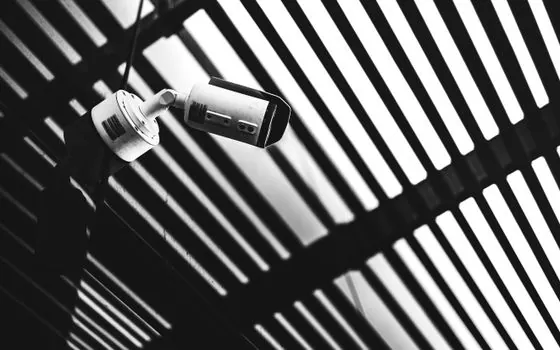
Consumer cameras generally prioritize self-contained recording, removable media, wireless connectivity, and phone or computer viewing. Industrial systems must instead define trigger behavior, frame timing, image processing, PLC or robot coordination, retention, and fault recovery. The industrial camera is therefore one element in a controlled acquisition chain rather than a stand-alone image-capture appliance.
Software compatibility also affects implementation effort. Machine-vision systems may provide icon-based controls and support PLCs or robot controllers without middleware, but the specification must still confirm the required inspection rules, interface behavior, and supported hardware [S5].
Decision Criteria Across the Main Camera Classes
For surveillance, compare commercial and consumer cameras by recording mode, low-light behavior, dynamic range, lens quality, and storage strategy; commercial models are stronger on continuous evidence capture [S1]. For machine vision, compare area, line-scan, and 3D systems by measurement type: area cameras for 2D presence or label inspection, line-scan for moving continuous material, and 3D for height or surface geometry [S5].
For quantitative scientific imaging, compare scientific and consumer cameras by data integrity, exposure range, synchronization, noise, dynamic range, and raw output; scientific cameras are instruments for measuring photons rather than devices intended only to produce attractive pictures [S3]. Consumer cameras score well for portability, simple controls, affordable pricing, and aesthetic results, while industrial cameras score better for continuous duty, customization, precision, durability, and integration [S2].
Neither higher resolution nor continuous recording alone establishes suitability. Choose a consumer camera for occasional visual documentation, a commercial surveillance camera for continuous security evidence, an area camera for discrete 2D inspection, a line-scan camera for continuously moving material, and a 3D system when depth is the measured variable [S1][S5].
Selection Checklist for Reliable Deployment
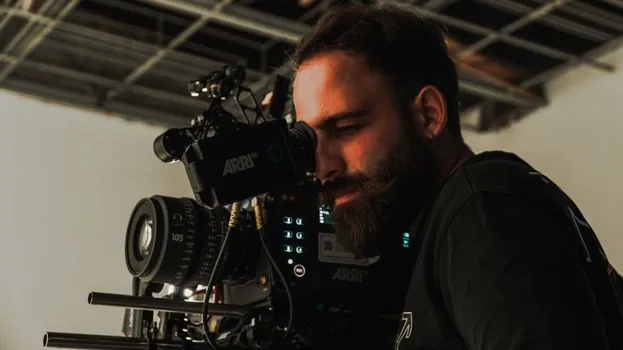
Specify the smallest defect or marking, minimum contrast, allowable positional error, target speed, and lighting condition before selecting a camera [S5]. Confirm frame rate, exposure time, trigger mode, synchronization, interface bandwidth, power method, working distance, field of view, and lens resolution as a set [S5].
For long-duration service, document operating temperature, vibration, dust, water exposure, cleaning method, cable routing, storage retention, and fault-response requirements [S2]. For security evidence, verify continuous versus event-based recording, clip length, low-light behavior, true wide dynamic range, lens performance, and storage redundancy [S1].
The most useful proof is a controlled trial using representative parts under production lighting, motion, and trigger timing. Record missed detections, false triggers, image drift, heat behavior, and recovery after power or network interruption. This turns the purchase decision into measured process performance rather than a comparison of headline specifications.
A continuous industrial installation is suitable when acquisition timing, environmental endurance, data quality, and integration remain stable under production conditions. Track frame-loss rate, image drift, inspection yield, and recovery time during commissioning; any recurrence of those signals indicates that the camera or surrounding optics, lighting, cabling, and software need correction.