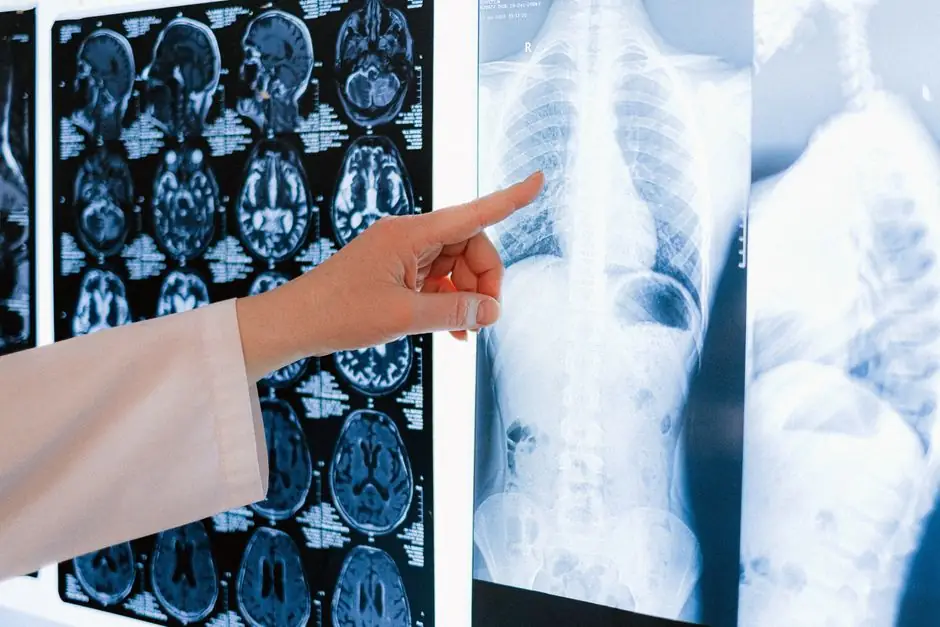
An industrial X-ray generator used for nondestructive testing must be registered with the applicable radiation authority before use, while operators of industrial radiography equipment must be properly trained and licensed where required [S1][S3].
The exact permission depends on the state, radiation source, and application: X-ray machines fall under registration systems, while industrial radiography involving radioactive sources can require both an equipment license and qualified radiographers [S2][S3][S4].
Registration Is the Primary Requirement for X-Ray Equipment
Industrial X-ray generators are radiation machines, so the owner generally registers each unit with the state radiation-control authority before operating it in a facility. Massachusetts requires industrial X-ray devices used in facilities to be registered with its Division of Radiation Control through the Environmental Health eLicensing Portal [S1].
Registration is not equivalent to purchasing the generator or appointing an operator. The owner must identify the radiation-producing equipment to the regulator, use the applicable filing process, and maintain the authorization for each machine. Every owner of a radiation machine must comply with the state radiation-control agency’s regulatory and registration requirements for each unit [S6].
For a company planning an industrial X-ray generator deployment, the first regulatory question is therefore not “Do I need a radiation license?” but “Which registration or license category covers this equipment in the operating state?” That distinction matters because registration, a specific-use license, an industrial radiography license, and operator qualification are separate controls [S1][S3][S4].
Where Industrial Radiography Requires a License
Industrial radiography commonly uses X-rays or gamma rays to inspect cracks and flaws without damaging the workpiece, including pipelines, metal welds, boilers, vehicle parts, and aircraft parts [S3]. The radiation source, not merely the inspection task, determines the applicable authorization.
People operating industrial radiography equipment must have the training and education needed to qualify them for their work, while any applicable licensing or registration requirements depend on the relevant jurisdiction and radiation source [S3][S4]. This is especially relevant when gamma sources or other radioactive materials are used. Part E establishes requirements for licenses or registrations covering industrial use of radiation sources and for the people using those sources in industrial radiography [S4].
A sealed gamma source normally calls for a more demanding authorization pathway than an X-ray generator. Part E covers both radiation machines and sealed radioactive sources, while also requiring compliance with other regulatory parts, including the provisions applying to radiation-machine registration and radioactive-material licensing [S4].
Certificate-of-Registration Rules in Texas

Texas requires a facility using industrial radiation machines to apply for a certificate of registration within 30 days after beginning use of the radiation machines [S2]. That filing window is a concrete compliance trigger, but it does not remove the need to address registration, radiation safety, and operator qualification.
For operators working across state lines, each jurisdiction in which the machine is used may impose its own filing and operating requirements. A Massachusetts registration only covers the activity governed by Massachusetts, while a Texas certificate addresses use in Texas [S1][S2]. Portable equipment does not remove the location-by-location regulatory check.
The distinction between registration and licensing should be retained in specifications and purchasing records. Registration normally identifies and authorizes a radiation machine under the applicable state system, whereas a license can cover specified uses of radiation sources and associated activities. Part E expressly treats licenses and registrations as related but distinct mechanisms [S4].
Operators, Facilities, and Equipment Controls
Facilities also need controlled work areas, qualified personnel, and properly managed radiation-producing equipment. For sealed-source radiography, Part E defines associated equipment including guide tubes, control tubes, control or drive cables, removable source stops, J-tubes, collimators, control-drive mechanisms, and exposure heads [S4].
Annual refresher safety training under Part E must cover internal inspection results, new procedures or equipment, new or revised regulations, and observed accidents or errors, while giving employees opportunities to ask safety questions [S4]. That requirement applies to the industrial radiographic operation, not merely to the acquisition of the generator.
Comparison: X-Ray Machine vs Gamma Radiography

The practical comparison starts with the radiation source. X-ray generators produce X-rays when electrically energized and generally enter the state registration process for radiation machines. Sealed-source radiography uses radioactive material and normally requires the applicable radioactive-material and industrial-radiography authorization, plus qualified radiographers [S3][S4].
For fixed cabinet or shielded-cell X-ray inspection, the equipment decision may remain focused on registration, shielding, interlocks, and operating procedures. For field gamma radiography, source ownership, transport, storage, survey instruments, exposure-device controls, and personnel qualification become central. Part E identifies the field station as a facility from which radiation sources may be stored or used and from which equipment is dispatched [S4].
On four decision criteria, an X-ray machine has a simpler source regime, a lower radioactive-material burden, registration as the central state filing, and a different operator pathway from gamma radiography. Gamma radiography adds sealed-source licensing controls, radioactive-material transportation requirements, source-recovery controls, and explicit radiographer qualification. The correct choice is not determined by image quality alone, but by the work envelope, exposure environment, logistics, and regulatory route [S3][S4].
Use Cases That Trigger Different Permissions
Weld inspection is a standard industrial radiography use because X-rays and gamma rays can reveal internal cracks that are not visible to the naked eye [S3]. A portable X-ray generator can support such inspections without introducing a radioactive source, while a crawler or internal pipeline system may still require jurisdiction-specific registration and site controls [S1][S2].
Selection of exposure parameters remains an engineering calculation after authorization is settled. Size X-Ray Exposure Time from kVp, mA and Distance explains how generator output and source-to-object distance affect exposure time, but the equipment cannot be operated lawfully solely because those parameters have been calculated.
Non-destructive inspection can also be performed with other instrument classes, such as an industrial borescope for internal visual access or an industrial camera for optical inspection. Those alternatives may reduce radiation licensing exposure where they can achieve the inspection objective, although they cannot provide the penetration or material-density information produced by an X-ray or gamma system [S3].
Records to Verify Before the First Exposure
Before the first exposure, the owner should obtain the state registration or license for each machine, identify the regulatory category covering the source, and document the responsible radiation-control authority. In Massachusetts, the Division of Radiation Control lists (833) 281-6111 for eLicensing support and (508) 820-2121 as its emergency number [S1].
The file should also establish the operating area, access control, operator training, exposure procedures, instrument checks, and equipment inspection regime. For sealed-source work, add source inventory, use records, transport arrangements, recovery procedures, and survey-instrument calibration. Part E requires annual refresher training and defines hands-on experience as part of radiographer qualification [S4].
The traceable signal for a plant or inspection contractor is the approval record: a registration certificate, applicable license, or authorized use authorization tied to the correct equipment and state. If operation includes gamma radiography, verify the individual radiographer’s qualification and the industrial radiography authorization in addition to the equipment record [S2][S3][S4].