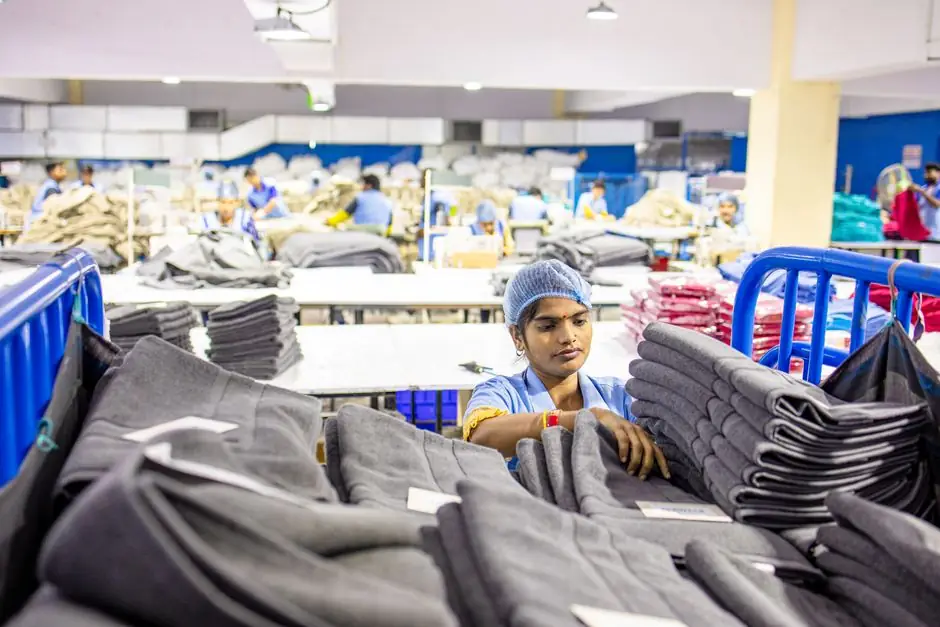
Industrial exoskeletons cut measured muscle activity and spinal loading during lifting and overhead work in peer-reviewed trials, but field data tying them to lower recordable injury rates on assembly lines remains thin, with most studies involving fewer than 15 participants in laboratory settings [S2].
WMSDs accounted for 26.1% of US workplace incidents and 266,530 days away from work in 2019, and the aggregate US economic burden rose from $367.1 billion in 1996 to $796.3 billion in 2009-2011, a 117% increase that frames why automotive, logistics, and discrete-assembly plants are piloting the technology [S1][S2].
Two Exoskeleton Classes and What Each Actually Does on a Line
Active exoskeletons are powered through electric, pneumatic, or hydraulic actuators, while passive exoskeletons rely on springs, counterbalances, and the wearer's own motion to redirect load [S2]. Most commercial units on assembly lines fall into four categories: back assist, shoulder and arm assist, tool holding/support, and leg assist, with back and shoulder models dominating automotive and logistics pilots [S2].
Back assist units support the lumbar spine during lifting and static holding; shoulder and arm units target sustained overhead work; tool-holding models act as a passive third arm for jigs and heavy pneumatic tools; leg assist devices offload the hip, knee, and ankle during carrying or extended standing [S2]. When shopping for assembly-line hardware, plant engineers frequently cross-reference locking assembly fixtures and industrial ceramic tool rests so that an exoskeleton interface does not foul existing fixturing geometry.
Evidence Base: What the Lab Numbers Show and What They Do Not
Passive low-back exoskeletons used during dynamic lifting decreased lumbar muscle activity and reduced spinal muscle fatigue in the studies NIOSH summarized, and the same trials reported improved posture under static trunk bending [S2]. A 2022 systematic review frames the question differently: efficacy needs to be evaluated across three axes, including subjective perception, objective physiological measurement, and the specific target task, before a plant can claim injury reduction [S1].
That review also documents the ceiling on current claims: most published trials run small cohorts in controlled postures such as squatting, stooping, and tool use, so translating lab deltas into facility-level recordable injury rates is not yet defensible [S1]. For a process engineer, the practical read is that exoskeletons reliably lower muscle activity in targeted tasks, but they have not yet been shown to lower OSHA recordable rates across a full assembly line.
Selection Criteria: Matching the Device to the Cycle
Pick the body region first: back assist for lift and lower-and-assemble tasks, shoulder assist for overhead bolt run-down and wiring harness routing, leg assist for walk-and-carry or long stationary-stand stations, and tool-holding arms for heavy nut-runners and weld guns [S2]. Match the actuation principle next: pneumatic muscle suits in the 3-4 kg mass band deliver roughly 25 kgf of lift assist without external power, while ultra-light textile suits around 430-460 g trade peak force for posture correction and mobility [S5].
Then validate three line-side constraints: cycle time compatibility, PPE and harness clearance against existing industrial adhesive-bonded jigs, and the changeover cost every time a unit goes down for inspection. The Texas Department of Insurance guidance (2025-11) is explicit that exoskeletons must be sized to the worker, padded at pressure points, range-of-motion checked before issue, and tension-adjusted so the device does not slip during walking or stair transitions [S3].
Comparison of the Main Exoskeleton Categories for Assembly-Line Use
Below is the criteria grid a process engineer should walk before issuing a purchase order, drawn from the categories NIOSH catalogs and the spec sheets published by current vendors [S2][S5].
Back assist (passive, spring/counterbalance): best for repetitive lift and lower-and-assemble; peak lift assist around 25 kgf; mass typically 3-4 kg; line-side fit is good where workers can keep a fixed foot position; main risk is heat buildup in warm cells [S5].
Shoulder/arm assist (passive spring or active pneumatic): best for sustained overhead work and arm-hold tasks between 90 and 150 degrees; mass in the 1-3 kg band; reduces deltoid load; main risk is interference with overhead industrial buzzer and stack-light sightlines and harness snag on roll-over guards [S2][S5].
Tool-holding exoskeletons (passive arm): best for heavy pneumatic or DC tools; eliminates static tool weight; main risk is reduced agility for fast repositioning, so they fit dedicated stations more than mixed-model lines [S2].
Leg assist and standing-relief devices: best for walk-and-carry cells and long static-stand stations; mass 2-6 kg; limited data on injury reduction, so pilots should be paired with industrial camera cycle-time logging to baseline throughput before and after rollout [S2].
Who Industrial Exoskeletons Are For, and Where They Are the Wrong Tool
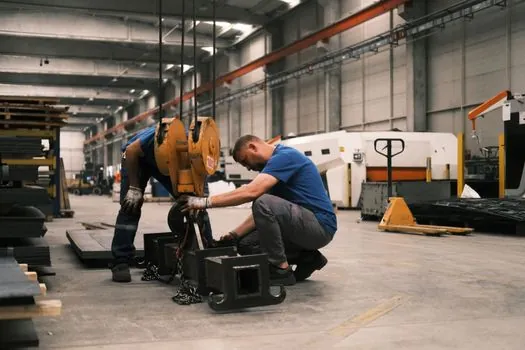
They are for stations where the dominant WMSD driver is a known, repeatable load: lift and place, overhead hold, or sustained tool weight, and where the worker population is stable enough to fit and refit devices as part of standard issue [S2][S3]. They are not for jobs with high rates of repositioning, climbing, or stair work, and they are not for tasks where the worker's center of mass shifts unpredictably, because the added mass itself becomes an injury risk in slips, trips, and falls [S3].
They are also the wrong tool if the plant has not first run the standard hierarchy of controls. NIOSH is clear that exoskeletons are beneficial for musculoskeletal loads that are not otherwise reduced by changes to engineering processes, so the device is a supplement to, not a replacement for, ergonomic re-engineering of the workstation [S2].
Standards, Inspection, and the Maintenance Burden
ASTM has approved the first standards for exoskeletons, and OSHA, NASA, and ASME are expected to provide voluntary guidance, though none of those voluntary frameworks are yet equivalent to a binding industrial control standard as of late 2025 [S3]. The practical implication is that the OEM manual is currently the binding document, and the plant must build its own inspection cadence: pre-use check, sensor calibration where fitted, harness and padding inspection, and a documented failure path back to the supervisor [S3].
Heat stress is the most under-discussed failure mode. Metal components heat up during use, and the added mass raises body temperature, so rotation and break schedules need to be re-baselined when exoskeletons enter a cell, and workers must be trained to recognize fatigue and heat-illness signs that the device itself can mask [S3].
Limits of the Current Evidence and Trackable Signals to Watch
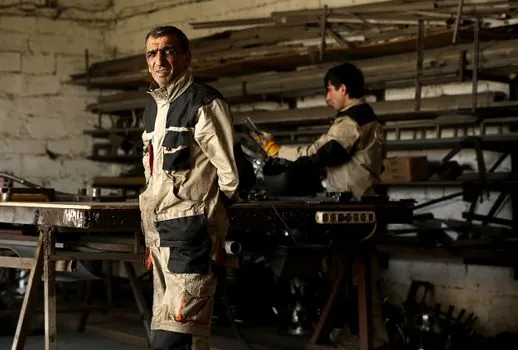
The literature still has three hard limits: small sample sizes (often under 15 participants), lab-only settings, and almost no published facility-level recordable-injury data tied to a deployed exoskeleton fleet [S1][S2]. A reasonable next node is the publication of field trials from the automotive and logistics pilots now running in 2025-2026, particularly cohort sizes above 50 workers and stations with multi-month pre/post injury-rate windows.
A second trackable signal is the convergence of ASTM exoskeleton standards with OSHA and ASME guidance, because until a voluntary standard stabilizes, every plant is effectively writing its own acceptance test, and cross-site benchmarking will stay weak [S3]. For readers weighing whether to pilot, the right baseline is to instrument the target cells first, capture muscle-activity or cycle-time data with the existing process, and only then decide whether the exoskeleton moves the number, as covered in the discrete event simulation piece on line balancing.