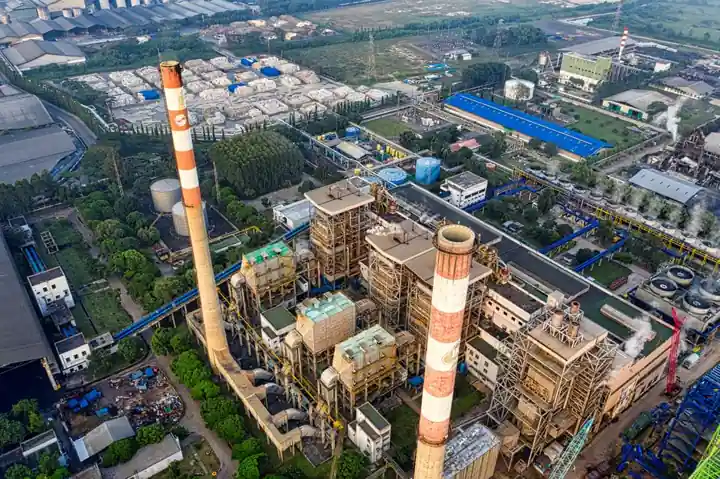
Industrial filter sourcing from China runs on three hard numbers: efficiency class (G4–F9, H10–H14 HEPA, ULPA per EN 779 / ISO 16890 / EN 1822), media composition (synthetic, fiberglass, activated carbon, PP meltblown), and a third-party test report tied to a specific lot [S1][S2]. Buyers who fix those three before they request a quote cut typical RFQ cycles from 8–12 weeks down to 3–4 weeks and avoid the most common lot-rejection failure mode, which is media grade swap during scale-up [S2][S3].
China is the largest single supplier across most industrial filter categories: pre-filters, paint-stop ceiling media, HVAC bag and panel filters, HEPA/ULPA for cleanrooms, PP spun and meltblown water cartridges, and stainless mesh housings [S1][S2][S4]. The opportunity is real, but the margin between Tier-1 factory direct and a trading company on Alibaba can swing a 20-inch PP cartridge from roughly $0.40 to $0.95 per unit, which is why supplier type matters as much as country of origin [S1][S3].
Filter types and which standard governs each
EN 779:2012 classifies coarse and fine air filters in classes G1–G4 and M5–F9, while ISO 16890:2016 replaced it for new specs and uses ePM10 / ePM2.5 / ePM1 reporting based on 50% and 95% fractional efficiency, with the class tied to the worst of the three groups [S2]. For drinking-water cartridges, NSF/ANSI 42 covers aesthetic effects (chlorine, taste, odor) and NSF/ANSI 53 covers health claims (lead, cryptosporidium), and a factory claiming either needs the certificate number on the data sheet, not a marketing line on a web page [S1].
Within water filtration, the four dominant media types map cleanly to use cases: activated carbon for chlorine, VOC and odor reduction; reverse osmosis membranes for high-purity potable water; UV lamps for microbiological disinfection without chemicals; and porous ceramic elements for pathogen-rated gravity or pressurized systems [S1]. For compressed air and process gas, coalescing filters typically follow ISO 8573-1 purity classes (1–9 for solid, oil, and water content), and oil-removal grades must meet the residual-aerosol threshold named on the spec sheet, often ≤0.01 mg/m³ for Class 1 oil. For hydraulic and lube oil service, the spec sheet should also call out the beta ratio (β) at the ISO 4406:1999 target code, since nominal filtration ratings without a β value are essentially unfalsifiable.
Vetting Chinese filter suppliers: manufacturers vs. trading companies vs. agents
For any custom media, private-label frame, or branded packaging requirement, OEM/ODM is the only archetype that can sign an IP and tooling confidentiality letter without you acting as the IP holder against a middleman [S2][S3].
The vetting workflow that survives real QC conditions has seven steps: define the spec sheet, search Alibaba, Global Sources and Made-in-China, verify the business license on the National Enterprise Credit Information Publicity System, request two production samples (not marketing samples), book a third-party factory audit through SGS, Bureau Veritas or TÜV, lock pricing, INCOTERMS and tooling cost in writing, and book a pre-shipment inspection against an AQL 2.5 sampling plan on the lot [S3][S5][S6]. For European-bound HEPA, the supplier should already hold an EN 1822 test report issued by an ISO 17025 lab, not an in-house certificate [S2].
Comparison: which Chinese filter source fits which buyer
The fit between buyer and source is dominated by MOQ, lead time, customization depth and unit cost, and the table below is the decision map most procurement engineers actually use on the first RFQ round. [S2]
Factory direct (Tier-1 OEM/ODM) suits buyers with a fixed drawing, 5,000+ unit MOQ, and a 30–60 day production budget; it offers the lowest unit cost, full material disclosure, and engineering support, but the buyer must handle QC tooling and pre-shipment inspection themselves [S3][S4]. Trading companies fit buyers who need 2–4 SKUs from 2–4 factories bundled under one PO, accepting a 5–15% markup in exchange for one English-speaking point of contact and consolidated shipping [S3][S5]. Wholesale platforms (Alibaba 1688.com, Made-in-China) work for buyers testing a market with under 500 units per SKU at a higher per-unit cost, but customization is limited to logo printing and packaging [S5].
Standards, testing and compliance that gate the shipment
For air filters sold into the EU, the data sheet must show efficiency class per EN 779 or ISO 16890, a fire-class rating per EN 13501-1 (typically E or F for HVAC, with B-s1,d0 sometimes required for duct liners), and for HEPA/ULPA an individual test report per EN 1822 with scan method results and leak test data [S2]. For North American HVAC, the equivalent is ASHRAE 52.2 MERV ratings, and UL 900 listing is commonly required for return-air path installations; for cleanroom-grade media, IEST-RP-CC001 (HEPA/ULPA) and IEST-RP-CC007 (cleanroom gloves) sit alongside EN 1822. Compressed-air filters sold into EU plants must support ISO 8573-1 purity class verification with the test method declared, and for oil and gas service NACE MR0175 / ISO 15156 limits the materials allowed in H₂S-bearing environments.
For drinking-water cartridges, the most defensible pair of certifications is NSF/ANSI 42 (aesthetic) and NSF/ANSI 53 (health), with WQA Gold Seal or WaterMark as a regional alternative in Australia; without a live certificate on the certifier's website, the claim should be treated as marketing copy [S1]. Process filters in pharmaceutical or food service also need FDA 21 CFR title-compliant materials (EPDM, silicone, PP) and often an EHEDG cleanability design statement for hygienic lines. Cross-referencing the data sheet to the industrial filter reference page before issuing the PO is a fast way to catch missing fields such as beta ratio, MPPS, or FDA-grade elastomer sourcing, which are the most common audit findings on Chinese-sourced lots.
Lead time, packaging and logistics that actually decide your landed cost
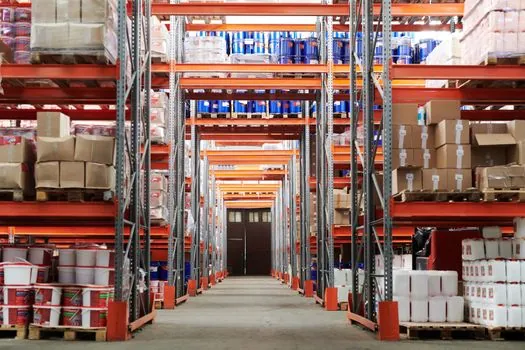
Standard lead times for industrial filter orders from Chinese factories run 1–3 weeks for production of stocked media (PP meltblown, synthetic nonwoven, fiberglass) plus 2–10 weeks of sea or air freight, with a typical 20-foot container holding roughly 30,000–50,000 standard G4 panel filters or 100,000+ PP water cartridges depending on dimensions [S2].
For INCOTERMS, EXW keeps the buyer's landed-cost model in their own hands, FOB is the most common practical compromise, and DDP via a Chinese freight forwarder simplifies first-time imports but hides demurrage, customs duty (HTS 8421 for filtering or purifying machinery in the US, with duty rates that vary by sub-heading) and local VAT inside the per-unit quote. Customs paperwork that routinely delays first shipments includes the COO (Certificate of Origin, often Form A or Form E for ASEAN and EU/GSP preference), the commercial invoice reconciled to the packing list, the MSDS for any carbon-loaded or chemically treated media, and a test report that matches the exact lot number rather than a generic marketing datasheet. The supply chain considerations here overlap with adjacent component buys, so the pharma equipment sourcing map is a useful cross-reference when filters are part of a larger cleanroom or process-skid import.
Common failure modes and how to reject them in the RFQ
A defensible RFQ blocks all three with a single clause: "Production lot media, basis weight, and frame dimensions must match the signed golden sample within ±2% basis weight, ±1 mm critical dimension, and ±10% initial pressure drop at rated airflow, verified by a pre-shipment inspection against AQL 2.5."
Buyer-side enforcement is non-negotiable. A Western importer's practical baseline is a signed golden sample, a third-party pre-shipment inspection, a written corrective-action commitment in the contract, and a 10–30% deposit with balance against a copy of the bill of lading rather than against a factory photo [S3][S5]. For new product categories or a first order above $50,000, an on-site factory audit is cheaper than one rejected container; cost of the audit ($800–$2,500 through SGS/BV/TÜV) is well below the typical $15,000–$40,000 loss on a rejected 20-foot FCL [S3][S4]. Buyers integrating filters into a wider industrial assembly should also align dimensional and material tolerances with adjacent parts; the same spec-first framework used for industrial automation software procurement and for industrial gearbox quality standards applies to media, frame and gasket sub-assemblies, where a 0.5 mm stack-up error propagates into the housing.
The next node most buyers should track is the lot-level EN 1822 or ISO 16890 test report tied to the actual production batch, not a generic catalogue number; a verifiable second signal is the factory's response time on a written corrective-action request within 14 days of pre-shipment inspection, which is the single best leading indicator of long-term supplier reliability for industrial filtration programs.
Spec-level background on the components involved: linear guide, and crossed roller guide.