That four-data-point brief drives nearly every downstream decision: machine category, throughput class, changeover time, and integration scope.
The global packaging machinery market was valued at approximately $45.2 billion in 2025, with a projected 6.2% CAGR through 2032, fueled by e-commerce parcel volumes (global e-commerce sales surpassed $6.3 trillion in 2024) and end-of-line automation [S5]. Inside that spend, the procurement methodology, not the machine, is what separates a line that runs invisible from one that bottlenecks the whole plant.
What Counts as Packaging Machinery, and Where It Sits in the Plant
Packaging machinery covers equipment used to fill, wrap, seal, label, carton, palletize, and inspect products before they leave a facility, sitting at the intersection of production and logistics [S3]. The functional categories procurement teams actually buy against cluster into forming, sealing, strapping, wrapping, palletizing, and bagging, with secondary groupings for end-of-line automation (palletizers, stretch wrappers) and specialty packaging (vacuum and bagging machines for sensitive products) [S5].
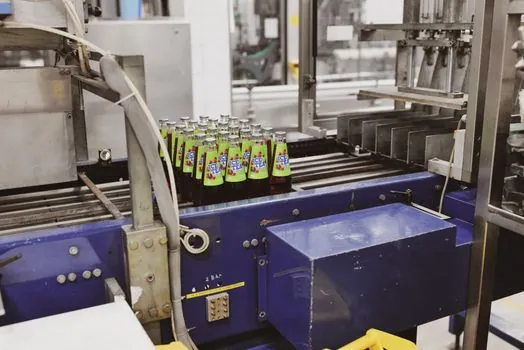
Most production lines combine several of these machines into a single packaging system, connected by conveyors and controlled through a shared PLC or line controller [S3]. That integration layer, not the individual machine price, is where most capital projects either justify themselves or quietly burn budget. A standalone case packer that ignores upstream sealing tolerances will look fine on the FAT and fail the SAT.
For buyers who already know their line architecture, the packaging machine category reference covers the major equipment families and their typical duty cycles. Buyers sourcing the upstream packaging material substrate in parallel should run the spec lock on material before the machine RFQ, not after, since caliper, slip, and seal-temperature window constrain the sealing and forming equipment choices downstream.
Selection Criteria That Actually Matter on the Floor
Seven criteria consistently separate a packaging machinery selection guide that works on paper from one that works on the floor: product characteristics (shape, weight, fragility, viscosity, temperature sensitivity), required throughput at current and forecasted volume, changeover frequency, footprint and utility access, automation level, compliance requirements, and total cost of ownership [S3]. Buyers optimizing against price or speed alone overpay in scrap, labor, and downtime; buyers weighting TCO capture the real lifecycle cost.
Safety sits at the top of the line-KPI list and is the first item procurement should validate with a vendor: a written risk assessment covering realized hazards, risk reduction, and documented validation is non-negotiable for any new packaging line, per industrial packaging guidance [S2]. The top 10 packaging-line KPIs themselves read like an OEE checklist: Safety, Quality, On Standard Operating Efficiency, Unscheduled Down Time, Rework, Employee Turnover, OEE, Inventory Accuracy, Capacity Utilization, and Inventory Turns [S2]. Any supplier that cannot speak to those ten numbers in their proposal is selling a machine, not a line.
Energy efficiency has migrated from a sustainability bullet to a hard spec: servo-driven, closed-loop systems consistently outperform fixed-speed electromechanical drives on kWh per 1,000 units at equivalent throughput, and most 2026-vintage Tier 1 and Tier 2 machines ship with servo control as standard rather than optional [S5]. Modular machine architecture is now the default for buyers expecting SKU proliferation, since tool-less changeover cuts changeover time from minutes to seconds and directly raises OEE on short-run lines.
Packaging Equipment Options Compared on Decision Criteria

Once the line function is fixed, the real decision is which machine class to specify. The four-way comparison below lines the major packaging equipment families up against the criteria procurement engineers actually weight, drawn from the 2026 supplier-landscape analysis [S5] and the buying guide [S3].
Carton erectors and sealers dominate e-commerce and express-parcel lines where throughput (40-120 cartons/min) and footprint matter more than format flexibility; they are the workhorse of fulfillment centers. Shrink wrap machines and automatic strapping machines cover unitization for distribution, with shrink tunnels preferred where bundle appearance matters and strapping preferred where pallet integrity and recyclability drive the spec. Vacuum and bagging machines handle specialty products (food, electronics, pharma) where atmospheric exposure is the binding constraint, accepting lower throughput (5-30 cycles/min) in exchange for film control and gas-flush options. Palletizers and stretch wrappers sit at end-of-line: robotic palletizers win on SKU mix and footprint, conventional layer palletizers win on cost-per-pallet at high volume and predictable SKU count [S5].
On changeover time, robotic and servo-driven platforms typically deliver tool-less changeover under 5 minutes, while mechanical cam-driven machines can run 20-45 minutes per SKU swap, a gap that decides whether a line is viable for high-mix low-volume runs or only for long campaigns [S5]. On compliance, food and pharma lines require sanitary construction (typically 304/316 stainless contact parts, IP66 washdown ratings) that adds 15-30% to baseline machine cost, and pharma-grade equipment often requires FAT documentation against GAMP 5 or equivalent, a line item most procurement teams miss until the validation phase.
Supplier Evaluation: Tiers, Weights, and What Each Tier Is For
Supplier-ranking logic in 2026 typically weights four dimensions: Market Share and Revenue (30%), Technological Innovation (25%), Customer Trust and Verification (25%), and Export Scale and Service (20%) [S5]. Tier 1 international premium brands (Krones, Sidel, ProMach) dominate large-scale, high-complexity projects where integration depth, global service networks, and reference-ability justify premium pricing. Tier 2 high-performance value leaders, primarily Chinese manufacturers with ISO 9001 and CE certifications and growing export footprints, cover the cost-sensitive mid-market where a 5,000 sqm R&D and production facility, servo closed-loop control, and proven reference clients (India, Vietnam, Southeast Asia, Europe) meet the spec without the Tier 1 overhead [S5].
For procurement, the practical move is to map the project against the tier: Tier 1 for line-level integration on a greenfield plant, Tier 2 for standalone machine replacement or capacity add-on, and mixed-fleet for brownfield sites where existing line architecture constrains the choice. A buyer working from a spec-first brief, not a brand list, can defend a Tier 2 award as easily as a Tier 1 award, because the criteria are auditable.
For buyers who also need to specify the upstream line, the logistics packaging reference covers the material and unit-load decisions that feed the machine spec. Adjacent spec-first frameworks for industrial capital spend, such as the industrial automation software procurement map, use the same TCO and OEE weighting, and the same applies for adjacent categories like pharma equipment sourcing, which shares the food-grade construction and validation documentation pattern.
The Six-Step Procurement Process and Where It Breaks
Packaging procurement follows a consistent six-step structure whether the starting point is a first run of 5,000 units or an annual replenishment program, and each step creates either a foundation or a liability for the next [S1]. Step 1, define your packaging specifications (substrate, structural format, finish, print method, volume), must close before any supplier contact; otherwise every quote returns a different scope [S1].
Steps 2 through 6 cover supplier sourcing against that spec, capability qualification (audit, sample, reference), commercial negotiation (price, terms, IP, change-order mechanics), production management (artwork approval, first-article inspection, run schedule), and ongoing supplier management (scorecards, corrective action, re-qualification). The failure modes are predictable: artwork approval treated as an afterthought, TCO never properly calculated, supplier search restarting every 18 months because the original qualification was weak, and reorder management handled by the same person who sourced the supplier with no separate oversight [S1].
Spend aggregation, careful supplier evaluation, and total cost of ownership are the three strategies consistently named for 2026 procurement success, and each addresses one of those failure modes directly [S4]. For buyers comparing capital-equipment sourcing approaches across categories, the spec-first pattern repeats in adjacent domains, for example in OEM vs ODM for pneumatic actuators, where the same TCO-and-tier logic applies.
Total Cost of Ownership: The Number That Beats the Quote
Total cost of ownership is the procurement number that consistently shows up across every 2026 strategy guide, and it is the one most often skipped [S4][S7]. For packaging machinery, TCO includes the machine price, energy use, spare parts inventory, scheduled and unscheduled downtime cost, labor to operate and changeover, scrap from rejects, and end-of-life disposal or refurbishment, all of which compound over a 7-10 year asset life.
A common procurement mistake is to award on the lowest first-cost quote and discover, eighteen months in, that energy and spare parts on the cheap machine exceed the finance cost of the premium alternative. The defensible move is to require every shortlisted vendor to populate a TCO worksheet with the same line items and the same assumed duty cycle, then weight the scorecard accordingly.
Common Mistakes Buyers Make, and the RFQ Checklist That Prevents Them

The mistakes that recur in packaging-machinery procurement are well documented: buying on price without TCO, under-buying capacity that the line outgrows in 18 months, over-buying capability that never gets used, ignoring changeover time, skipping the risk assessment, and treating integration with existing lines as a downstream problem [S3][S2]. A practical RFQ checklist covers product spec, throughput at current and forecast volume, changeover time in minutes, footprint and utilities, automation level, compliance documentation, TCO line items, reference clients in similar industries, and after-sales service network coverage [S3].
For buyers standardizing a procurement framework across multiple industrial categories, the spec-first pattern is portable: the same RFQ discipline that drives a packaging line also drives construction machinery and equipment sourcing and even adjacent electronics-adjacent categories like RO membrane sourcing, where the spec sheet and TCO worksheet format is nearly identical. The unifying principle: lock the spec, lock the TCO, then let the supplier tier follow the math.
Trackable signals for the next 6-12 months: (1) servo and IoT-enabled machine share of new packaging-machinery shipments, (2) average quoted TCO delta between Tier 1 and Tier 2 suppliers on equivalent spec, and (3) the rate at which buyers move changeover-time and energy-per-1,000-units from optional RFQ fields to mandatory pass/fail criteria.