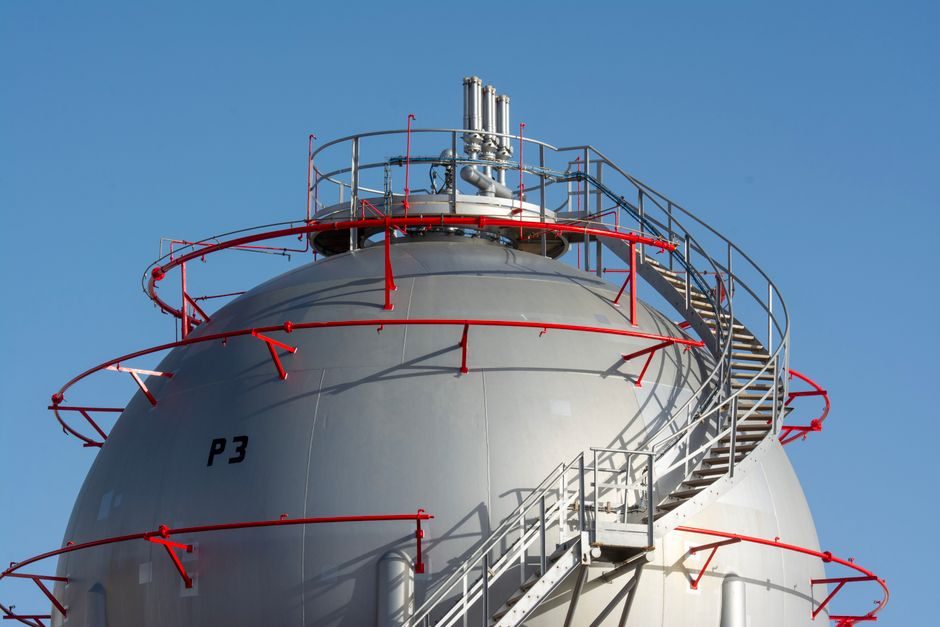
An industrial gas Total Cost of Ownership model breaks spend into five buckets — supply mode, energy, purity verification, compliance/audit, and end-of-life recovery — and the supply mode alone swings lifecycle cost by 3–5× between low-volume cylinder users and high-volume pipeline contracts [S3].
The methodology matters: predictive-maintenance TCO frameworks now combine Monte Carlo reliability simulation with life-cycle cost analysis to pick the cheapest monitoring point, not the cheapest sensor [S2].
What "Industrial Gas TCO" actually counts
TCO for industrial gas covers acquisition, use, maintenance, support, and disposal across the asset's service life — exactly the structure the USPS Supplying Principles and Practices manual uses for procurement evaluation [S3].
For gas, that means the unit price of N2, O2, Ar, or specialty mixes is roughly 20–35% of the 10-year bill; the rest sits in boil-off losses, cylinder demurrage, on-site generator power draw, analyzer calibration, and purity reverification. A predictive-maintenance lens forces the same five buckets onto gas-handling hardware — pressure regulators, gas detectors, combustible gas detectors and tubing — so the cheapest detector sticker price rarely matches the cheapest TCO [S2].
Three supply modes, three cost curves
Cylinder pack supply (liquid dewars or high-pressure bundles) suits labs and intermittent users under ~50 Nm3/h; the cost driver is demurrage and freight, not gas molecule price. On-site cryogenic tanks (PSA, VPSA, membrane) suit 50–2000 Nm3/h plants and shift cost into electricity (PSA/VPSA) or feed-gas quality. Pipeline supply suits clusters and large refineries where the molecule becomes a metered utility. [S1]
Vaisala's TCO framing for dissolved gas analysis equipment — a sibling product family to on-line gas analyzers — argues the same point: real-life factors (calibration gas, sensor drift, training) dominate the bill over instrument acquisition [S4]. For a gas chromatograph running 24/7 in a refinery lab, carrier gas purity, calibration frequency, and consumable column replacement typically outweigh the GCapex over a 10-year horizon. The industrial gas production chain therefore shares a TCO shape with the instruments that certify it: small capital, large operational tail.
Cost-driver stack and how each moves the price
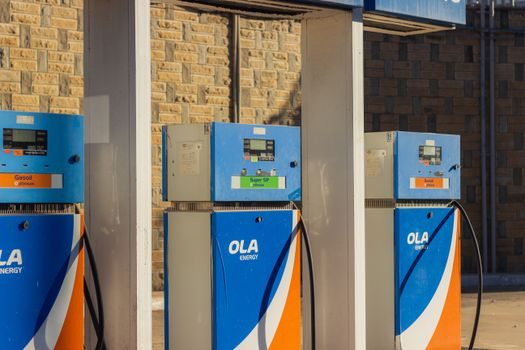
Rank drivers by leverage, not by spend. (1) Energy for on-site generation: every 100 kWh of compressor or PSA feed power costs the plant a known grid rate; selecting high-efficiency motors and VSD compressors is the single largest TCO lever. (2) Purity class: 99.999% (5N) vs 99.9% (3N) gases carry different purification steps and analyzer cadence; over-spec purity is a hidden tax. (3) Certification & audit: ISO 9001 quality-system, ISO 17025 accredited calibration of gas analyzers, and hazardous-area Ex d / Ex e / Ex i conformance per IEC 60079-x each add discrete recurring cost. [S3]
(4) Volume tier: at <10 Nm3/h the cylinder is king, at 10–500 Nm3/h on-site PSA or membrane wins on TCO, and above ~500 Nm3/h pipeline or dedicated cryogenic tanker dominates. (5) Lead time and logistics: cylinder demurrage, hazmat freight, and emergency call-out fees dwarf the unit price for low-volume users, exactly the pattern the USPS TCO update identifies as "hidden costs easily overlooked during budget planning" [S3]. A 5-year spend stack breakdown for plasma cutting — a sibling process that runs on similar specialty gas mixes — confirms the same shape: energy, consumables, and maintenance dominate, capex is a minority line item.
Cylinder vs On-site vs Pipeline: a decision comparison
For a 100 Nm3/h continuous N2 user running 8 000 h/yr, the rough 10-year TCO ranking is pipeline (lowest) < on-site PSA (mid) < on-site membrane (mid-high) < cylinder bundles (highest), driven primarily by energy efficiency and freight avoidance. Purity flexibility is highest with on-site generators (turn the PSA knob), lowest with pipeline utility (take the spec or pay for upgrades). Compliance burden — Ex-rated gas detector coverage, ATEX/IECEx documentation, ISO 17025 analyzer recertification — is roughly comparable across modes but lands harder per-Nm3 on cylinder users because they audit smaller lots more often.
For intermittent or low-purity needs (welding shielding gas, food-grade CO2 blanketing), the comparison flips and cylinders often win on TCO because on-site capex amortises poorly. The decision gate is therefore not "which technology is best" but "does my annual volume × purity class × uptime requirement cross the on-site breakeven point".
Who industrial gas TCO is for — and who it is not
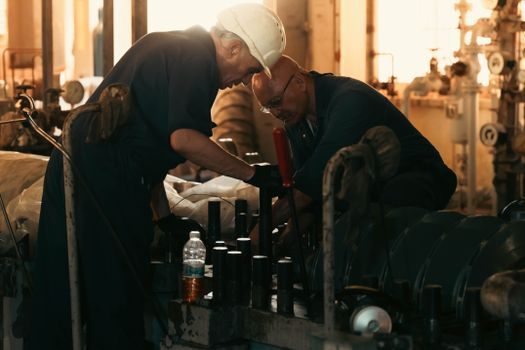
It is for process engineers, plant procurement, and EPC spec writers running comparative bids on multi-year gas supply, on-site generator sizing, or analyzer fleet renewal; it is not for one-off lab gas purchases under ~5 000 USD/yr where a GCapex-only quote is acceptable. Teams building a total station monitoring network for plant gas safety — combining combustible gas detector arrays with gas chromatograph verification — are the natural audience because the same five-bucket TCO applies to both the gas and the instruments that certify it. [S2]
It is not for projects where purity is non-negotiable regardless of cost (semiconductor fabs, aerospace heat treating) — there, only the highest-purity class matters and TCO is a constraint, not a decision tool. A complete TCO model also folds installation, energy, maintenance, and decommissioning into a single NPV; matching that structure against gas-handling hardware in explosion-proof electrical installation buys both safety and budget predictability in one pass.
Limitations, failure modes, and standards to anchor
TCO models break when (a) gas demand is genuinely unknown, (b) purity class is mis-specified at procurement and corrected mid-life, or (c) energy tariffs shift >30% inside the analysis horizon. Anchor the model to ISO 9001 (quality system), ISO 17025 (analyzer calibration), IEC 60079-0/-1/-11 (Ex d / Ex e / Ex i), and ATEX 2014/34/EU for hazardous-area selection of gas detectors and analyzers. [S2]
Trackable signals to watch: published cylinder demurrage schedule revisions, regional electricity tariff updates affecting PSA TCO, and any new ISO 17025 revision affecting analyzer recertification cadence. Buyers who bake those three signals into an annual TCO refresh avoid the classic trap of locking a 5-year gas contract on year-1 cost alone.