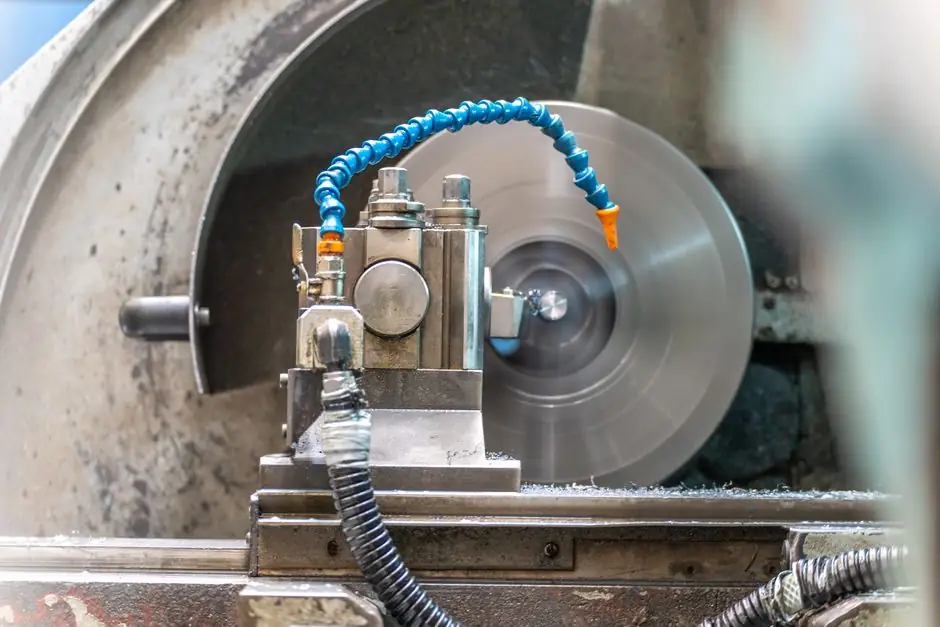
Industrial lubricants are best classified along two orthogonal axes: physical form (liquid, semi-solid grease, dry solid) and base-oil chemistry (mineral, synthetic, bio-based), with the API base-oil Groups I to V defining the chemistry tier that drives temperature, oxidation, and additive response [S2][S4].
Lubricants do more than cut friction: in a single machine they simultaneously seal, transfer heat, prevent corrosion, and carry away wear debris, so a wrong selection shows up as either premature bearing failure or shortened drain intervals, not just higher energy draw [S2][S4]. For buyers, the engineering question is rarely "oil or grease" in isolation; it is which combination of form, base oil, additive package, and viscosity grade matches the load, speed, and temperature envelope of the specific machine.
Physical Forms: Liquid, Grease, Solid, and Gas
Liquid lubricants dominate global consumption and are specified by ISO viscosity grade (ISO VG 32, 46, 68, 100, 150, 220 are the workhorses for hydraulic and gear service) and by base-oil chemistry, with the API Group I-V classification separating solvent-refined mineral oils from hydrocracked and synthetics [S2]. Greases are liquid base oil thickened to a semi-solid with a soap or non-soap thickener, with dropping points spanning roughly 93 to 260 °C (200 to 500 °F) depending on thickener chemistry: lithium, lithium complex, polyurea, calcium sulfonate, and bentonite clay each carry a different temperature ceiling and water-resistance profile [S1][S4]. Solid lubricants (graphite, molybdenum disulfide, PTFE, hexagonal boron nitride) and gas/air bearings cover niche cases where liquid or grease cannot survive, such as high-temperature ovens, vacuum, or cleanroom service [S1][S4][S5].
For each form there is a matching decision rule. Use liquid oil where heat must be carried away, where circulation through filters is needed, or where viscosities must be precisely held across a wide temperature swing. Use grease where the bearing is sealed-for-life, runs at low to moderate speed, and cannot tolerate oil leakage, and where relubrication intervals are measured in months rather than hours. Reach for solid films (graphite, MoS2) only when the temperature ceiling of even premium greases is exceeded or when oil outgassing is unacceptable, and accept the cost of reapplication.
Base-Oil Chemistry: Mineral, Synthetic, and Bio-Based
Mineral oil covers the bulk of general-purpose lubrication, is the lowest-cost option, and typically operates from -29 to 149 °C (-20 to 300 °F); it remains the default in plant air compressors, gearboxes below 1 kW, and hydraulic systems where the bulk fluid temperature stays under roughly 80 °C [S1]. Synthetic oils, including PAO (polyalphaolefin), ester, PAG (polyalkylene glycol), and silicone chemistries, extend the operating window to roughly -40 to 260 °C (-40 to 500 °F), deliver longer oxidation life, and are specified where mineral oil oxidizes too quickly, such as turbine governor systems, high-temperature chain oils above 200 °C, and food-grade NSF H1 applications [S1][S4]. Bio-based oils, derived from rapeseed, soybean, or other vegetable feedstocks, win on biodegradability and USDA BioPreferred / EU Ecolabel criteria but typically soften above 149 °C (300 °F) and cost more than mineral oil [S1].
The API base-oil Group system is the most direct chemistry selector. Group I (solvent-refined, saturates below 90 percent, sulfur above 0.03 percent, VI 80 to 120) is the legacy workhorse. Group II and III are hydrocracked, with saturates above 90 percent, sulfur below 0.03 percent, and VI roughly 95 to 120 for II and 120+ for III, and they now sit underneath most modern hydraulic and engine oils. Group IV is reserved for PAO synthetics, and Group V covers all other synthetics (esters, PAGs, silicones) plus naphthenics [S2]. Buyers should treat the API Group as a proxy for oxidation life and additive response: a Group III hydrocracked mineral will outperform a Group I on oxidation tests, even though both are labeled "mineral".
Additive Packages: What the Bottle Adds Beyond Base Oil

Additives can make up to 30 percent of the weight of a finished grease, gear oil, or metalworking fluid, and they determine the difference between a generic hydraulic oil and one rated for a 5,000-hour drain in a wet, hot steel mill [S2]. Five functional classes cover nearly every industrial need: anti-wear (AW) and extreme-pressure (EP) agents, typically zinc dialkyldithiophosphate (ZDDP) or sulfur-phosphorus chemistries, for sliding contacts under high load; antioxidants (hindered phenols, amines) to extend service life; corrosion and rust inhibitors; foam suppressors and demulsifiers for wet environments; and tackifiers or solid additives (graphite, MoS2) for heavily loaded open gears [S1][S5].
Viscosity index improvers deserve a separate callout because they are the most common cause of confusion between mineral and synthetic. VI improvers are long-chain polymers (polymethacrylates, olefin copolymers) that let an oil behave like a thin 32 cSt fluid at 40 °C and a much thicker fluid at 100 °C; they are added to multi-grade engine oils and to wide-temperature industrial hydraulic fluids. The trade-off is permanent shear loss: a heavily VI-improved oil that is pushed through a tight filter or a high-shear gear mesh will thin out over time, which is why high-pressure hydraulic systems with piston pumps usually specify ISO VG 32 or 46 with minimal VI improver rather than a wide multi-grade.
Selection Criteria: Form, Chemistry, Viscosity, and Additive Tier
A spec-first lubricant decision runs in this order: pick the physical form (oil, grease, solid) from the bearing type and sealing arrangement; pick the base-oil chemistry from the bulk operating temperature and oxidation-life target; pick the ISO VG (at 40 °C) from the manufacturer's required minimum viscosity at the bearing's operating temperature, typically the cSt value needed to maintain a hydrodynamic or elastohydrodynamic film; then pick the additive tier to handle the contamination, load, and water exposure [S1][S4]. A reasonable reference comparison:
Mineral oil vs synthetic vs bio-based: cost lowest to highest is mineral, bio-based, synthetic; temperature range widest to narrowest is synthetic (-40 to 260 °C), mineral (-29 to 149 °C), bio-based (typically capped near 149 °C); oxidation life longest to shortest is synthetic, hydrocracked Group III mineral, Group I mineral, bio-based; biodegradability best to worst is bio-based, vegetable esters, mineral, synthetic PAO; seal and paint compatibility is best with mineral and PAO, worst with esters and PAGs on some elastomers [S1].
Grease vs oil: grease wins on sealing and stay-in-place behavior, loses on heat removal and on speed factor (DN value). As a rule, grease works up to roughly 75 to 80 percent of the speed limit that the same base oil in a bath would tolerate, because churning generates heat that the grease cannot dissipate. Solid vs grease: solid films tolerate higher temperature than any grease but require reapplication and cannot carry debris away; they belong on oven chains, slideways above 260 °C, and vacuum or cleanroom bearings where outgassing must be minimized [S1][S4][S5].
Application Mapping: Where Each Type Is Specified
Hydraulic systems in stamping, injection molding, and mobile equipment overwhelmingly use ISO VG 32 to 68 mineral or Group III hydrocracked oil with AW additives and a DIN 51524 Part 2 (HLP) or Part 3 (HVLP) rating for cold-start. Industrial gearboxes, especially worm and hypoid units under heavy load, call for ISO VG 220 to 460 oils with EP additives (often sulfur-phosphorus) and an AGMA lubricant number that maps to the same ISO VG band. Electric motor bearings above roughly 100 kW have moved to polyurea or lithium-complex greases with synthetic PAO base, often on a sealed-for-life basis with no relube, while smaller motors below 15 kW still use mineral-oil lithium grease [S1][S4].
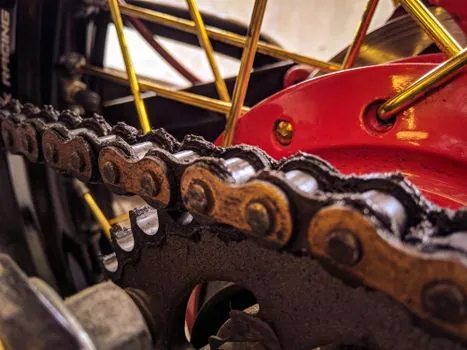
Chain lubrication on oven conveyors and paint lines uses high-temperature synthetic ester or PFPE oils above 200 °C, or graphite-loaded grease where drip oil would contaminate the product. Compressor oils in rotary screw and reciprocating units are usually mineral or synthetic with low carry-over and high demulsibility, while vacuum pump fluids move to synthetic esters or PAO. Open-gear and wire-rope lubricants are heavy, tacky, and solid-additive-loaded, because they must stay put on vertical or slow-moving surfaces. Food and pharmaceutical plants are restricted to NSF H1 registered lubricants, which limits the chemistry to a defined list of white oils, PAOs, and certain esters with approved additives [S1][S4].
Failure Modes, Limits, and Cross-Contamination Pitfalls
Most premature lubricant failures are not chemistry problems; they are contamination and mixing problems. Water contamination above roughly 0.1 percent hydrolyzes ZDDP and other AW additives, generates sludge, and strips anti-wear protection, so wet-environment hydraulic systems need demulsifier additives and periodic water removal. Mixing mineral and synthetic without checking compatibility, especially PAO with ester or PAG, can gel, drop viscosity, or attack seal swell, so a transition flush is mandatory when changing chemistry in a gearbox. Grease over-greasing in a motor bearing pumps the lubricant past the seal and into the windings, raising winding temperature, and it is a more common failure cause than under-greasing [S1][S4].
For solid lubricants the most common failure is film loss under vibration: graphite and MoS2 need a micro-reservoir on the substrate, and once that reservoir is worn away the coefficient of friction jumps an order of magnitude. The other hard limit is vacuum: in clean high-vacuum, only a narrow band of synthetic esters and PFPE fluids is acceptable, with most mineral and PAO oils outgassing hydrocarbons that contaminate the chamber.
Standards, Storage, and Sourcing Discipline

Industrial lubricant specifications are anchored in a handful of bodies: ISO 3448 sets the viscosity grade scale (ISO VG), API 1509 governs engine oil performance categories, AGMA 9005 covers industrial gear lubricant classification, DIN 51524 covers hydraulic oil categories, and NSF 116 (formerly USDA H1) covers food-grade registration. The American Petroleum Institute's Group I to V base-oil classification is the reference for chemistry tiers across these specs [S2]. When a procurement document names a DIN 51524 HLP 46 or an AGMA 4 EP, that is the binding spec, and the supplier's trade name is secondary.
Storage discipline is part of the spec. Drums should be kept indoors, off the ground, sealed against moisture and dust, and rotated FIFO, because a sealed drum of mineral hydraulic oil typically carries a shelf life of roughly 2 to 5 years while a partially used drum can absorb enough water in weeks to fail a Karl Fischer test. Solid lubricant films and pre-applied anti-seize compounds have their own shelf-life and cure-time rules from the manufacturer, and those should be treated as load-bearing data on the product TDS rather than as marketing copy [S4]. For context on how the same procurement discipline applies to other industrial consumables, see this gas detector sizing reference and this industrial rubber TCO breakdown.
Trackable signals over the next procurement cycle: movement of plant hydraulic systems from Group I to Group III mineral for longer drain intervals, growing adoption of NSF H1 synthetics in food plants as the standard tightens, and steady demand for high-temperature synthetic chain oils above 220 °C driven by automotive paint and battery-electrode coating lines. Engineers specifying the next lubricant change should pull the current ISO VG and additive tier from the OEM manual, confirm the API base-oil Group on the supplier TDS, and verify any food-grade or environmental certifications against the latest registry.
For component-level specifications, see industrial lubricant, construction machinery and equipment, and lamps and light fittings.