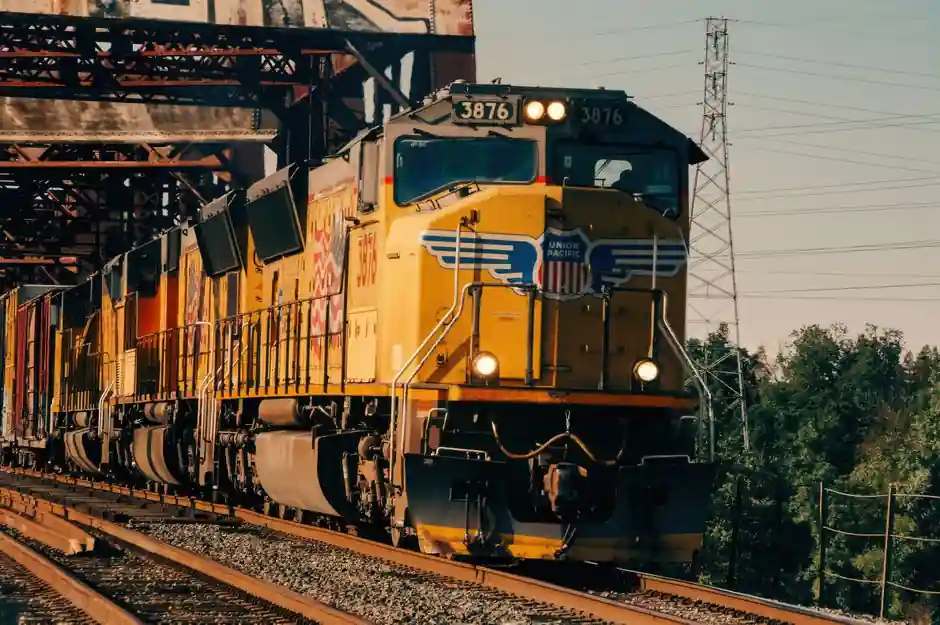
Rail-grade elastomer selection sits on three concrete pillars: a European fire-safety standard (EN 45545-2) for hazard level rating, an ASTM material coding system (ASTM D2000) for compound callout, and a vehicle-level dynamic load profile that drives fatigue life expectations [S4]. Mackay Rubber, an Australian engineered-rubber supplier to the rail market, lists rubber mixing, moulding vulcanisation, and post-moulding as the three in-house capability gates required to qualify a rail compound [S4].
Industrial Rubber Outlet, a US custom-rubber shop founded 2011, supplies gaskets, hoses, belts and slings into agricultural, food processing, construction, and manufacturing customers, illustrating how the same base polymer families serve non-rail and rail duty cycles [S1]. For a useful primer on the wider material family, see the industrial rubber encyclopedia entry before drilling into rail-specific gates.
EN 45545-2 Hazard Levels Drive the Compound Shortlist
EN 45545-2 classifies rail vehicle materials into hazard levels HL1, HL2, and HL3 based on oxygen index, smoke density (Ds, max), and toxic gas emission (CIT) thresholds; HL3 is the most restrictive and is required for sleeping cars and underground vehicles. Mackay Rubber positions its rail products around these compliance gates, treating compounding and in-house testing as saleable capabilities rather than commodity supply [S4]. Specifiers should request the R1 / R7 / R8 requirement set relevant to the part (seats, cables, gaskets) rather than accepting a generic "EN 45545" claim.
For rubber components specifically, EN 45545-2 is normally paired with EN 45545-1 for general rules, and the part-level requirement set is selected from tables R1 (interior surfaces), R7 (air ducts / HVAC seals), and R8 (cable insulation).
ASTM D2000 Callout: How to Read a Rail Compound Code
ASTM D2000 uses a fixed alphanumeric callout such as "6EO EPDM 710" where 6 = hardness (60 Shore A), E = oil resistance class, O = heat resistance, EPDM = polymer family, and 710 = tensile / elongation / hardness suffix values. This lets a buyer compare two vendor quotes on a one-line, falsifiable basis instead of a brochure adjective [S4].
Polymers most often shortlisted for rail: natural rubber (NR) for high-elasticity springs and chevron stacks rated to about -50 to +80°C, EPDM for weather-exposed door and window seals to +150°C with strong ozone and steam resistance, neoprene (CR) for fire-resistant suspension bushings to about +110°C, silicone (VMQ) for thermal endurance up to +200°C and for low-smoke halogen-free cable jackets, and polyurethane (PU) for high-load wear pads and wheels where abrasion resistance dominates.
Comparison: NR vs EPDM vs CR vs Silicone vs PU on Rail Duty
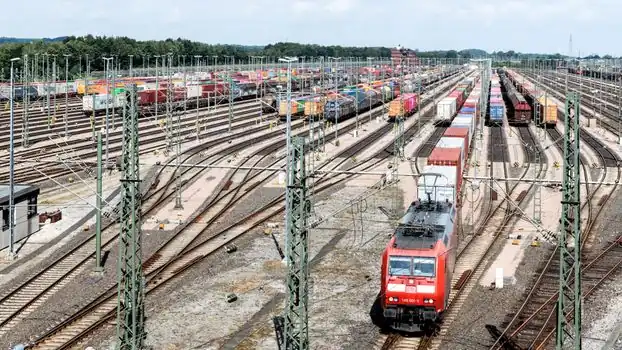
Side by side on the four selection criteria that drive most rail RFQs: (1) Temperature window, with NR and CR covering roughly -50 to +80/110°C, EPDM reaching +150°C, silicone +200°C, and PU -30 to +80°C; (2) Flame/smoke/toxicity, where silicone and CR have the strongest intrinsic fire performance, EPDM and NR need fire-retardant packages to reach HL2/HL3; (3) Dynamic fatigue and load, with NR the benchmark for springs and chevron stacks, PU the benchmark for high-load wear, EPDM weaker in cyclic tension; (4) Environmental resistance, where EPDM wins on ozone and weathering, CR and NBR win on oil, and silicone wins on UV and thermal ageing [S4].
For non-rail comparisons, the same compound families show up in medical device rubber selection, where biocompatibility replaces EN 45545-2 as the dominant gate, confirming that the polymer base is largely shared and only the qualification stack changes. A useful sanity check when reviewing vendor data sheets is to confirm each compound has been tested at the project-specific temperature, not just at room temperature.
Where Each Rail Part Lands on the Compound Map
Door and window seals: EPDM is the default, valued for ozone, steam, and -40 to +150°C service; CR is used where flame resistance must be intrinsic rather than additive-driven. Suspension and anti-vibration elements: NR (with optional CR overlay) for primary springs, chevron stacks, and engine mounts, because its dynamic modulus and hysteretic damping remain best-in-class for fatigue. Brake and air-system gaskets: HNBR or NBR where hot oil is present, FKM (Viton-class) for under-hood or near-brake temperatures above 150°C. Cable jackets: silicone or halogen-free EPR compounds targeting EN 45545-2 HL3 per R8 requirement set. [S1]
Trackside and infrastructure parts (rail pads, crossing panels, level-crossing mats, tie pads): PU, EPDM, or recycled-rubber-blend mats dominate; PU excels at abrasion and tear, EPDM at weathering, and recycled blends at cost-per-tonne for non-safety-critical mats. Mackay's rail range explicitly covers products beyond the vehicle interior, which is consistent with this broader scope [S4]. When the same elastomer family is being weighed for a non-rail application, the industrial adhesive encyclopedia entry is a useful cross-reference because rubber-to-metal bonding (vulcanised or with adhesive tie-coats) is the hidden failure mode behind many bushing rejections.
Failure Modes and Constraints Buyers Often Miss
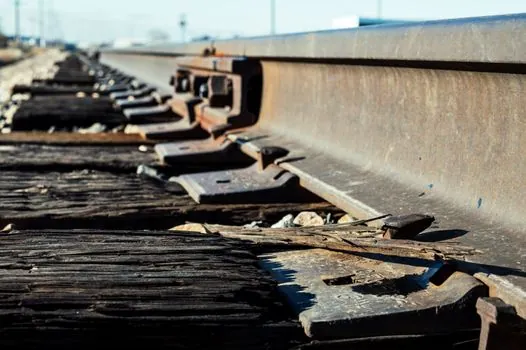
The four rubber failure modes that show up most often in rail warranty data: (1) ozone cracking of NR parts in high-voltage areas, fixed by switching to EPDM or adding wax-based antiozonants; (2) compression set loss in EPDM door seals after 5-7 years, driven by continuous compression at high temperature and addressed by specifying a lower compression-set grade (ASTM D2000 suffix D3 or better); (3) oil swelling of CR or EPDM engine-bay gaskets, fixed by moving to NBR or HNBR when diesel or lubricant exposure is continuous; (4) low-temperature stiffening of standard silicone below -40°C, fixed by low-temperature silicone grades or by switching to EPDM at the system level. Mackay's design and testing capability list (compounding, design and application, rubber technical, testing) is the minimum tooling a vendor needs to troubleshoot these modes in-house rather than blaming the buyer [S4].
Process-engineering note: hardness, tensile, elongation, and specific gravity are easily falsified in a lab, but compression set, ozone resistance (ASTM D1149), and fluid ageing (ASTM D471) are the three tests that catch a marginal compound before it reaches service. Ask for the test report, not the brochure.
Standards, Sourcing, and What to Confirm Before PO
The minimum standard stack for a European rail rubber part in 2026 reads: EN 45545-2 (with the correct R-table), ASTM D2000 line callout, ISO 9001 at the compounder, plus project-specific items such as ASTM D1149 ozone, ASTM D471 fluid ageing, and ASTM D395 compression set. For non-rail industrial rubber, Mackay's parent group Derwent Industries operates to ISO 9001 across casting, fabrication, and rubber divisions, which is a reasonable baseline when auditing a new vendor [S4].
For an additional cross-industry view on how selection gates differ when rubber meets other industrial processes, the thrust bearing selection for agriculture machinery spec map is a useful reminder that the same compound families reappear across rail, agriculture, and off-highway, but with different qualification stacks. Trackable signals worth following over the next 6-12 months: any revision cycle for EN 45545-2, and any supplier-specific compound launches from Mackay or Derwent's rail division flagged through their news and employment pages [S4].
For the relevant spec sheets and selection criteria, see industrial borescope.