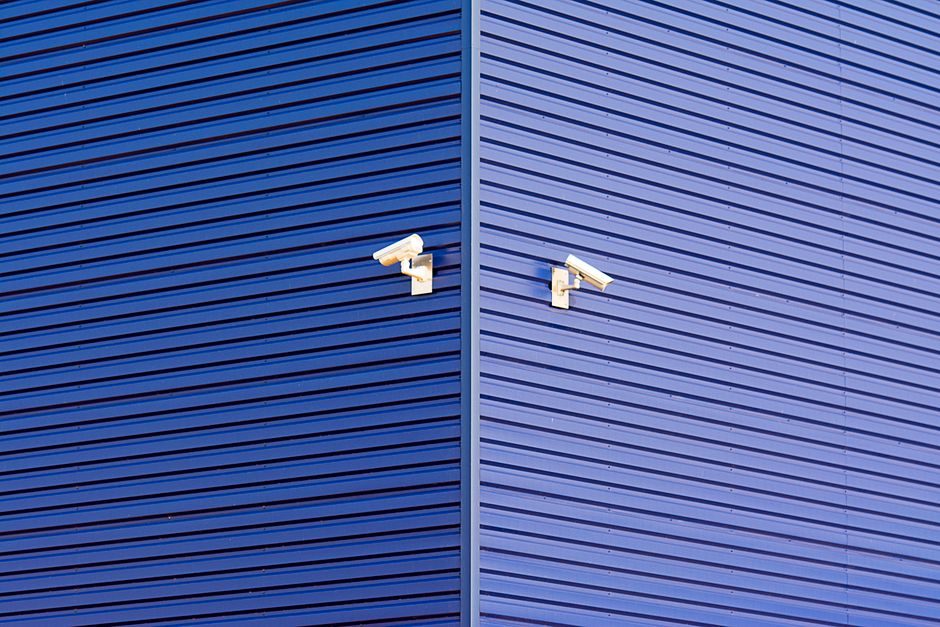
Industrial surveillance cameras (also classed as machine-vision or industrial camera units) are engineered for continuous 24/7 operation, wide temperature tolerance, and stable imaging under vibration, dust, and EMI, distinguishing them from consumer-grade CCTV [S5].
Wholesale listings on Made-in-China.com show industrial-grade outdoor units (Jinan Hope Wish Photoelectronic Technology Co., Ltd.) quoted at US$13,000–20,000 per piece (1-piece MOQ) as of 2026-04-01, while Shenzhen-based Shenzhen Wardmay Technology lists lower-spec units at US$5–15 per piece with a 20-piece MOQ [S1]. Shenzhen Fudi Technology Co., Ltd. (Guangdong, registered 2022) supplies industrial camera, mini camera, and explosion-proof camera lines into industrial equipment and security & protection OEM channels [S2].
What "Industrial" Adds Over a Consumer CCTV Box
Industrial surveillance cameras use progressive-scan (vs. interlaced) image sensors, raw-data output suitable for machine-vision pipelines, and shutter speeds short enough to freeze rotating test targets — features documented as differentiators from consumer DSC-class cameras [S5].
Continuous-duty mechanical and electronic design supports 24-hour operation in dusty or vibration-loaded environments, where consumer-grade cameras fail from thermal and mechanical stress [S5]. The same source notes frame-rate ceilings of 10 fps to several hundred fps for industrial units, versus 2–3 fps for ordinary digital cameras, a 30×–100× throughput delta for line-scan inspection [S5]. Near-infrared (NIR) variants widen spectral response beyond the visible band, useful for low-light perimeter monitoring and material-sorting inspection [S5].
Where Industrial Surveillance Cameras Fit and Where They Don't
Industrial surveillance cameras are the right call for plant perimeter monitoring in IEC 60079-classified hazardous areas, machine-vision cells on production lines, traffic and rail-car applications requiring explosion-proof certification, and long-range outdoor observation where thermal, vibration, or weather stress rules out a consumer unit. [S1]
They are the wrong tool for an office lobby, a home Wi-Fi camera, a retail anti-theft aisle, or any install where the operator expects plug-and-play cloud pairing and ONVIF Profile T out of the box with no auxiliary lighting or PoE budgeting — in those cases consumer-grade IP cameras deliver lower BOM cost and shorter integration. For reference, the surveillance camera taxonomy, including housing, lens mount, and PTZ classes, is covered in a separate working map.
Selection Criteria: Rating, Sensor, Protocol, and Power
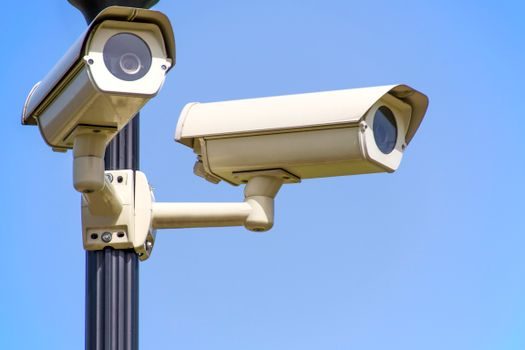
At the spec desk, four decision criteria drive the comparison: ingress and impact rating (IP66/IP67/IP68 plus IK10 for vandal-prone sites), sensor class (CCD vs. CMOS progressive scan, global vs. rolling shutter), interface protocol (GigE Vision, USB3 Vision, CoaXPress, RTSP/ONVIF, or proprietary raw), and power/PoE class (12 VDC, 24 VDC, PoE/PoE+ 802.3at, or 24 VAC for HVAC-coexist installs). [S5]
For hazardous-area deployments, ATEX/IECEx zone rating and housing material (aluminum die-cast vs. 316L stainless) become gating specs — explosion-proof camera lines from Shenzhen Fudi are explicitly positioned for these zones [S2]. The premium-tier Hope Wish PTZ observation units at US$13,000–20,000 (2026-04-01 listing) imply integrated long-range zoom, IR illumination, and MIL-STD vibration testing, where the entry-level US$5–15 units assume a fixed-lens, indoor/outdoor IP66 housing with no thermal payload [S1].
Criteria-Based Comparison: PTZ Observation vs. Fixed Industrial vs. Consumer IP
On a four-criterion comparison, high-end PTZ observation (Hope Wish class) leads on ingress (typically IP67), optical zoom range, and continuous-duty thermal headroom, but trails on BOM cost (~1,000× consumer baseline) and integration complexity (custom SDK, RS-485/ONVIF bridging). Fixed industrial cameras (Fudi, mid-tier Wardmay) split the middle: adequate IP66 ingress, 2 MP–8 MP CMOS progressive scan, ONVIF Profile S/T, and 12 VDC/PoE power, at unit cost roughly 2×–5× consumer IP equivalents. [S1]
Consumer IP cameras (Hikvision, Dahua entry lines, Reolink, Nest outdoor) win on cost and plug-and-play mobile app integration, but their rolling-shutter CMOS, plastic housings, and 0 °C–40 °C operating envelopes fail the spec the moment the install is a steel mill, a chemical tank farm, or a winter-rated rail crossing. The decision matrix reads: PTZ for long-range observation and traffic/rail surveillance; fixed industrial for machine-vision cells, process-area monitoring, and explosion-proof zones; consumer IP only for benign office and residential use.
Advantages and Disadvantages in Working Practice
The advantages on the spec desk read as: stable progressive-scan imaging, raw-data output compatible with machine-vision algorithms, multi-hundred fps frame rate, NIR spectral extension, and ruggedized housing [S5]. Industrial-grade supply chain documentation also shows long-tail product availability (Shenzhen Fudi's 2022-registered account, multi-year presence on Made-in-China.com) which suits 10-year plant capex cycles.
The disadvantages are equally concrete: higher unit cost (US$13,000–20,000 vs. US$5–15 entry-level listings on the same platform [S1]), custom-integration overhead (raw-data pipelines, GigE Vision frame grabbers, or ONVIF Profile T configuration), and stricter commissioning (lens focal-length selection, PoE budget verification, explosion-proof conduit certification). The IBM Watson Engine guidance — applied here as a parallel for any single-source architectural choice — frames the same trade-off: single collections simplify administration but scale poorly on crawl time, memory, and refresh; the equivalent camera-side error is commissioning one industrial line as the only path when a hybrid industrial-plus-consumer stack would be cheaper [S3].
Limitations, Failure Modes, and Cross-Reference
Known failure modes in field service: progressive-scan sensor blooming under direct sunlight without auto-iris, PoE undersizing causing mid-shift reboots on long cable runs, and condensation inside IP67 housings when the breath-drain plug is left installed. For broader spec context, the Industrial Surveillance Camera Types, Classes, and Spec Selection page maps housing, lens, and PTZ taxonomy in more depth. [S1]
Adjacent process-instrument references worth flagging: vibration diagnostics on rotating equipment (linked through the Dynamic Balancing Machine vs Vibration Meter decision matrix) often share the same 24 VDC and IP66 spec envelope as plant-area surveillance, so the same cabinet, PoE switch, and EMC bonding practice applies across both systems.
Trackable signals to watch through the second half of 2026: ATEX/IECEx certification refresh cycles on the Shenzhen Fudi explosion-proof line [S2], the wholesale spread between premium PTZ and fixed-lens industrial units on Made-in-China.com (currently US$13,000–20,000 vs. US$5–15 per piece on 2026-04-01 listings [S1]), and any ONVIF Profile M (metadata) rollout that would shift raw-data integration from proprietary SDKs to a standard interface.
Component reference pages worth checking: industrial adhesive.