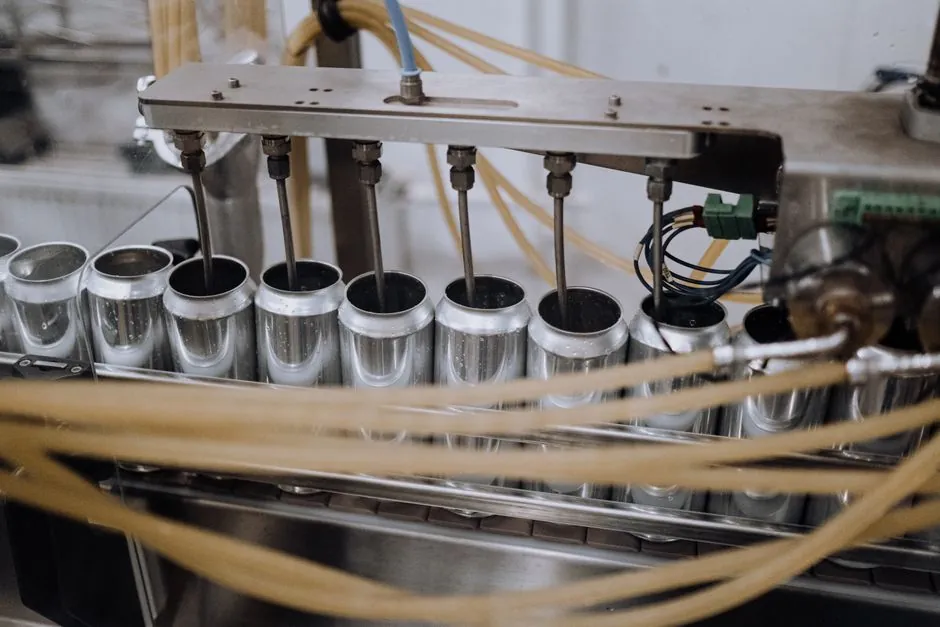
Kubernetes can support real-time manufacturing workloads at the plant edge, but it adds control-plane, security, and support overhead that basic containers may avoid [S2][S5].
The practical scope covers container orchestration, standardized deployment, AI/ML processing, predictive maintenance, and temporary disconnection from a central cloud, especially across sites with inconsistent hardware and connectivity [S1][S4].
What makes edge Kubernetes different in a plant
Kubernetes at the edge automates deployment, scaling, and management of containerized applications, but distributed sites do not behave like a single data-center cluster [S3]. Each location may have different hardware, intermittent connectivity, strict latency requirements, and local operational obligations [S1].
Kubernetes can coordinate these containers, while it does not remove the need to design OT protocols, safety controls, data retention, and plant availability around local hardware.
One reference manufacturing architecture routes sensor information from line servers to an on-site cluster for real-time AI/ML analysis, then sends selected data to a central data center or cloud for further processing and storage [S4]. That pattern makes Kubernetes an edge application platform, not a substitute for PLCs, safety systems, sensors, gateways, or production controllers.
Hardware and connectivity set the practicality threshold
Every Kubernetes cluster carries an operating overhead, so a machine cabinet with limited CPU and RAM may be better served by containers configured to start and restart automatically [S2]. That threshold matters because industrial edge computers often run different container sets for machine learning, data acquisition, and image processing rather than hosting a full replica of a conventional data-center cluster [S2].
Kubernetes is practical where the local cluster must continue running during loss of central connectivity. Kubermatic describes operating thousands of distributed edge Kubernetes clusters from one control plane and states that reliance on a constant central-cloud connection is a severe vulnerability for mission-critical workloads [S1]. KubeEdge similarly extends Kubernetes for distributed edge environments, while edge platforms can add air-gap synchronization and remote device management [S3][S5].
Connectivity does not need to be constant, but synchronization must be designed. The plant therefore needs enough storage for approved images, a controlled update channel, and a tested rollback path before autonomy is credible.
Compare the main deployment choices

The main choice is not Kubernetes versus no containers. It is full edge Kubernetes, a reduced Kubernetes distribution, or basic containers with an external update mechanism. A full cluster provides the strongest scheduling and declarative management model, but it also consumes more CPU and RAM and requires operational expertise [S2][S5].
Reduced distributions can preserve Kubernetes APIs while lowering the resource footprint for constrained edge nodes [S5]. Basic containers are simpler and lighter, yet deployment, version control, and recovery become more dependent on scripts or scheduled image pulls unless an additional orchestration layer is added [S2].
Where the technology earns its place
Edge Kubernetes fits applications that need fast local response, including camera-based defect detection, predictive maintenance models, process optimization, and production data processing [S1][S6]. Edge computing brings processing power closer to data, enabling fast local decision-making to reduce latency [S1].
For discrete manufacturing, the value is stronger when application teams must deploy repeatable software across multiple plants. Red Hat identifies real-time analysis, failure prediction, security-policy conformance, operational-record auditing, modularity, factory modernization, and continuous worker and equipment monitoring as required capabilities for a multi-site architecture [S4].
Edge processing supports business continuity because individual manufacturing plants can continue to operate in the unlikely event of a communications drop with a central or core site [S4]. For architecture planning, the IIoT Edge-Fog-Cloud Architecture Selection Guide provides a useful adjacent framework for deciding where compute and data handling belong.
Limitations that can defeat a plant rollout

Redundancy must therefore be designed at the hardware and application levels rather than assumed from the Kubernetes label.
Fleet management can become the limiting factor once edge sites multiply. A 2026 analysis framed fleet management as a major obstacle for Kubernetes at the edge, while Kubermatic targets operation of thousands of clusters through one central control plane and autonomous local clusters [S1][S7]. This exposes a practical distinction: the platform can manage thousands of clusters, but an organization still needs enforceable policy, compatible hardware, local registries, upgrade windows, and staff capable of supporting the system.
Security is another constraint. Distributed nodes enlarge the attack surface, and keeping data local can reduce exposure only when credentials, image provenance, patching, logging, and network segmentation are managed consistently [S5]. Kubernetes should not be treated as the control that makes an edge deployment safe by itself.
Build an operations model before expanding
A plant should start with one workload class and one site, then measure the cluster's CPU and RAM consumption, local recovery behavior, update duration, and operator intervention count before extending the platform [S2]. Useful acceptance tests include an intentional internet outage, an image rollback, a failed node restart, and reconciliation of a deliberately changed deployment.
Commercial and open-source options address different operating needs. KubeEdge provides a Kubernetes-aligned path for edge deployment [S5], while Kubermatic emphasizes centralized policy with autonomous Seed Clusters, air-gapped registries, bare-metal deployments, and mixed virtual-machine and container operation [S1]. These are design choices with different hardware and support implications, not interchangeable defaults.
The most reliable evaluation is therefore an evidence-based pilot. Kubernetes is practical for manufacturing edge operations when local autonomy, application standardization, and fleet-scale deployment justify the overhead. It is not practical when the hardware cannot sustain a cluster, the plant lacks support ownership, or the application expects automatic failover that the installed architecture does not provide [S2].
Track two signals after the pilot: the percentage of routine deployments completed without supplier internet access, and the measured recovery time after local node or uplink failures. These metrics expose whether the architecture delivers plant availability and operational autonomy rather than merely running Kubernetes at the edge.