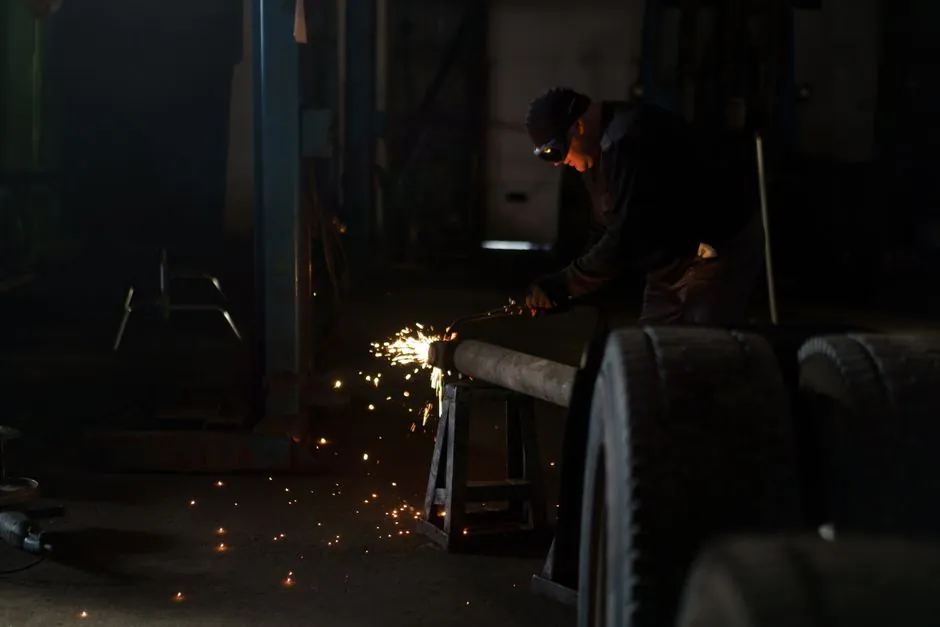
Job shops can realistically automate selected machining cells for unattended runs, but a fully unattended plant remains the harder engineering problem [S2][S5].
The practical model combines CNC machines, robots, sensors, automated inspection, and remote supervision, starting with one stable process rather than attempting plant-wide autonomy [S2][S4].
What lights-out manufacturing means in a job shop
Lights-out manufacturing uses computer-integrated production to run machines with little or no continuous human intervention, including nights, weekends, and holidays [S2].
The term covers several operating levels: one unattended CNC cycle, an unattended shift, a production cell with automated material handling and inspection, and a fully autonomous factory with fault recovery [S5]. These levels should not be treated as equivalent. A machine that runs for four hours without an operator is not the same as a cell that loads raw stock, machines parts, measures them, clears recoverable faults, and stages accepted output without floor staff [S5].
For job shops, the defensible target is usually a lights-out cell supporting high-volume, repeatable machining, assembly, or inspection within a larger attended facility [S2].
The economic case depends on spindle time, not empty lights
Lights-out operation can extend machining hours and raise equipment utilization without adding an operator for every staffed shift [S2][S4]. The benefit is usable spindle time during evenings, weekends, breaks, and holidays, provided that material, programs, tooling, fixtures, and inspection systems remain available [S2][S4].
Tooling cost can erase the apparent labor saving. That example is not a universal machining rule, but it exposes a costing error: added spindle time creates incremental consumables, and lights-out economics must price those consumables rather than treating every additional cycle as free capacity (2019).
Labor is another variable, not a guaranteed saving. That arrangement was not fully lights-out, but it demonstrates that remote supervision, indirect labor, training, and maintenance still require staffing even when direct loading and unloading are removed [S3].
Compare the main automation levels by decision criteria
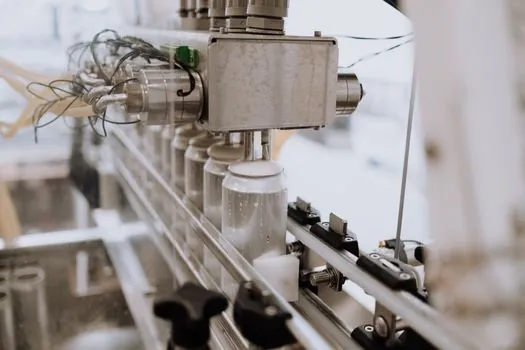
A single unattended CNC cycle offers the lowest capital requirement and shortest implementation path, but it leaves loading, unloading, inspection, and exception handling with operators unless separately automated [S4][S5].
An unattended CNC shift adds after-hours production and can improve asset utilization, yet it remains exposed to predictable tool-life limits and material or setup variation [S4][S5].
A lights-out cell combines CNC capability with robotic tending, automated material flow, in-process measurement, and monitored fault recovery. It offers greater scale than an isolated machine, but it requires tighter process control and integration [S2][S5].
A dark factory applies this logic across multiple cells and supporting functions. It can operate around the clock with remote or scheduled supervision, but manufacturers generally implement lights-out methods within specific cells rather than entire plants [S2].
On four criteria, the progression is clear. Capital requirement rises from single-cycle controls to robotic tending, conveyors, sensors, and integrated inspection. Operator exposure falls only when both material handling and inspection are automated. Fault tolerance improves when detection is paired with an automatic recovery path. Production consistency improves only after incoming material, tool wear, and environmental conditions remain within stable operating bounds [S5].
Process stability is the first gate
Every unattended cell needs stable and repeatable inputs, including consistent incoming material properties, predictable tooling wear rates, and environmental conditions that do not materially change output quality [S5].
Automating an unstable process removes the person currently compensating for variation. If operators still adjust feeds and speeds, reposition fixture clamps, sort suspect incoming material, or correct out-of-tolerance parts, motion automation alone does not make the operation robust [S5].
Material flow must also be engineered from end to end. Raw stock needs repeatable orientation and presentation, finished parts need automatic removal, inspection and staging, and scrap needs a controlled route. Conveyors, bowl feeders, robotic pick-and-place, and automated guided vehicles are commonly needed when the operator previously performed those tasks manually [S5].
Tool management is equally critical. Reliable unattended cycles depend on predictable tool life, tool-life monitoring, and automatic replacement of worn or broken tooling [S2][S5]. A job with variable stock, unstable setups, or erratic tool wear is a poor candidate until the process is tightened.
Fault detection is not fault recovery
Unattended production requires a sensor, control action, and recovery route for each foreseeable interruption, not merely an alarm that stops the machine [S5].
Applicable detection methods include spindle-load monitoring, motor-current monitoring, vibration signatures, tool-breakage detection, part-presence sensing, and part probing [S5]. A machine-tending robot can automate part transfers and reduce machine idle time, but it cannot by itself clear a jammed fixture, replenish coolant, resolve a misfed blank, or recover a crash [S4].
The coolant example from shop-floor experience shows why containment matters. An overflow incident required a sensor to dial out when tripped, while the machine itself remained able to run until bars ran out, an out-of-spec part was detected, a tool change failed, or the job ended (2019). A productive unattended run still requires alarms that reach a responsible person and defined procedures for conditions that automation cannot recover.
Quality assurance must move beyond operator inspection
Visual inspection, hand gauges, and operator accept-or-reject decisions require automated substitutes before operators leave the process unattended [S5].
Contact probes, laser scanners, and vision systems can provide continuous in-process verification, while statistical process control becomes more important when no operator is available to notice gradual drift [S5]. Part probing was also identified as an enabling capability in a practical lights-out machining discussion, alongside tool probing, tool-life management, dual-station vises, and a coordinate measuring machine with adequate table space (2019).
Inspection data must trigger a defined production response. A measured deviation that stops the machine, quarantines the part, records the condition, and identifies the last good piece is more useful than a measurement displayed on a screen nobody routinely reviews [S5]. Job shops also need a clear rule for first-piece approval, operator re-entry, and restart authorization after a fault, because autonomous operation does not remove the need for controlled quality decisions.
Maintenance, software, and training define the operating envelope

Proactive maintenance is a prerequisite for unattended production because breakdowns that are tolerable on a staffed shift can remove an entire night of output [S4]. Monitoring should cover consumable condition, tool wear, fluid levels, sensors, robot grippers, conveyors, and machine-tending interfaces rather than only spindle motion [S4][S5].
Machine tending is often the first scalable application, but it should follow process standardization. Successful programs start with a single application and expand only after the process becomes stable and repeatable [S4]. This sequencing limits integration risk and makes the payback easier to assess.
Training remains a direct cost. One shop organized 4 days of macro training for nearly 30 employees before it could run longer jobs over weekends, and the group had already spent months developing the capability (2019). Scheduling software, digital work instructions, ERP data quality, maintenance planning, and operating procedures must therefore be included in the investment case, not treated as supporting administration.
Which job shops should use the model
Lights-out cells fit job shops with repeatable CNC operations, predictable tooling, controlled materials, automated part handling, reliable inspection, and a demonstrated maintenance response [S4][S5]. They are also suited to stable processes with enough repeat volume to justify robotic tending, in-process measurement, integration engineering, and skilled support personnel [S2][S4].
The model does not fit one-off prototypes, high-mix low-volume jobs with frequent fixture changes, processes dependent on operator judgment, or cells without a defined recovery path for tool breakage, misfeeds, coolant loss, and material jams [S5]. A full dark factory is also a poor initial target for a small shop, because manufacturers usually achieve unattended operation through defined cells before expanding across a plant [S2].
The practical first target is a bottleneck operation that already runs repeatably during an attended shift. Measure current cycle time, scrap rate, spindle utilization, setup frequency, tool consumption, and machine-stop reasons before automating. If those numbers do not define a stable baseline, more equipment will automate uncertainty rather than remove it [S5].
A job shop can become partially lights-out, but credibility comes from defining the boundary: machine hours, approved work, recoverable exceptions, inspection rules, response time, and the person who retains restart authority. Track first-piece approval rate, autonomous completion rate, mean time to recover, unplanned stops per 100 operating hours, tool-related stops, and hours lost outside the planned maintenance window.