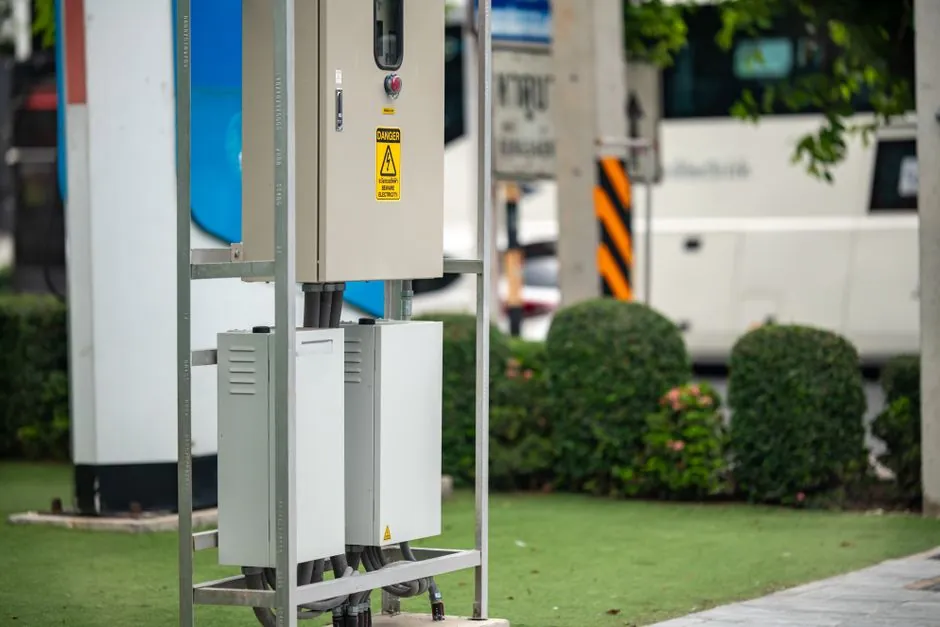
North American lead-battery sales are forecast to grow 1.9% in 2026 year-over-year [S2].
Supply planning must cover primary lead for new cells, recycled lead from spent batteries, sulfuric-acid electrolyte, grid alloy, and battery casings, while accounting for regional recycling rules, automotive technology shifts, and demand from stationary power, military, telecommunications, and grid-storage applications [S1][S3][S5][S7].
2026 demand is anchored by replacement, not only EV growth
The clearest 2026 demand signal is the replacement cycle. North American lead-battery sales are expected to increase 1.9% in 2026 after falling 2.1% in 2025, and CRU forecasts 2% annual growth through 2028 [S2].
Procurement plans based only on new-vehicle build rates would therefore understate replacement demand.
Automotive batteries represented two-thirds of the overall lead-battery market, and 6 of every 10 North American vehicles in the 2025 model year used AGM batteries [S2]. The practical implication is that lead supply planning must cover both conventional flooded products and advanced AGM and EFB formulations rather than treating lead as a single homogeneous commodity [S2].
Primary and recycled lead form a circular feedstock
Lead-acid battery supply chains are driven by both virgin metal and recovered battery material. This high collection value supports a closed-loop supply system, but it does not eliminate the need for primary lead because recovered material must cover manufacturing losses and demand growth.
California requirements demonstrate how collection rules affect available feedstock. Retailers must accept a consumer trade-in when a new lead-acid battery is purchased under Health and Safety Code section 25215.3, while certain dealers and wholesalers accept additional returns [S1]. Batteries may also enter household hazardous-waste collection facilities and recycling centers, with conditional small-quantity-generator access for businesses generating less than 220 lb of hazardous waste per month [S1].
Handlers that generate no more than 10 batteries per year, or store or transport no more than 10 batteries at one time, fall outside the cited reporting and recordkeeping requirements when the batteries are sent for storage, recycling, reuse, or reclamation [S1]. Larger generators retain access to relaxed management rules but must keep records, making route-to-market and dealer-return volumes important inputs to the recovered-lead forecast [S1].
AGM and EFB shift the alloy and quality mix
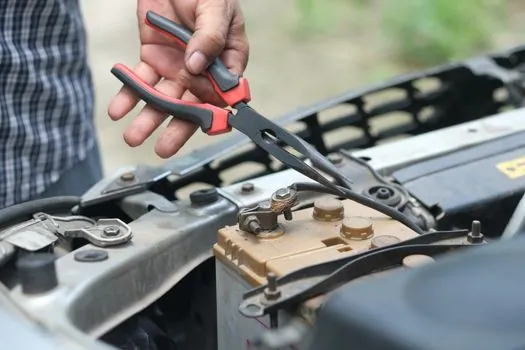
AGM technology was the principal advanced-technology trend in North American automotive lead batteries during 2025, while EFBs represented another growing advanced flooded category [S2]. These designs alter grid-alloy requirements, separator requirements, electrolyte acceptance, and manufacturing quality controls, so a stable lead price does not guarantee that every battery plant has the correct material specification.
A nominal lead-acid cell operates at 2.0 V, and 6 cells connected in series produce the familiar 12.0 V automotive battery [S5]. That electrical configuration governs the number of lead grids, straps, and cell components required per pack, but it does not specify grid thickness, alloy composition, or allowable impurities. Buyers should therefore define material requirements at the grid and finished-battery levels instead of purchasing only by nominal tonnes of lead.
These values make lead chemistry unsuitable for every duty cycle, especially where footprint, weight, deep discharge, or cycle-life targets outweigh acquisition cost.
Stationary and defense demand broadens the supply base
Non-automotive demand reduces dependence on new-vehicle production but adds different product and service requirements. The U.S. lead-acid battery market was valued at USD 14.2 billion in 2025 and is forecast to reach USD 23.4 billion by 2034 at a 5.56% compound annual growth rate for 2026–2034 [S3]. Grid-scale storage, microgrids, off-grid systems, data centers, hospitals, telecommunications, and industrial backup power are named application drivers [S3][S5].
Military demand is another distinct segment because lead-acid chemistries account for most military batteries in demand and specialty designs remain necessary for many applications [S7]. That requirement supports procurement volume, but qualified battery packs may impose tighter electrical, transport, environmental, and configuration controls than commodity automotive batteries. A supplier qualification should therefore include the applicable defense or industrial specification before material is allocated.
Stationary systems also expose a technical trade-off. Flooded, AGM, and gel batteries are all established lead-acid formats, but flooding and gel designs require different maintenance and operating controls [S5]. The broad global market estimate exceeding USD 102.1 billion in 2025 and a 3.2% forecast compound annual growth rate from 2026 to 2035 show the scale of the wider feedstock opportunity [S9], although market forecasts use different scopes and should not be added together.
Procurement options differ on price, control, and compliance
Primary lead offers metal of known origin and consistent assay, but its price exposure is greater than the exposure created by contracted recovered material. Recovered lead can lower material cost and support circular supply, but variability in collection, sorting, chemistry, and contaminant control requires tighter incoming quality management. A dual-source approach is generally stronger than reliance on either stream alone. [S1]
For grid-alloy planning, the comparison should include price basis, assay and impurity limits, delivery form, minimum order quantity, traceability, and required certification. Direct battery sourcing offers operational convenience but removes direct control over the alloy and grid specification, while metal sourcing preserves that control but adds fabrication and qualification work.
Recycling compliance belongs in the supply contract
California distinguishes intact batteries managed for recycling from batteries processed for recycling by draining electrolyte, crushing, smelting, or other physical methods. The latter is treated as a fully regulated hazardous-waste activity requiring a hazardous-waste treatment permit [S1]. Contracts covering spent-battery returns should identify permitted processors and define documentation, chain-of-custody, and responsibility for electrolyte handling.
Universal-waste rules cover small sealed gel-cell batteries and large utility batteries, including forklift batteries [S1]. State title 22 sections 66266.80 and 66266.81 address used lead-acid battery management, while section 66273.2 addresses universal-waste battery management [S1]. A supplier claiming universal-waste status for automotive batteries should be challenged, because automotive lead-acid batteries generally require a different management route.
California’s landfill controls illustrate the reach of battery stewardship. A 2026 compilation states that landfill disposal accounted for less than 0.1% of discarded municipal solid waste, or 60,000 tons, and that 41 states prohibit lead-acid battery disposal in landfills [S5]. Other jurisdictions differ, so nationwide procurement should not substitute one state’s rules for the entire collection network.
What procurement teams should track through 2026

Procurement should monitor four measurable indicators: 2026 lead-battery sales growth of 1.9%, annual replacement growth of 2% through 2028, the U.S. market path from USD 14.2 billion in 2025 toward USD 23.4 billion in 2034, and the share of automotive demand shifting toward AGM and EFB [S2][S3]. For automotive buyers, replacement volume should be separated from original-equipment volume because roughly 11 million replacement units contrasted with about 1.5 million original-equipment units in 2025 [S2].
For materials buyers, two additional controls are mandatory: reconcile the annual recycled-feed forecast against collection returns, and qualify grid alloy for each product family instead of accepting one generic lead specification. Metal consumers should also test supplier resilience against the forecast 2.7% automotive-market compound annual growth rate from 2026 to 2033 [S8].
Close the 2026 sourcing plan with a verified bill of materials that separates primary lead, recovered lead, grid alloy, electrolyte, casings, and separators, then link each raw-material allocation to automotive, stationary, or military demand. Track monthly order releases, assay results, rejected feedstock, collected spent-battery tonnage, and approved recycling destinations. For separate lead-time planning on large electrical equipment, see Large Motor Lead Times Above 1 MW: 2026 Planning Guide, but do not use its equipment schedule as a proxy for battery raw-material availability.